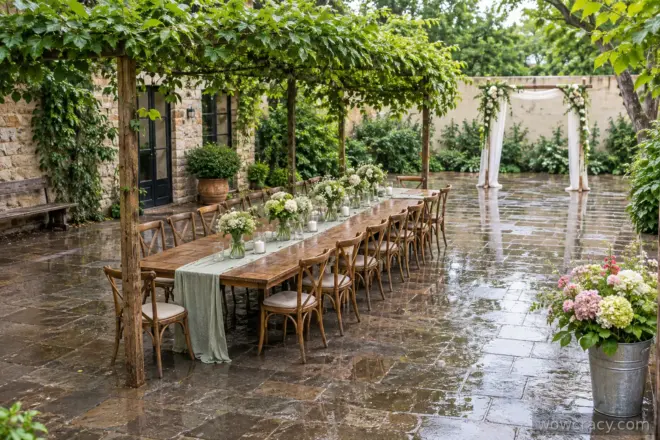
The weather forecast for a wedding is an unpredictable thing, but a plan of action in case of rain can quite easily be drawn up in advance. The most common mistake is to hope that “it will somehow work out” and to remember the backup plan an hour before the ceremony, when there is no longer time either to rearrange the furniture or to notify the guests. Instead, it is worth settling several decisions long before the celebration: exactly where the ceremony will take place under cover, who will be responsible for rearranging, what items to prepare for guests, and how to organise the photo session so that the shots don’t turn into chaos.
Below is an anti-crisis checklist that covers the most important aspects: from negotiations with the venue to the distribution of roles within the team. It doesn’t guarantee that the rain won’t come, but it will help preserve calm, time and the quality of the celebration.
- What to agree on with the venue in advance
- How to move the ceremony under cover without panic
- What to prepare for guests: umbrellas, footwear, comfort
- Photo session in the rain: how to get atmospheric shots
- Who informs the guests about the change of plan
- Weather monitoring and decision-making time
- Frequently asked questions
- Should a wedding be cancelled because of rain?
- What to do with the wedding dress if it gets wet?
- Is it possible to take good photos in the rain?
- Who should inform the guests about the change of plan?
- Brief summary: what to do already today
What to agree on with the venue in advance
Agree two distinct plans with the venue: comfort during ordinary rain and safe shelter during thunderstorms or strong winds. A tent or open terrace does not protect against lightning. Establish a substantial enclosed building for everyone, the route and time needed to reach it, accessibility, booking and full backup-space costs.
Check capacity, exits, dry non-slip flooring and an accessible route. Qualified venue technicians should assess electrical power, sound and lighting around moisture. Guests should not move connected equipment or touch wet cables. Plan checks and relocation before dangerous conditions; do not keep people outside to save decor.
Agree a written deadline for switching locations, allowing time for setup and moving people. Confirm any delay with suppliers and, if relevant, the marriage-registration authority. Waiting “another half hour” must not replace action on a severe-weather warning.
How to move the ceremony under cover without panic
Assign a decision coordinator and someone who monitors local weather warnings without also running the ceremony. Agree who can stop proceedings and direct everyone to shelter immediately. A threat does not require waiting for a group discussion or the end of a speech.
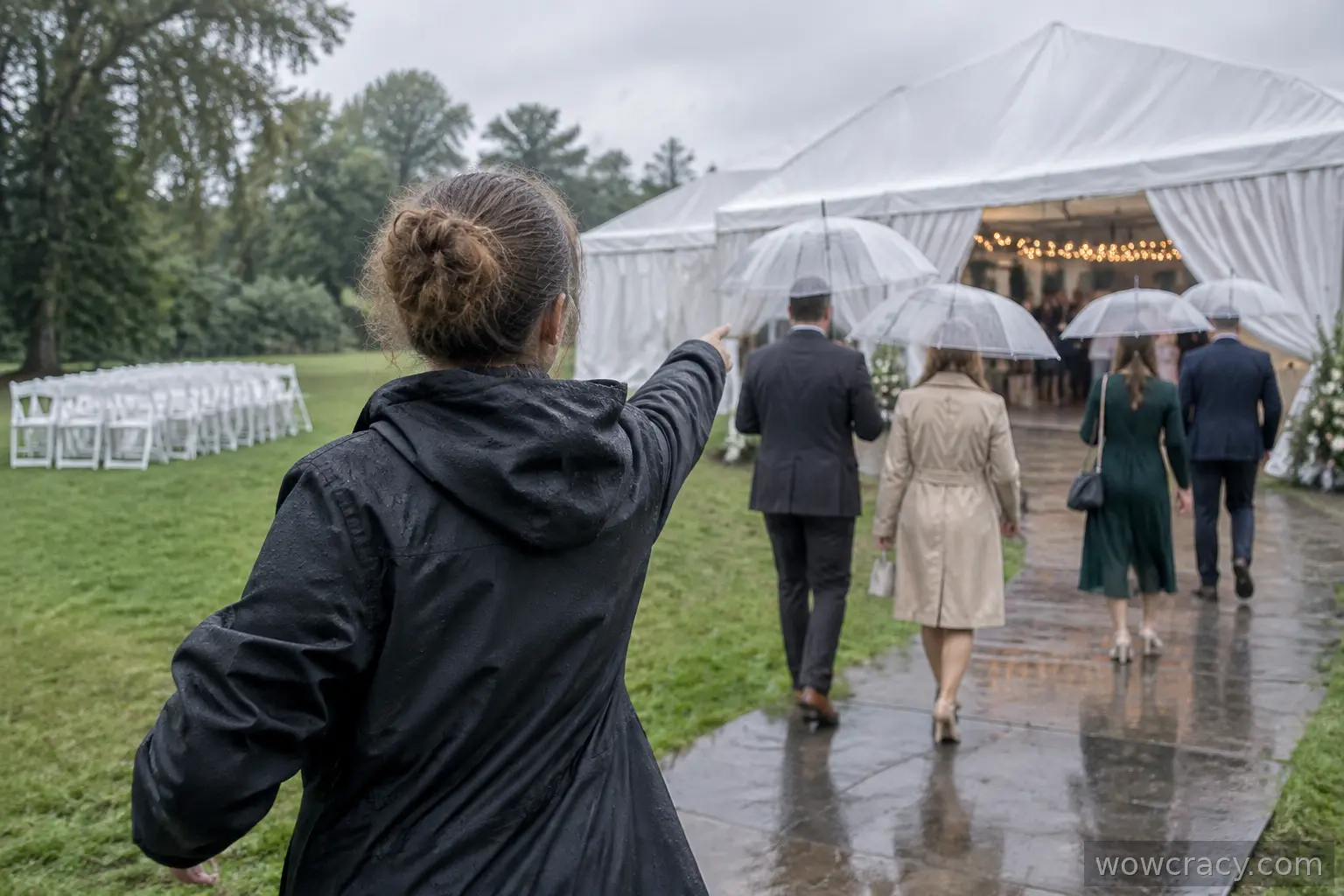
The algorithm of actions looks like this:
- Announce the responsible coordinator’s decision to move to the agreed safe location.
- Move people first, assisting those who need an accessible route.
- Responsible staff move equipment only when safe; saving equipment must not delay shelter.
- Check that everyone has arrived before agreeing the revised programme.
The backup space must accommodate everyone without blocking aisles or exits. Seating choices cannot solve excess occupancy, and some guests must not be left outside in dangerous weather. If no suitable space exists, arrange another venue, postponement or cancellation of the outdoor portion.
Don’t forget about the music: if a live band can’t play in the rain, prepare a backup playlist of recordings in advance. This is a small thing that saves the atmosphere.
What to prepare for guests: umbrellas, footwear, comfort
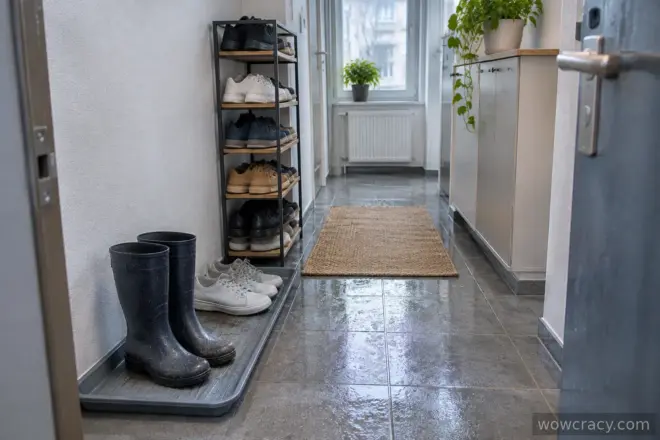
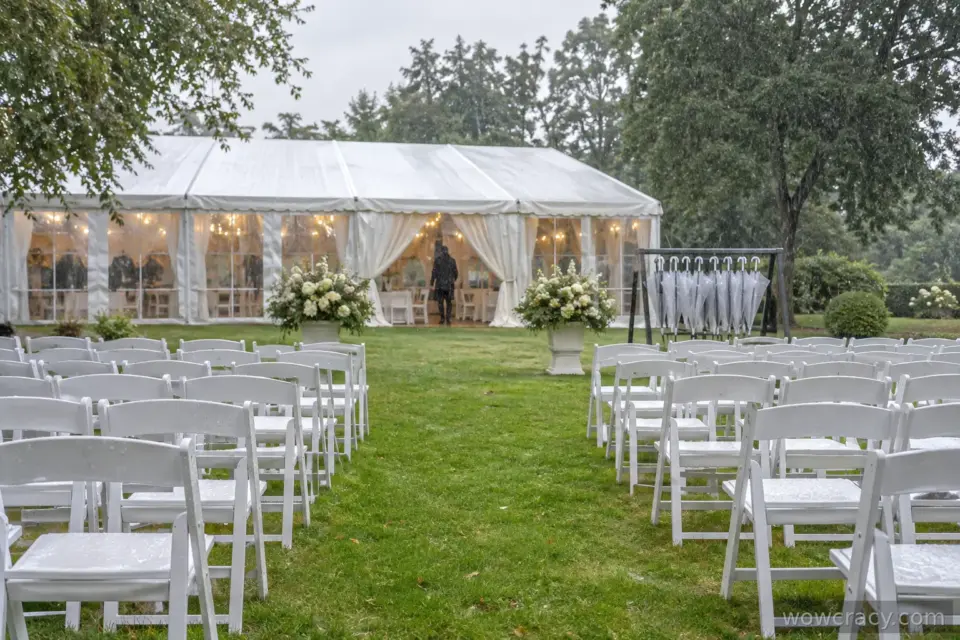
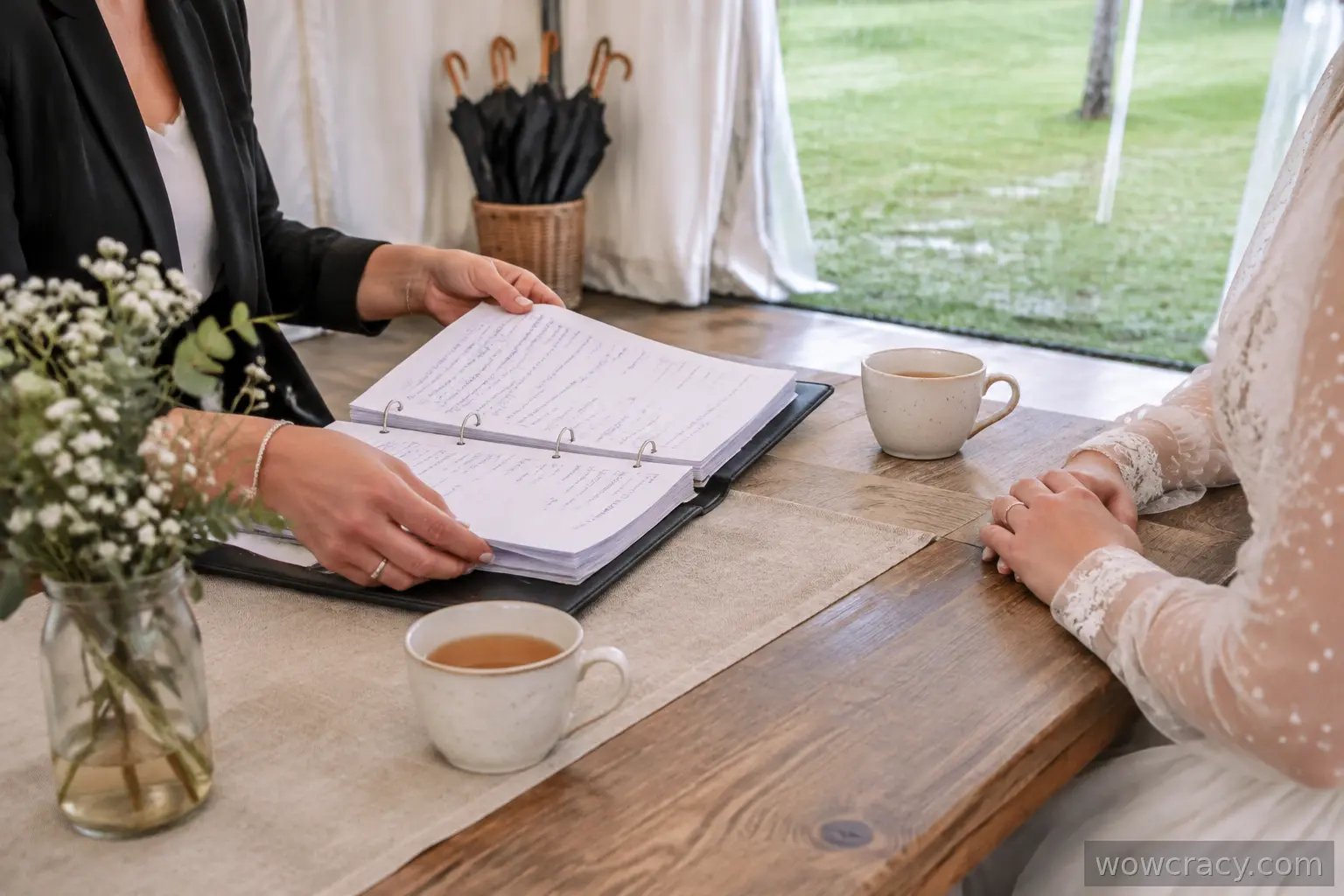
Guests rarely bring rubber boots or spare socks, so the organisers should take care of this in advance. The simplest solution is to buy a batch of transparent or white umbrellas (they look aesthetic in photos) and place them at the entrance. If the budget is limited, you can ask guests in the invitation to bring umbrellas with them, but then it is worth providing a place to store them.

Agree secure flooring with no slipping, loose edges or folds. Check access for different footwear, walking aids, wheelchairs and pushchairs. A rolled mat left in a walkway is itself a trip hazard. Provide storage for wet umbrellas and dry towels.
A raincoat helps keep you dry but does not replace warm clothing or thunderstorm shelter. Do not light a fire beneath a tent or install an improvised fuel-burning heater there: fire and carbon-monoxide hazards matter. Competent staff must assess heating against equipment, ventilation and venue requirements; an existing heated indoor room may be a safer fallback.
Take separate care of children and elderly guests: it may be uncomfortable for them to stand in the rain for a long time or wait for the move. Decide in advance on a place where one can wait out the bad weather sitting down.
Photo session in the rain: how to get atmospheric shots
Cloud cover can provide soft light, but results depend on conditions and the photographer, and safety comes first. Agree several indoor locations or places protected from ordinary rain. An open gallery or photography tent is not thunderstorm shelter.
For shooting in the rain you will need:
- agreed umbrellas for ordinary rain, not thunderstorm protection;
- camera protection chosen by the photographer under manufacturer guidance;
- appropriate lens-care supplies rather than arbitrary paper tissues;
- dry clothing, footwear and somewhere to change if needed.
Decide with the photographer whether working in rain is safe; a cover does not make every camera waterproof. At thunder, stop outdoor shooting and move immediately to suitable shelter. NWS guidance says to remain sheltered for at least 30 minutes after the last thunder, also accounting for other hazards and local warnings.
If you have a videographer, clarify whether they have protection for the camera. Suggest that they shoot a few rain scenes from under an umbrella — such shots often become favourites in the film.
Who informs the guests about the change of plan
On the wedding day, guests may not know about the backup plan, so it is important to appoint a responsible person. It is best if this is the coordinator or the host — they have the authority and experience. If there is no coordinator, entrust this role to one of the friends or relatives who is not involved in the ceremony.
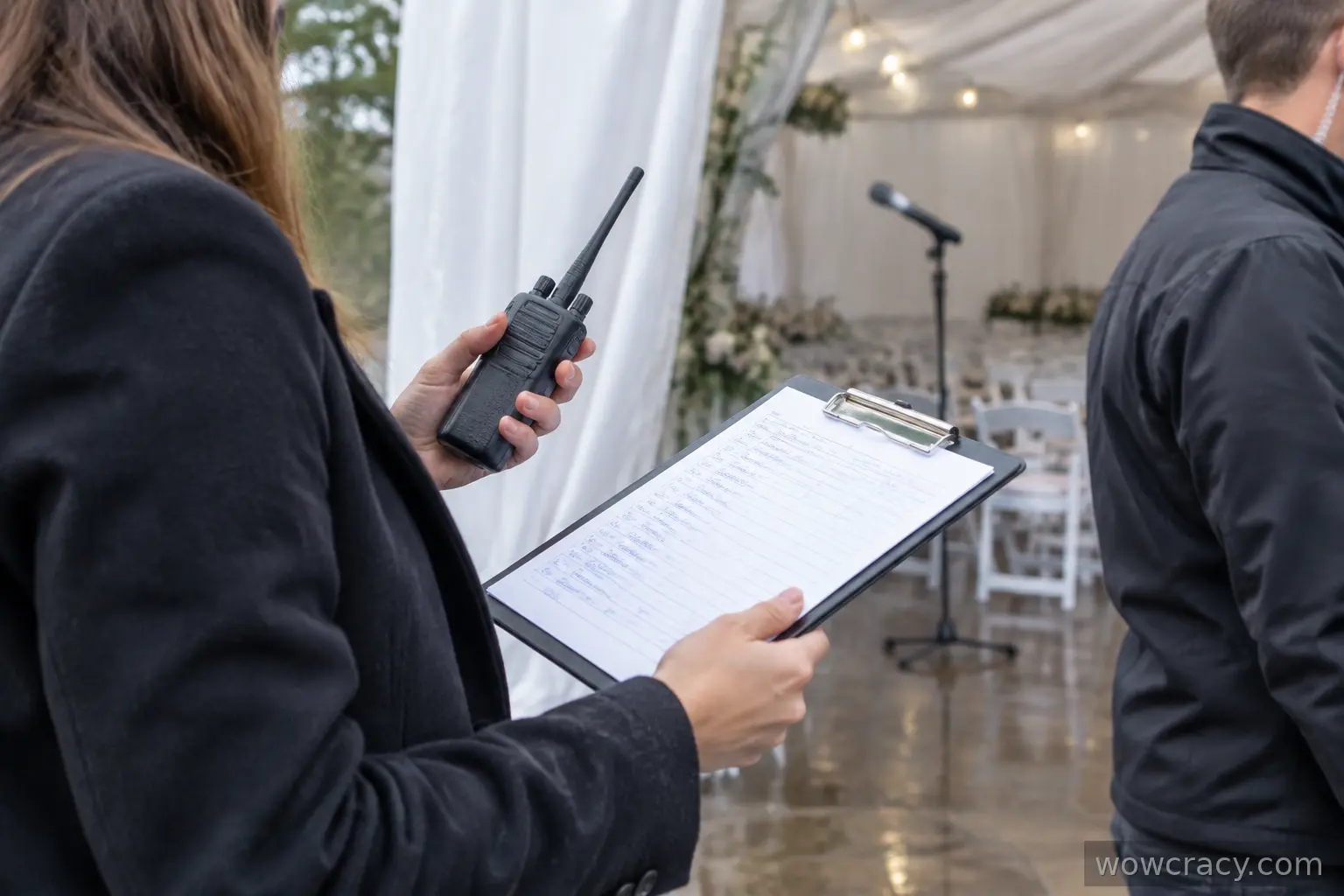
State briefly what is changing, where to go and who can help: “Because of the weather, please move to the main hall; staff will show the route.” Do not rely on messaging alone. Agree participation before creating a guest group and consider whether it exposes phone numbers to others.
It is also worth warning the venue staff, the photographer, the musicians and the host. Everyone should know who makes the decision and where to gather.
Weather monitoring and decision-making time
Review local official forecasts and warnings in advance and throughout the event. The planning deadline depends on setup and travel time, and conditions can require changes afterwards. A 50% rain probability is not a universal safety threshold; it does not itself describe lightning, wind gusts or flooding.
At thunder, tents and open shelters are unsuitable: use a substantial enclosed building or, if none is available, a fully enclosed hard-topped metal vehicle with windows closed. For strong winds, follow warnings and the structure’s operating limits set by its manufacturer and responsible staff. Do not wait for decor to start falling.
Frequently asked questions
Should a wedding be cancelled because of rain?
Ordinary rain may allow a switch to an agreed indoor format. Thunderstorms, dangerous winds, flooding or lack of suitable shelter can require postponing or cancelling outdoor activities. Follow safety guidance and official instructions, and check contractual arrangements for financial and logistical consequences.
What to do with the wedding dress if it gets wet?
Take a spare pair of shoes and a towel with you. If the dress is made of natural fabric, it may quickly absorb moisture, so it is better to have the opportunity to change into something more comfortable for photos. Clarify with the dry cleaner in advance whether the item can be urgently cleaned after the celebration.
Is it possible to take good photos in the rain?
Yes, in safe conditions and with the photographer’s agreement. Choose indoor photography or a brief outing in ordinary rain if appropriate. Thunder or other dangerous weather means stopping outdoor photography regardless of the desired shots.
Who should inform the guests about the change of plan?
Best of all — the coordinator or the host. If there are none, appoint a responsible person from among friends or relatives. The message should be short and clear, without unnecessary apologies.
Brief summary: what to do already today
Don’t put off the preparation until the last day. Here is the minimum checklist worth completing a week before the wedding:
- Agree indoor backup space for everyone and a severe-weather plan.
- Assign weather monitoring, decisions and communication.
- Check travel time, accessibility, capacity and exits.
- Prepare rain supplies and agree safe photo locations.
- Check postponement terms, supplier arrangements and safe electrical provision.
A prepared plan makes changing the format easier. It does not remove weather risks: people’s safety matters more than preserving the original schedule.