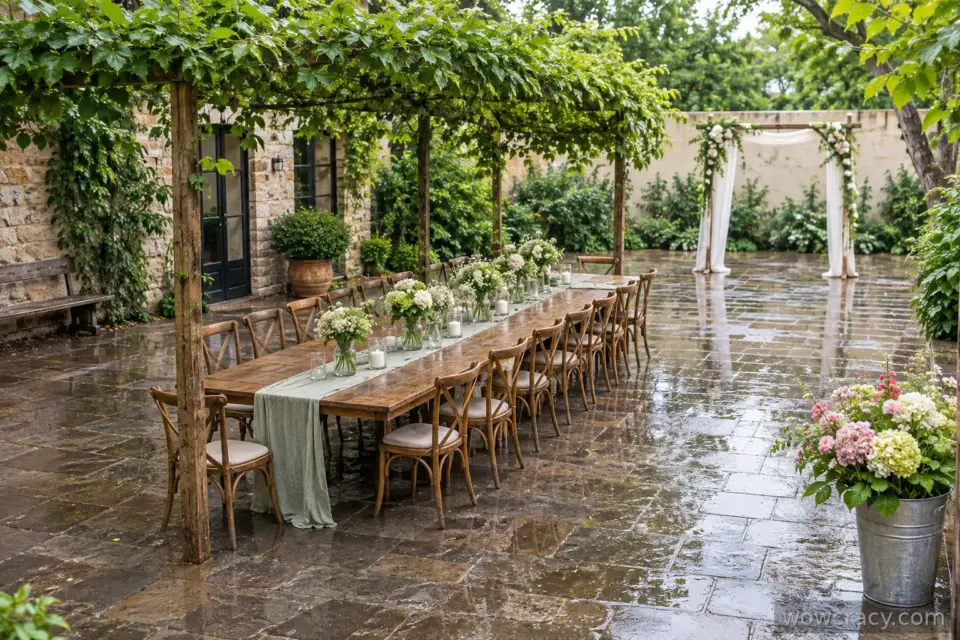
A wedding with up to twenty guests lets you gather a close circle and choose a simpler format, but does not automatically mean low costs or no stress. The budget depends on the venue, services and your priorities. Start with an affordable total, a headcount and what you actually want from the day.
Below is a practical plan that helps you decide on the format, allocate money by priority and put together a schedule that does not turn the day into a marathon.
- Celebration format: what really changes when there are twenty guests
- Three workable formats for 15–20 guests
- Guest list: how not to turn twenty seats into thirty invitations
- Who deserves a separate discussion
- Budget of an intimate wedding: where the money actually goes
- Approximate cost structure
- How to allocate money when the sum is limited
- A schedule with breaks
- Sample schedule
- Who is responsible for what
- Expenses that are most often forgotten
- Where you can really save without losing the atmosphere
- Music
- Decor
- Menu
- Clothing
- Frequently asked questions
- Is a host needed at a wedding for 20 guests?
- How much time is needed for organising?
- Can you invite more guests than planned?
- What to do if the guests do not know each other?
- A short checklist before booking
Celebration format: what really changes when there are twenty guests
The main advantage of a small wedding is the ability to choose not a “standard package” but a scenario of your own. With twenty guests you can afford a restaurant that has no large hall but one room for the whole evening. You can skip the host and seat a friend who knows everyone well at the table. You can hold the ceremony in your parents’ yard and move the banquet to a nearby café.
At the same time, the format imposes limitations. In a small group everyone sees everyone, so contentious topics, awkward table neighbours and “random” guests are felt more keenly. If you invite colleagues but not the rest of the department, it is worth thinking this through in advance — in a small circle such things are noticed faster than in a crowd of a hundred.
Three workable formats for 15–20 guests
- Dinner at a restaurant. The simplest option: you book a separate room or a large table, and the restaurant takes care of the food, the service and the cleaning. The downside is less freedom in decor and music.
- Ceremony and banquet at one location. A country house, a manor, a loft or a yard. The win is that guests do not have to travel anywhere, but journeys to and from the venue still need planning.
- An intimate ceremony plus dinner elsewhere. Works well if you want a separate atmosphere for the vows and a separate one for the celebration. But it adds logistics: you need to think through how guests will get to the second location.
When choosing a format, ask yourself two questions: how much time you are willing to spend on organising and how many people you are willing to see beside you all day. The answers often rule out half the options.
Guest list: how not to turn twenty seats into thirty invitations
The most common mistake is to start with a list of “everyone who could theoretically be invited” and then cut it down. It is psychologically hard to cross people out, so the list grows, and the costs grow with it. Do the opposite: first determine how many people you really want to see, and only then fill those seats.

A practical technique: make three columns — “must”, “would like” and “if there is room left”. The first usually contains parents, brothers and sisters, and closest friends. If at this stage you already have 24 people, it is worth admitting honestly: either the format is wrong or the list needs reviewing.
Who deserves a separate discussion
Decide whether children are invited and arrange supervision with their parents. Colouring books do not replace a responsible adult; compare actual quotes rather than assuming a nanny costs less than an entertainer. Count the couple, children and staff separately for capacity and catering, even if you describe the event as “20 guests.”
Agree a consistent approach to partners and explain it before RSVPs. Consider guests’ relationships and any need for support or assistance. Someone you have not met does not inherently spoil an intimate wedding; capacity and clear arrangements matter.
Colleagues and distant relatives. There is no universal answer here. One workable option is to meet separately with those you are not inviting, either before the wedding or after it. This sounds simpler than long explanations in messages.
Budget of an intimate wedding: where the money actually goes
A smaller headcount does not reduce every cost proportionally. Rings or clothing may cost the same, while photography depends on the package and hours as well as the event. Do not assume these items will necessarily dominate the budget.
Food and drinks may be priced per person, but room hire or minimum spending can be fixed. Request a complete quote including taxes, service charges, delivery and overtime. Compare the total rather than only the menu price per guest.
Approximate cost structure
| Item | Illustrative share | What to check |
|---|---|---|
| Food and drinks | 30% | Menu, headcount and service |
| Venue hire | 15% | Minimum spending and extra charges |
| Photography and video | 15% | Hours and package |
| Clothing and preparation | 10% | Hire, purchase and alterations |
| Decor | 5% | Delivery and setup |
| Music, travel and other agreed costs | 15% | A full list without double counting |
| Contingency | 10% | Choose the amount around quote uncertainty |
The table is an illustrative allocation of 100% of an available budget, including contingency, not market statistics or recommended prices. Replace the shares with your own quotes and add missing costs. Spending more on photography or food requires adjusting other items or the overall total.
How to allocate money when the sum is limited
- Calculate the total sum you are willing to spend without loans or credit.
- Choose a contingency amount; this example uses 10%, which is not a universal requirement.
- Identify three priorities that make the day “yours”.
- Allocate the rest by item and immediately fix what exactly you are not doing: no video, no live band, no professional decor.
The last point sounds strange but works best. The list of what you consciously do not do protects you from impulsive spending a week before the wedding.
A schedule with breaks
Headcount alone does not determine duration. Agree the pace, meals, breaks, travel and options to leave early. Some couples want only a ceremony and dinner; others want longer dancing. There is no single correct schedule.
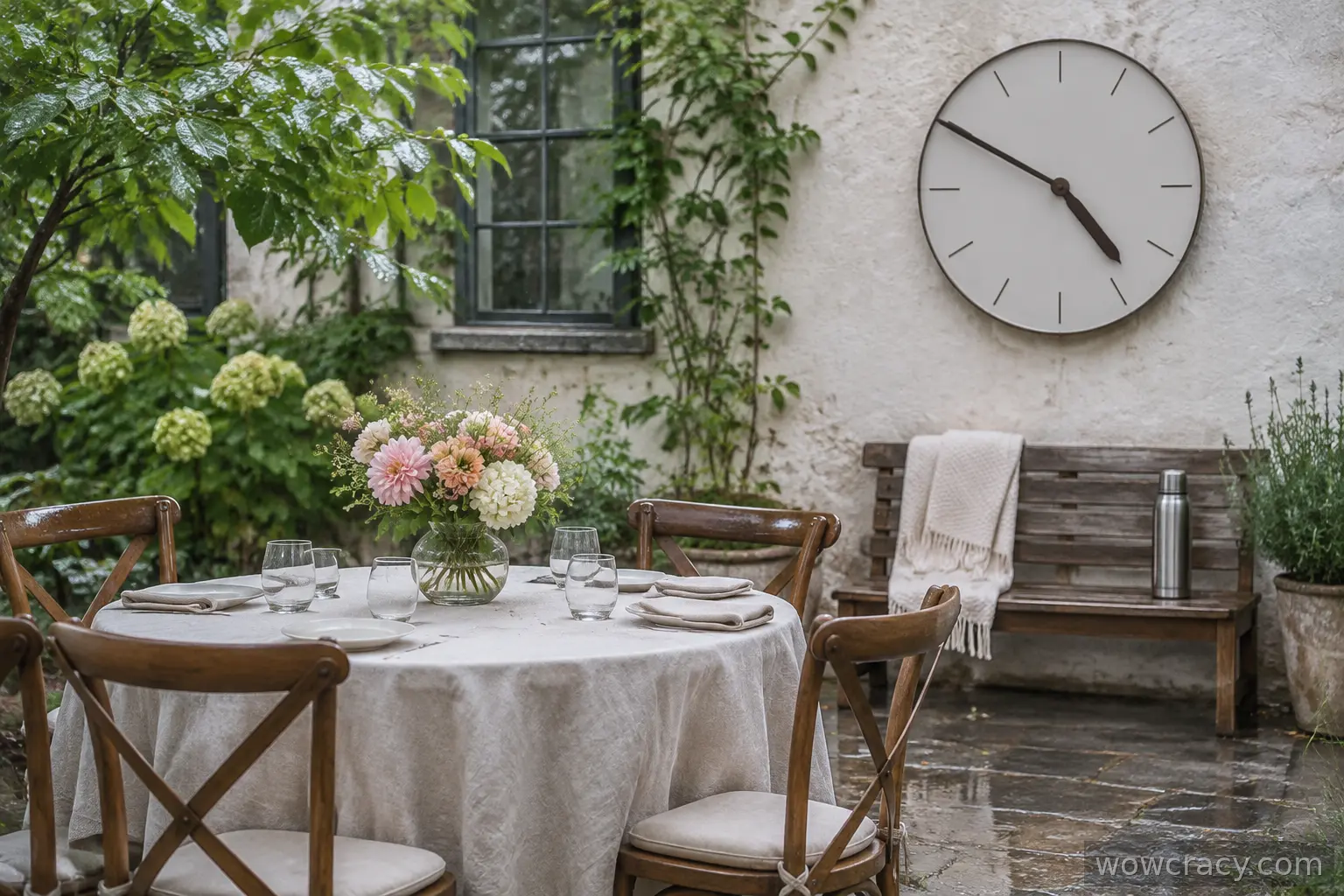
The example below runs for eight hours, from 14:00 to 22:00. It can be much shorter; this is not an “optimal” duration for everyone. Confirm any official marriage registration requirements and timing with the relevant authority rather than treating a symbolic exchange of vows as the legal procedure.
Sample schedule
- 14:00 — getting ready, light snacks, guests getting acquainted.
- 15:00 — illustrative ceremony (20–30 minutes; confirm the actual duration).
- 15:30 — greetings, group photographs, a glass of sparkling wine.
- 16:30 — travel or transition to the banquet part.
- 17:00 — dinner, toasts, quiet music.
- 19:00 — first dance, free conversation.
- 21:00 — cake, closing words of thanks.
- 22:00 — end of the formal part.
This is not a template but a basis that can be shifted. What matters is something else: the schedule must include pauses. It is in the pauses that the best moments happen — conversations, jokes, accidental photos.
Who is responsible for what
A small wedding often has no coordinator, and that becomes a problem. Someone has to keep an eye on the time, meet the suppliers and resolve small issues. It is best if this is neither the bride nor the groom but a close person or a friend you trust. Make a short list for them: contacts of the location, the photographer, the time dishes are served, where the money for tips is kept.
Expenses that are most often forgotten
Even attentive couples come across items that are not in the initial estimate. Here are the ones that appear most often.
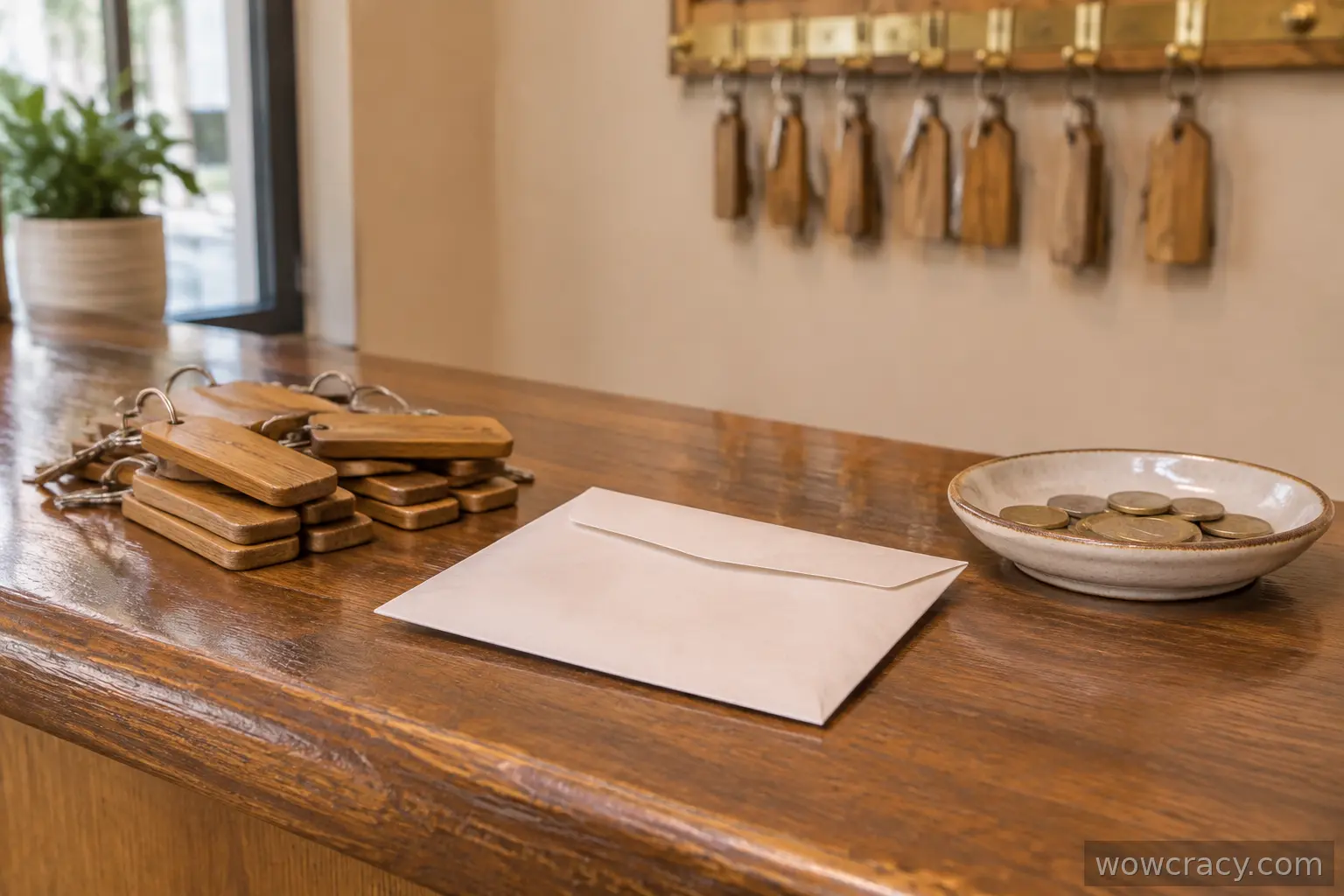
- Transfer. Even if there are few guests, someone has to get to a location outside the city. Sometimes it is cheaper to order one minibus than to ask everyone to drive their own cars.
- Overnight stay. If the celebration is outside the city, some guests will want to stay. Clarify in advance who pays for the rooms.
- Tips and surcharges. Service, tips for waiters, a surcharge for cleaning after the celebration — this is often written into the contract in small print.
- Trial makeup and hairstyle. A separate service that is easy to forget.
- Small purchases. Tights, underwear under the dress, spare tights, umbrellas, napkins, water for guests.
- Gifts for guests. Even small bonbonnières for twenty people are a separate item.
- Printing. Invitations, seating cards, menus — even in small quantities.
- Reserve for the unforeseen. Someone fell ill, something broke, the weather changed — the reserve covers these situations without panic.
A tip that saves nerves: before signing a contract with a location, ask for a full list of what is included in the price and what is paid separately. This is the simplest way to see hidden costs before they become a problem.
Where you can really save without losing the atmosphere
Saving does not mean giving up everything nice. In an intimate format there are several solutions that are almost unnoticeable to guests but significantly reduce costs.
Music
A playlist can replace live music if it suits your preferences and the venue. Test the sound and agree who is willing to manage it. Compare actual quotes for a short performance, a full band and equipment hire rather than assuming automatic savings.
Decor
Compare available seasonal flowers with the venue’s existing decor, including delivery and setup. Large or small arrangements are a matter of taste and space. Check venue requirements and clearance from fabrics for candles; electric candles may be a simpler option.
Menu
A shorter menu may be convenient, but taste and cost depend on the dishes. Account for allergies, dietary needs and non-alcoholic drinks. If bringing alcohol is allowed, compare the full cost including corkage and service, not just bottle prices.
Clothing
Renting a dress or buying a used one in good condition are perfectly workable options. A suit can be rented or you can use the one you already have, with a new shirt and accessories.
Frequently asked questions

Is a host needed at a wedding for 20 guests?
Not necessarily. In a small circle many couples manage without a host: friends give the toasts, and one of the guests turns on the music. A host is appropriate if you do not want to keep track of the time yourself or if there are people among the guests who barely know each other.
How much time is needed for organising?
Timing depends on venue and supplier availability, paperwork and your decisions. Check dates before making advance payments, then build your own timetable. There is no universal guarantee that three to five months will be enough.
Can you invite more guests than planned?
Technically you can, but it changes the format. Twenty-five people is already different logistics: a different table, a different number of dishes, a different atmosphere. If the list grows, review the budget and the scenario rather than simply adding chairs.
What to do if the guests do not know each other?
Help them get acquainted: seat them so that people with shared interests end up next to each other, and ask a few close friends to introduce the others. In a small circle this works better than any games.
A short checklist before booking
Before signing contracts, go through this list. It does not guarantee a perfect day, but it helps avoid the most expensive surprises.
- The guest list is fixed and does not exceed the chosen number.
- Two or three priority expense items are identified.
- A contingency amount is included in the total.
- The contract with the location specifies what is included in the price and what is paid separately.
- A person is appointed who is responsible for time and small issues on the wedding day.
- The schedule has breaks and an agreed duration.
- It is thought through how guests will get home after the celebration.
Compare each cost with your priorities and affordable total. Knowing why you want a service helps you choose, but does not oblige you to buy it at any price. Simplify the format where useful and check the final quote before paying.