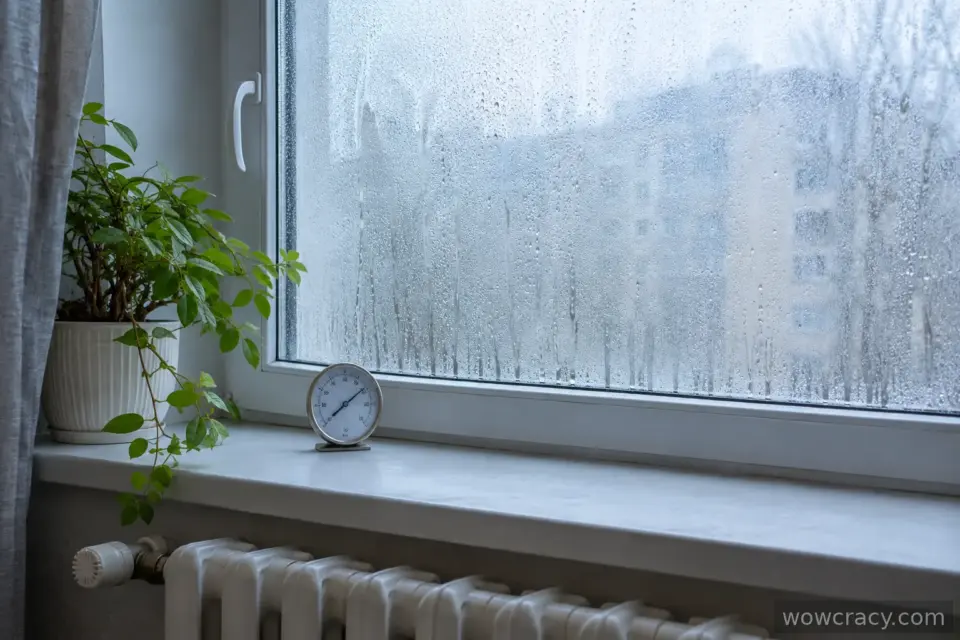
You wake up to small droplets running down the glass, or notice a wet strip along the bottom of the frame after cooking dinner. It is tempting to blame the windows, but replacing the glazing does not always solve the problem. Condensation forms when a surface cools below the dew point of the air touching it. Finding the cause means checking temperature, humidity and ventilation, as well as exactly where the water appears.
- Where exactly condensation forms and what it means
- How to check humidity and air exchange without a special laboratory
- Measuring humidity
- Checking ventilation
- Household habits that increase fogging
- When the problem is in the window structure and when it’s in the apartment
- When the window and installation need inspection
- When to check indoor humidity and ventilation
- What to do: practical steps from simple to complex
- When a specialist is needed
- Frequently asked questions
- Can I just ventilate more often and forget about the problem?
- Does a dehumidifier help?
- Why does condensation appear more often in winter?
- Should I replace the windows if condensation appears on only one?
- A short action algorithm
Where exactly condensation forms and what it means
First establish whether the moisture is on the room-facing surface, outdoors or inside a sealed glass unit. External condensation can occur on sound, energy-efficient windows in certain weather conditions. Then inspect the frame, sill and surrounding wall: moisture in these places needs a separate assessment.
On the room-facing glass. Water vapour condenses when the glass is below the dew point of the indoor air. A cold surface and excess moisture can act together, particularly where ventilation is inadequate. Condensation can occur even at moderate relative humidity if the glass is cold enough.
A wet strip along the bottom of the glass or frame. The edge of a sealed unit is often colder than its centre, and droplets also run down the glass. A wet lower edge therefore does not, by itself, prove that drainage is blocked or the sill was installed incorrectly. Water collecting in a frame channel or appearing during rain calls for a separate check of drainage, seals and installation.
Moisture on window reveals or nearby corners. Cold bridges and installation defects are possible, but so are rainwater and plumbing leaks. Distinguish condensation from liquid water entering the structure. A stain on a wall alone cannot tell you which component needs replacing or insulating.
Condensation between the panes of a sealed glass unit. Misting that cannot be wiped from either accessible surface usually indicates a failed seal. Ask the supplier or a window specialist to inspect it: the glass unit is usually replaced rather than the whole window. Separate frames with secondary glazing can have different causes and solutions.
It’s also useful to assess the scale straight away: does moisture appear on only one window or in all rooms? If in all of them, the issue is most likely the overall humidity level or the apartment’s ventilation. If it’s local, it’s worth looking closely at the specific window, the wall behind it or what is happening in that room.
How to check humidity and air exchange without a special laboratory
Before changing anything, it’s worth getting at least some measurable data. This will help you avoid spending money on unnecessary work and understand whether the problem is in the air or in the structure.
Measuring humidity
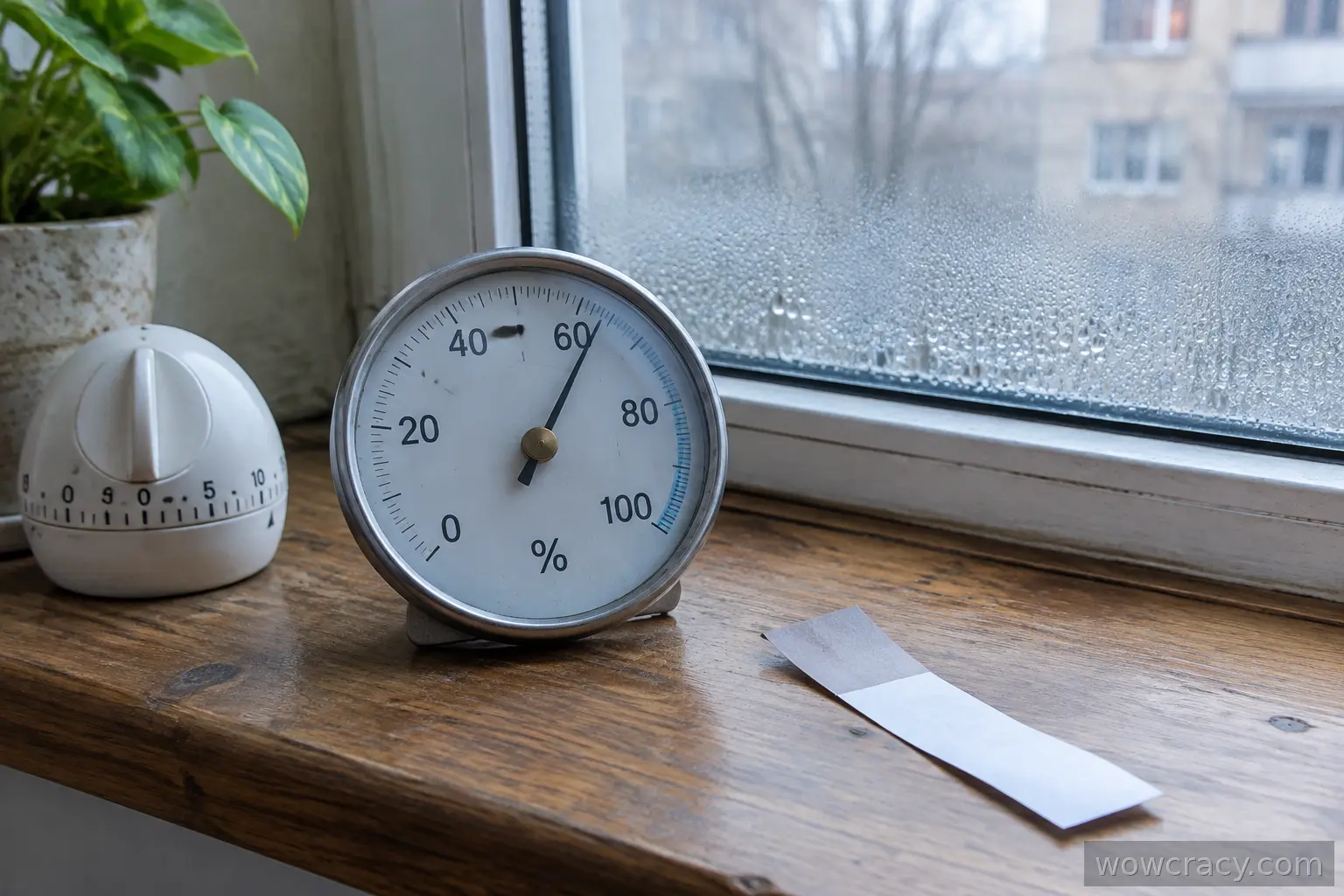
A household thermo-hygrometer measures temperature and relative humidity. Check its stated accuracy and allow it to stabilise after moving it. Take readings in the room, away from the glass, radiators and direct steam. Record them before airing the room in the morning, in the evening, and after activities such as showering or cooking.
The EPA advises keeping relative humidity below 60%, ideally between 30% and 50%, to help control mould. This is moisture-control guidance, not a guarantee of dry windows: the surface temperature also matters. There is no single 65–70% threshold above which every window must fog up.
If you don’t have a hygrometer, you can use indirect signs: the mirror in the bathroom takes a long time to dry, towels dry slowly, a dark deposit appears on the walls behind furniture, and there is a musty smell in the room. This is not a measurement, but it is a signal that it’s worth buying a device.
Checking ventilation
Airflow in natural ventilation systems varies with pressure differences, temperature and wind. A thin strip of paper held near an extract grille may give a rough indication of airflow direction, but it does not measure the flow rate or prove that ventilation is sufficient. Paper failing to cling is not enough to diagnose a fault either. Do not test airflow with a flame.
Compare the paper’s movement with the window closed and slightly open. A noticeable difference may suggest restricted incoming air, but weather and system design also affect the result. Check that designed air inlets and transfer paths between rooms are not blocked.
A musty smell, slow-drying towels and damp patches are reasons to investigate moisture. They do not replace measurements or provide a reliable ventilation test after closing a bathroom door for 10–15 minutes. A hidden leak or mould may also be responsible.
Do not dismantle or alter shared ventilation ducts yourself. If extraction is not working or air flows back into the room, contact the building manager or a ventilation specialist.
Household habits that increase fogging
Even properly functioning windows and normal ventilation won’t cope if moisture enters faster than it can be removed. Here are typical sources that often go unnoticed.

- Drying laundry indoors. Water evaporates into the air as clothes dry. The effect on humidity depends on the load, room size and ventilation.
- Cooking. Uncovered boiling pans release steam. A recirculating hood returns air to the room and does not replace moisture extraction outdoors.
- Showers without adequate extraction. Remove moist air from the bathroom outdoors while maintaining the designed air supply; releasing steam into the rest of the home is not a drying strategy.
- Houseplants. They also release water vapour; assess their contribution alongside other sources.
- Furniture and heavy curtains near windows. They can restrict warm airflow across the glass. Keep radiators and ventilation openings clear.
- Blocked ventilation paths. Closed vents or obstructed transfer openings can disrupt the system. Closed internal doors alone do not prove that ventilation is inadequate.
Worth mentioning separately are aquariums without a lid, humidifiers running without control, and numerous damp towels and napkins. In themselves they are not a problem, but combined with poor ventilation they become a noticeable source of moisture.
Control moisture where it is produced: use pan lids, an extractor hood that discharges outdoors, and bathroom ventilation after a shower. CSE recommends keeping internal kitchen and bathroom doors closed while steam is being produced so it does not spread through the home. Keep the system’s designed air supply and transfer paths clear. Dry laundry outside or in a separate room with moisture extracted outdoors.
When the problem is in the window structure and when it’s in the apartment
Separating these two scenarios is the key to the right solution. The mistake is to start with replacing windows when in fact ventilation is lacking, or, conversely, to spend years fighting moisture by ventilating when the glazing unit has already lost its airtightness.
When the window and installation need inspection
- Misting inside a sealed glass unit that cannot be wiped from either accessible side.
- Persistent moisture at one window: also compare curtains, heating and window orientation.
- Water appearing during rain or signs of leakage along the installation joint.
- Damaged seals, a misaligned opening sash or visible gaps.
When to check indoor humidity and ventilation
- Several windows fog up, especially after sleeping, showering or cooking.
- A thermo-hygrometer shows persistently high humidity in several rooms.
- Moisture clears slowly and extraction appears ineffective.
- There are substantial sources of steam, such as laundry, cooking or an uncontrolled humidifier.
- Designed air inlets are closed or the extract system lacks an adequate air supply.
Poor ventilation and a cold area around a window can occur together. Condensation may appear there first even when several factors are involved. Monitoring humidity and airflow helps narrow the cause, but leaks, mould or moisture between sealed panes warrant professional assessment straight away.
What to do: practical steps from simple to complex
Actions should be built on the principle of “from free to costly”. This is not only economical but also logical: first we eliminate the causes that are easy to check and observe the result.

- Improve ventilation. Air the room briefly after sleeping, cooking or showering as needed. Duration depends on the weather and room; opening a window does not replace the designed background or mechanical ventilation.
- Reduce steam at source. Use pan lids and extract moist air outdoors. Avoid drying laundry in an unventilated room.
- Check extraction. Clean accessible grilles as instructed. Weak or reversed airflow needs professional investigation.
- Maintain the designed air supply. Keep existing vents open. Additional inlets and their positions should be selected for the ventilation system as a whole.
- Monitor humidity. Use a thermo-hygrometer and, when needed, a dehumidifier alongside moisture-source control and ventilation.
- Distinguish condensation from leaks. If water stands in a frame channel or appears during rain, check drainage according to the window manufacturer’s instructions. Do not drill or enlarge holes.
- Assess seals and hardware. Repair damage and poor sash alignment following inspection. Adjusting a sash is not a universal cure for condensation.
Wipe water off the glass and sill promptly. Compare readings over a few days of similar weather, recording temperature and humidity. If water keeps entering, the wall becomes wet or mould appears, arrange an inspection rather than waiting to complete every step.
When a specialist is needed
There are situations when self-diagnosis runs its course. Call in a specialist if:
- condensation appears inside a sealed glass unit — arrange an inspection and, usually, replacement of the glass unit;
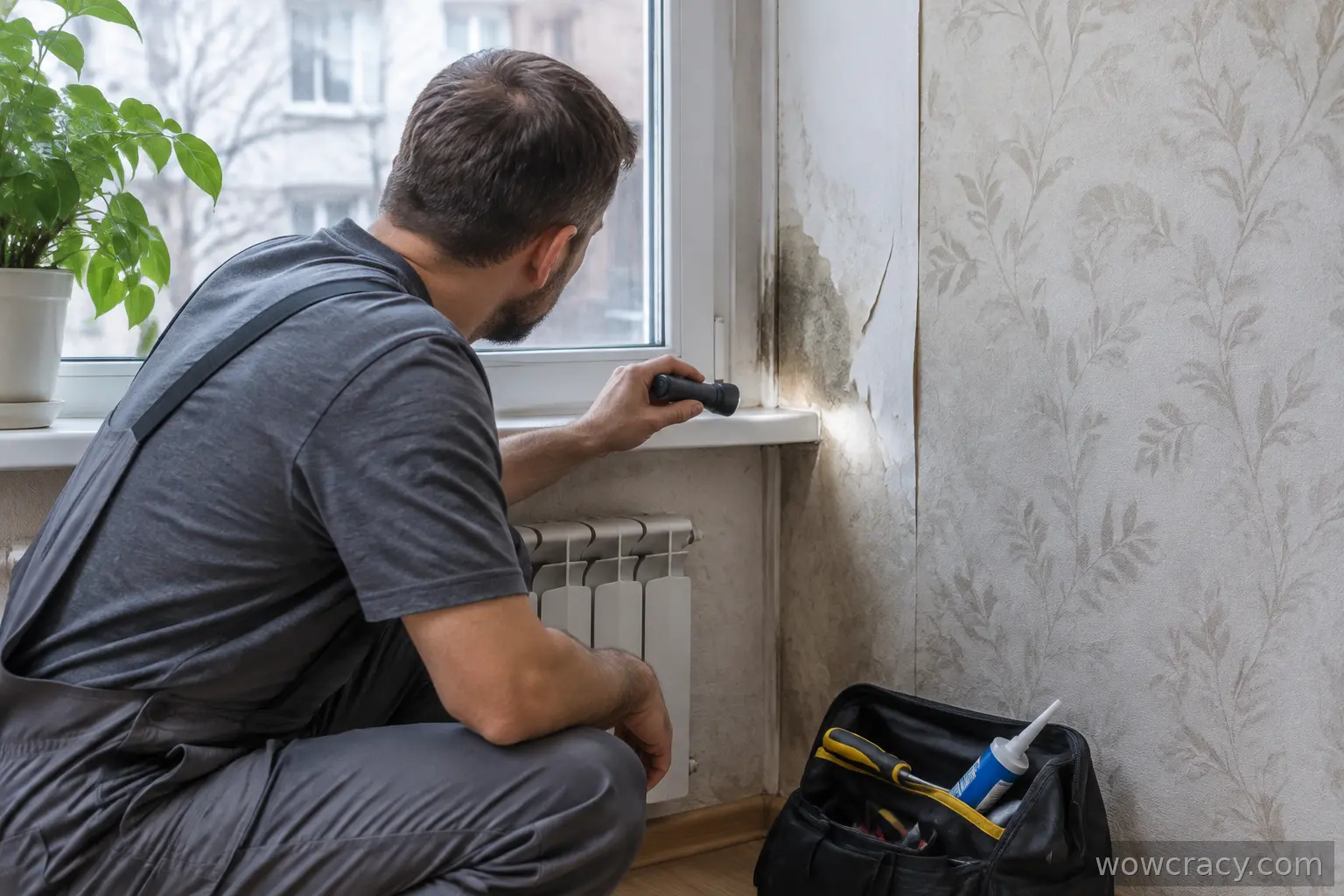
- moisture appears on the reveals, in the corners or on the wall by the window, especially if there are dark spots or peeling wallpaper;
- after adjusting and replacing the seals, fogging remains on the same window;
- you suspect the installation seam is freezing or there are cold bridges;
- the exhaust ducts don’t work and the management company doesn’t respond;
- a persistent musty smell or mould has appeared in the apartment.
Mould is a separate signal. It not only spoils the finish but can also affect how you feel. If it has already appeared, simply wiping the surface is not enough: the cause of the moisture needs to be eliminated, otherwise it will return. In cases of significant damage, it’s worth consulting a specialist about safe cleaning and further protection of the surfaces.
A window specialist will help with the glazing unit structure, hardware and installation. Questions of ventilation and humidity are better addressed to a ventilation specialist or a representative of the management company. Sometimes both are needed — but it’s worth starting with diagnostics, not replacement.
Frequently asked questions
Can I just ventilate more often and forget about the problem?
If the cause is moisture ingress or weak air exchange, ventilation really does help. But it won’t solve the problem of compromised airtightness of the glazing unit or a freezing corner. In addition, constant ventilation in winter increases heating costs, so it’s better to combine it with eliminating sources of moisture and organising a controlled supply.
Does a dehumidifier help?
Yes, when excess moisture needs removing. A dehumidifier reduces water vapour and lowers the dew point, making condensation less likely on the same cold surface. The US National Weather Service explains the relationship between moisture content and dew point. A dehumidifier can be a useful supplement, but it does not repair leaks or provide fresh air. Consider its capacity, electricity use and operating conditions.
Why does condensation appear more often in winter?
In winter, the inside surfaces of windows and frames become colder. Droplets form if a surface falls below the dew point of the indoor air. Moisture from daily activities and insufficient ventilation increase the risk. When cold outdoor air is warmed without adding water vapour, its relative humidity falls, which is why airing the room often helps.
Should I replace the windows if condensation appears on only one?
Not necessarily. First check whether there are problems with this particular window: drainage, seals, sash adjustment, airtightness of the glazing unit. If the window is in order and the moisture appears because of a cold zone or a local source of moisture in the room, replacement may not give a result.
A short action algorithm
Start by identifying the side and part of the window where water appears. Wipe it dry, measure temperature and humidity, and check moisture sources and ventilation. Moisture between sealed panes, leaks and wet window reveals need separate investigation. This helps you choose appropriate repairs without replacing a sound window on guesswork.