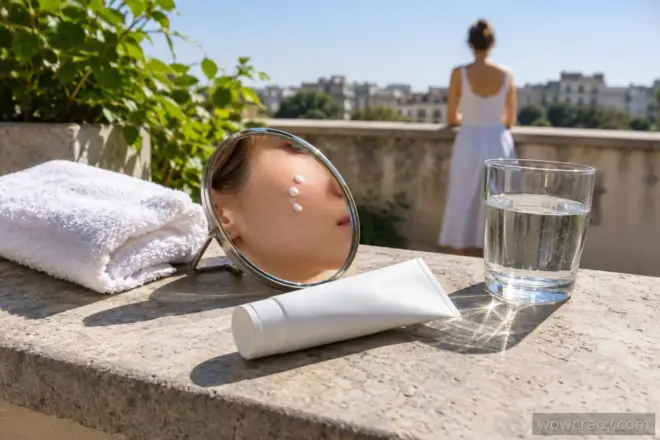
If a new cream or serum makes your face burn, turn red or feel tight, stop using it and gently wash it off. Avoid applying other active products over it, and do not try to diagnose the cause yourself.
This guide covers local irritation and signs that need medical attention. Call emergency services immediately for sudden swelling of the lips, tongue or throat, difficulty breathing or fainting. Home skincare must not delay getting help.
- What to do immediately after burning appears
- Why you shouldn’t add new active products
- Which symptoms require emergency help
- What to note down before a dermatologist consultation
- How to distinguish irritation from allergy: guidelines without self-diagnosis
- How to restore skin after a reaction to a new product
- How to safely test new products going forward
- When to arrange a medical appointment
- Frequently asked questions
- Can I apply a soothing cream if the burning has already started?
- How long does irritation from cosmetics usually last?
- Can I use hydrocortisone ointment without a prescription?
- How can I tell it’s not an infection?
- A quick action checklist
What to do immediately after burning appears
The first task is to remove the irritant as quickly as possible and not worsen the skin’s condition. Don’t wait for the burning to “go away on its own”: the longer the product stays on the skin, the higher the likelihood that irritation from cosmetics will intensify.
- Wash the product off. Use cool or lukewarm water without rubbing or scrubbing.
- Gently pat your face dry. Use a clean, soft towel.
- Avoid experimenting with new skincare. If needed, use a familiar fragrance-free moisturiser only if it does not worsen symptoms.
- Try a cool compress. A clean, damp cloth may ease discomfort; do not put ice directly on your skin.
- Do not scratch the affected area. Watch for signs of a severe reaction.
While your skin is irritated, put aside makeup, scrubs, masks, sponges and new products. Reintroduce your usual routine gradually once symptoms have settled; there is no single recovery timetable.
Why you shouldn’t add new active products
Irritated skin may sting even when you use products you previously tolerated. A new serum will not necessarily help, and introducing several new products at once makes it harder to identify the cause.
Temporarily avoid exfoliating acids, scrubs, retinoids and other products that irritate your skin. Fragrances, essential oils and products high in ethanol may also worsen discomfort. Do not judge a product by the number of ingredients alone: a short list does not guarantee that your skin will tolerate it.
Do not reapply the suspected product, even elsewhere on your skin, to check for an allergy yourself. Keep the packaging and discuss the reaction with a dermatologist, who may arrange diagnostic patch testing if needed.
Which symptoms require emergency help
Call emergency services immediately if any of these signs develop after using the product:
- sudden swelling of the lips, mouth, tongue or throat;
- difficulty breathing or swallowing, throat tightness or sudden hoarseness;
- severe dizziness, confusion or fainting.
These may be signs of anaphylaxis. Severe pain, blistering, marked facial swelling, eye involvement, a widespread rash, rapid worsening or fever also need urgent medical assessment. Do not wait several days or try to manage a severe reaction with cosmetic cream alone.
What to note down before a dermatologist consultation
See a dermatologist if symptoms do not improve after you stop using the product, affect daily life or keep recurring. Seek help sooner if symptoms worsen or are severe. Prepare the following information for your appointment:
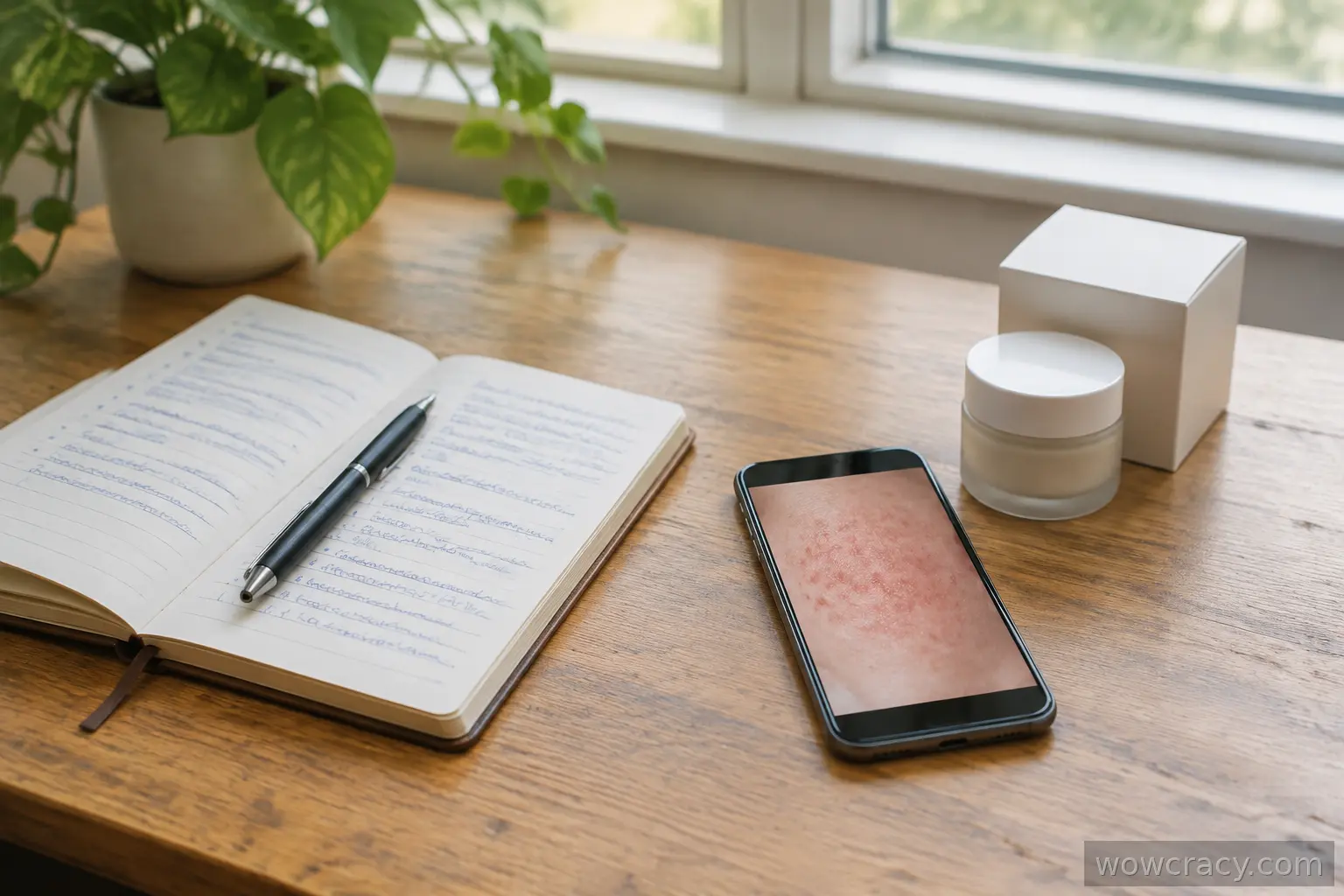
- the name and composition of the new product (photograph the packaging or label);
- when you applied it, how long it stayed on the skin, whether you washed it off;
- a list of all other products you used that day or the day before;
- whether you have had reactions to cosmetics before, and to what exactly;
- which symptoms appeared: burning, itching, redness, swelling, rash — and whether they changed over time;
- what you have already done to ease the condition (washed off the product, applied cream, etc.);
- whether you take medications, whether you have chronic skin conditions (eczema, rosacea, psoriasis).
It’s also worth photographing the redness or rash in the first hours — this will help the doctor see how the reaction developed, even if the skin already looks better by the time of the visit.
How to distinguish irritation from allergy: guidelines without self-diagnosis
Burning after a cream may be the result of irritation (irritant contact dermatitis) or an allergic reaction. It’s difficult to distinguish them on your own, but there are guidelines worth taking into account.
| Feature | Irritation | Contact allergy |
|---|---|---|
| Onset | May be immediate or delayed by up to 48 hours | Often hours or days after contact |
| Area | Usually where contact occurred | May extend beyond the application area |
| Symptoms | Burning, dryness, redness; blisters are possible | Itching, rash, swelling; small blisters are possible |
| Repeated contact | May worsen irritation | May trigger another reaction; do not deliberately retest |
This table cannot diagnose the cause: symptoms and their timing overlap. A clinician may use patch testing to investigate contact allergy. Do not choose treatment based only on a resemblance to these symptoms; discuss medicines for the face with a doctor or pharmacist.
How to restore skin after a reaction to a new product
Once the acute burning eases, continue gentle care until your skin has recovered. Follow its condition rather than a fixed five-to-seven-day schedule:
- wash with cool water and a mild product without fragrances;
- use a familiar fragrance-free moisturiser if it does not worsen symptoms;
- avoid the sun, especially during peak hours, and use a physical sunscreen with mineral filters (zinc oxide or titanium dioxide) if it doesn’t cause burning;
- don’t visit saunas, chlorinated pools, and don’t have intensive cosmetic procedures;
- don’t use scrubs, masks, peels or home-care devices.
If even a familiar moisturiser continues to sting, seek medical advice. Burning alone cannot establish whether you have an infection or how well your skin barrier is recovering.
How to safely test new products going forward
Test a new product that has not previously caused a reaction on a small area of healthy skin first. A home trial does not replace medical patch testing or guarantee that your face will tolerate it. The American Academy of Dermatology recommends the following approach:
- Apply the usual amount to a small area of your arm or elbow crease twice daily for seven to ten days, unless the label directs less frequent use.
- Leave rinse-off products on only as directed on the label.
- Wash off and stop the trial if redness, itching or burning develops.
- Introduce one product at a time. Do not retest a product that has already caused a reaction.
For sensitive skin, look for fragrance-free products and consider your own previous reactions. A natural product or a short ingredient list is not a guarantee of safety: plant ingredients can also cause reactions. After a significant reaction, discuss a new routine with a dermatologist.
When to arrange a medical appointment
Not every reaction requires immediate help, but there are situations when you should book an appointment with a dermatologist:

- symptoms persist or do not improve after you stop contact;
- reactions recur with different products;
- you have a chronic skin condition and an unusual reaction;
- irritation disrupts sleep or daily activities;
- you want help finding the cause and choosing a suitable routine.
A clinician can examine your skin, arrange patch testing and help identify ingredients to avoid. Marked swelling, severe pain or rapid worsening need urgent assessment rather than waiting for a routine appointment.
Frequently asked questions
Can I apply a soothing cream if the burning has already started?
After washing the product off, you can try a familiar fragrance-free moisturiser that you previously tolerated. Wash it off and stop using it if it makes the burning worse. Seek medical advice for a severe or persistent reaction.
How long does irritation from cosmetics usually last?
Recovery depends on the cause and severity. Mild discomfort may ease quickly, but contact dermatitis can last several weeks. Do not treat one to three days as a guaranteed recovery time, and seek help if your symptoms worsen.
Can I use hydrocortisone ointment without a prescription?
Do not use hydrocortisone on your face without first speaking to a doctor or pharmacist. The NHS cautions about using it on facial skin: the product, application area and treatment duration all matter.
How can I tell it’s not an infection?
You cannot rule out an infection by appearance alone. Discharge, increasing pain, rapid worsening, fever or feeling generally unwell are reasons to seek urgent medical advice.
A quick action checklist
- Stop using the suspected product and gently wash it off.
- Keep your routine minimal, using products you already tolerate.
- Put aside scrubs, peels and new active products.
- Call emergency services for breathing problems, sudden swelling of the lips, tongue or throat, or fainting.
- Seek medical advice for a severe, worsening or non-improving reaction, and keep details of the product.
Remember: this article is for informational purposes and does not replace an individual doctor’s consultation. Self-diagnosis and self-treatment of allergies can be dangerous.
Further sources: NHS contact dermatitis symptoms and MedlinePlus on its course and treatment.