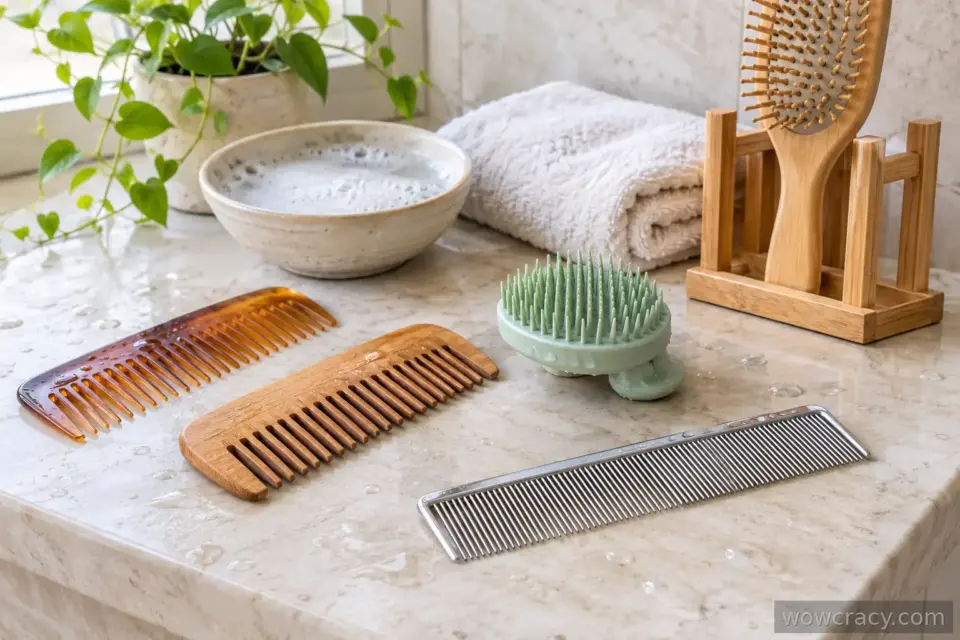
Your everyday comb collects hair, dust, styling residue and scalp oil, which can transfer back onto clean hair. Incorrect washing can damage the teeth, wooden surfaces or a brush cushion. Choose a cleaning method that suits the material, construction and manufacturer’s instructions.
- How to remove hair from a brush: the dry method
- Which materials can be soaked
- Step-by-step cleaning of a plastic comb
- Caring for a wooden comb
- Cleaning a brush with a cushion
- How to rinse and dry a brush correctly
- Comparison of cleaning methods by material
- How often to wash a comb and brush
- When the tool should be replaced
- Practical tips for daily care
- Frequently asked questions
- Can a comb be washed in a dishwasher?
- How to remove hair from a brush if it is tangled very tightly?
- What should I use to wash a wooden comb so as not to damage it?
- How often should a hairbrush be replaced?
- A simple cleaning checklist
How to remove hair from a brush: the dry method
Before wetting the tool, remove the bulk of the hair. It is best to do this over a bin rather than over the sink, so that the strands do not clog the drain. For brushes with dense bristles, it is convenient to use a wide-toothed comb or a toothpick — use them to hook the hair at the base and pull it out. Move from the edges towards the centre so as not to press the dirt deeper.
If the hair has tangled between the bristles, do not pull sharply: this can tear out a clump of bristles or scratch the base. It is better to loosen it with your fingers or blunt-ended tweezers. For brushes with natural bristles, do not use metal objects — they easily damage the bristles.
After dry cleaning, wipe the surface with a dry tissue to collect the dust. This step takes a few minutes but significantly reduces the amount of dirt that will then have to be washed out.
Which materials can be soaked
A solid plastic comb and a brush with a hollow handle or cushion need different care, even if both look plastic on the outside. Do not soak wood, and keep water out of glued joints and ventilation holes.
Unless the manufacturer allows full immersion, clean the bristles and teeth with a slightly damp cloth or soft cleaning brush. Keep water out of the cushion, seams and handle openings. Electrical brushes need their own instructions: switch them off and disconnect the power before cleaning. The washing methods below are not universal instructions for electrical tools.
Metal pins do not mean that the whole brush can be washed under a tap. Consider its coating, handle and cushion too. If wet cleaning is allowed, thoroughly remove water from metal parts afterwards.
Step-by-step cleaning of a plastic comb
A plastic comb is the most common and the easiest to care for. Here is a sequence that helps remove dirt without scratching the surface:
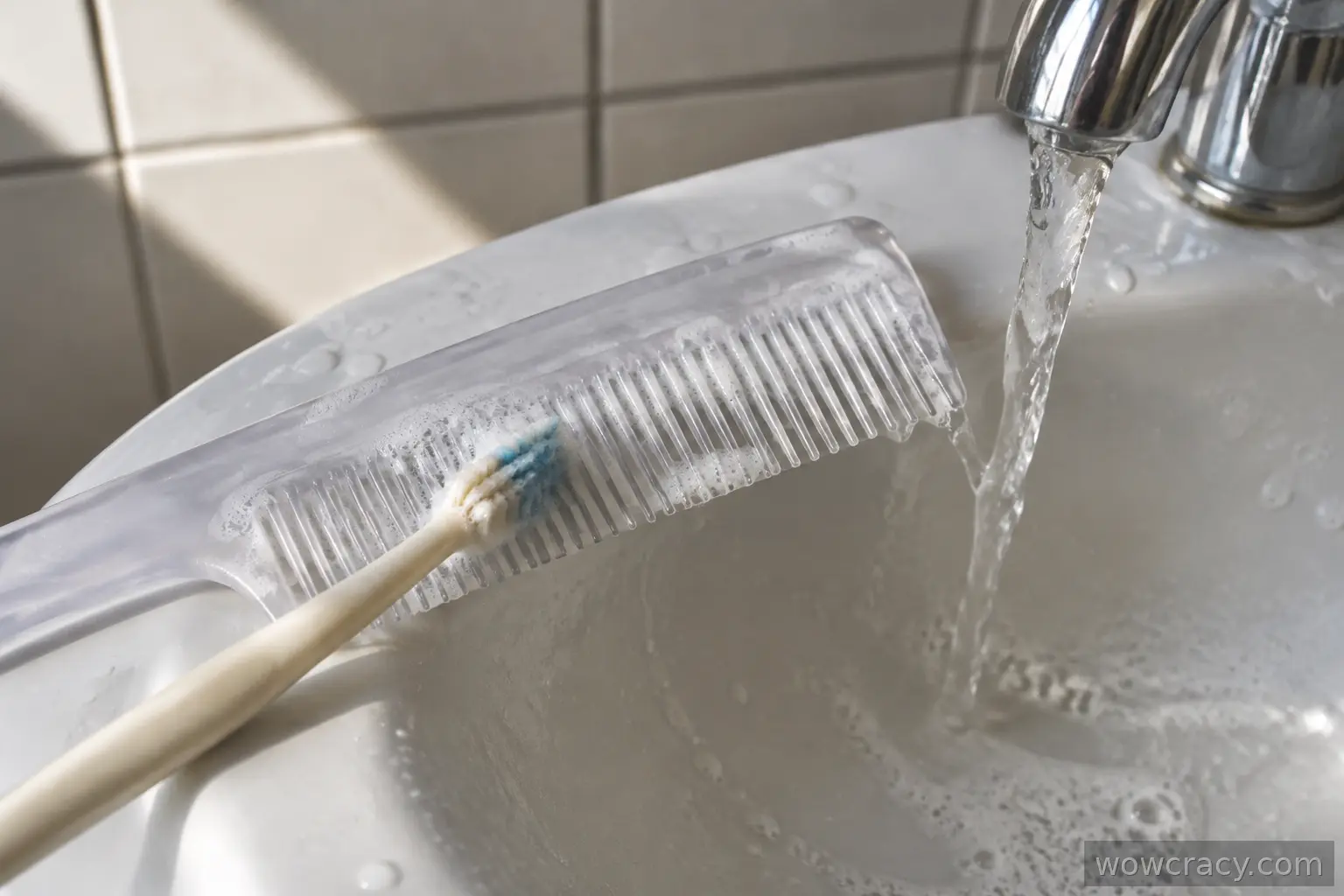
- Remove the hair using the dry method described above.
- Wet the comb with warm water (not hot).
- Apply a few drops of mild shampoo or liquid soap to the teeth and help yourself with an old soft-bristled toothbrush.
- Run the brush along each tooth, paying attention to the gaps near the base.
- Rinse under running water, shaking off the residue.
- Dry with a towel and leave in the air until completely dry.
Do not use abrasive powders or hard sponges for cleaning: they leave micro-scratches in which dirt accumulates faster. If the comb has a decorative coating, avoid alcohol-based products.
Caring for a wooden comb
Wood is a material that requires delicate handling. It does not like prolonged contact with water, sharp temperature changes or aggressive detergents. Cleaning a wooden comb is best done quickly and without soaking.
Remove loose hair first. If the instructions allow damp cleaning of the wood, wipe the surface with a well-wrung soft cloth. If needed, use a little mild soap, remove it with another barely damp cloth and wipe the comb dry immediately. Do not immerse it.
Do not oil the wood with coconut, mineral or any other oil unless the manufacturer recommends it: finishes and treatments vary. If the surface feels rough or catches hair, check for cracks and splinters rather than trying to cover damage with oil.
Do not wash a wooden comb in a dishwasher and do not dry it with a hairdryer — overheating can deform it.
Cleaning a brush with a cushion
Clean brushes with rubber or silicone cushions carefully. Even brief immersion is unsuitable for some models: water may remain beneath the cushion or enter glued joints.
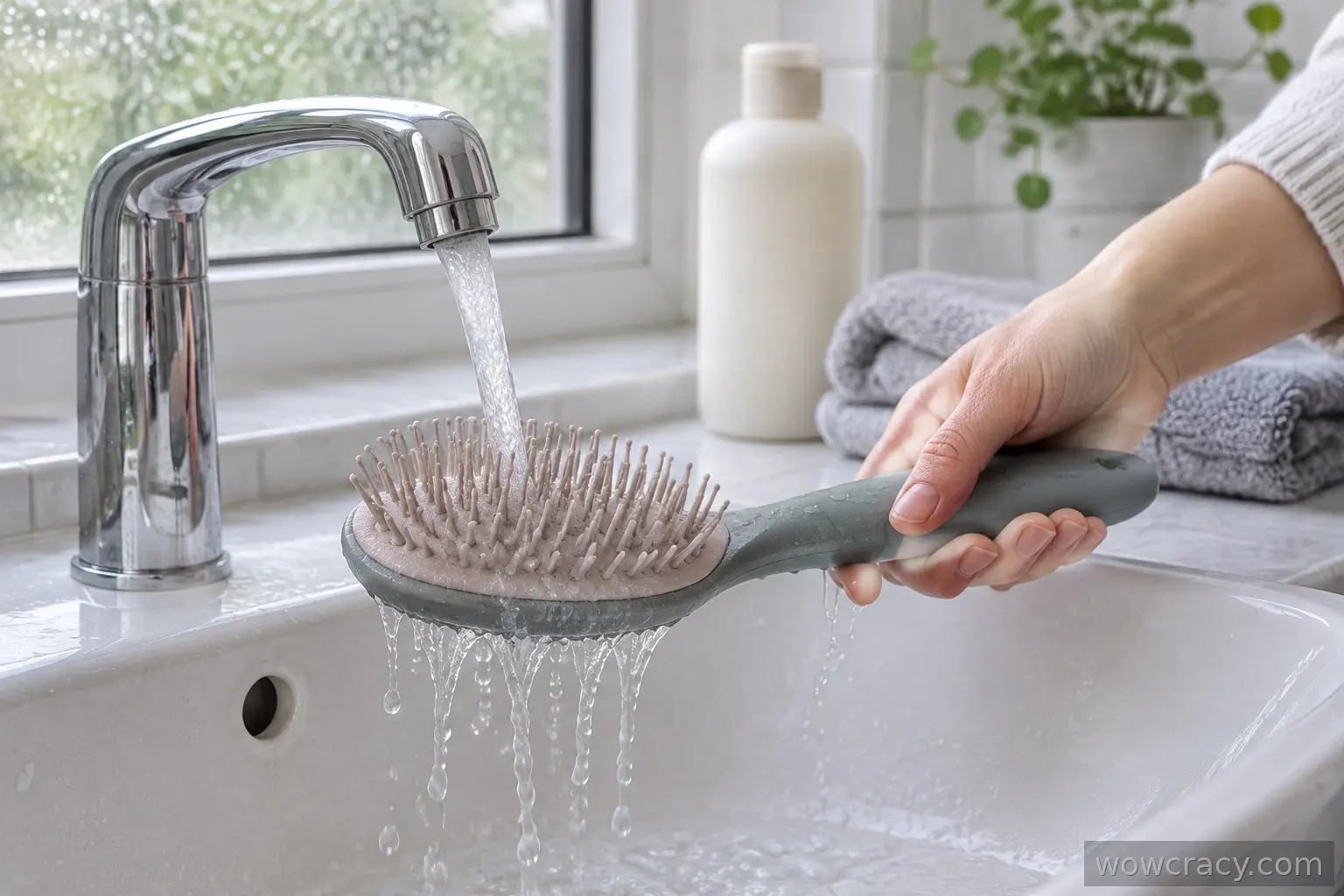
Recommended sequence:
- Remove loose hair with your fingers or a suitable cleaning tool.
- Dampen the cleaning brush or cloth, rather than the entire hairbrush.
- Gently clean the bristles and accessible cushion surface with an approved cleaner.
- Remove residue with a clean damp cleaning tool, keeping water out of openings.
- Allow to dry in the position recommended by the manufacturer.
Remove the cushion only if the manufacturer explicitly designs it to be removed. Being able to lift an edge does not make it a removable part. Do not pry open the brush to drain trapped water.
How to rinse and dry a brush correctly
Rinse under a tap only where the instructions permit it. Remove cleanser from a delicate brush with a clean damp cloth or cleaning brush. Avoid boiling water, a strong jet and prolonged soaking.
Let the brush air-dry with good ventilation, in the position specified for that model. For example, Kent recommends bristles down for several ranges, while Tangle Teezer specifies teeth up for the Original and Ultimate Styler. Do not squeeze or rub the bristles with a towel, and let the brush dry fully before use.
If the brush has a hanging hole, use it. Avoid drying on a hot radiator or in direct sunlight: overheating harms many materials.
Comparison of cleaning methods by material
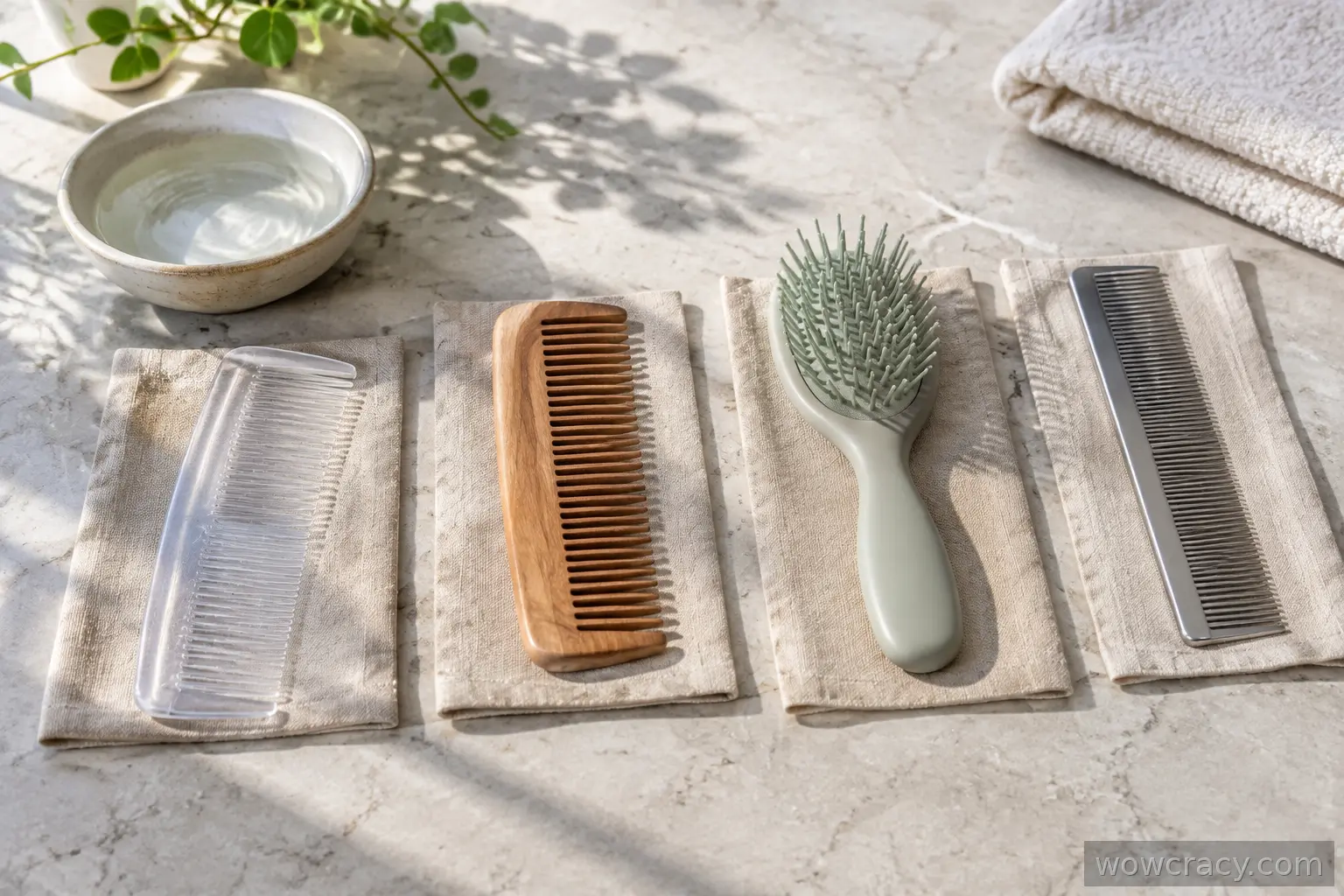
To avoid keeping everything in your head, use the table. It helps you quickly determine which method is acceptable for your tool.
| Material or construction | Water exposure | Cleaning | Drying |
|---|---|---|---|
| Solid plastic | Wash if the manufacturer allows it | Approved mild cleaner | Air-dry |
| Wood | Do not soak | Dry or barely damp cloth, as directed | Wipe dry immediately, then air-dry |
| Cushioned brush | Keep water out of the body and openings | Damp cleaning brush or cloth | Position specified by the manufacturer |
| Metal parts | Follow instructions for the complete tool | No abrasives | Remove moisture thoroughly |
Material is only a starting point. The instructions for the particular model take priority, including the cleaner, water exposure and drying position.
How often to wash a comb and brush
Remove loose hair after use and inspect your brush regularly. Heavy styling-product use may call for weekly cleaning or more often; light build-up may need less frequent cleaning. Follow visible dirt and stickiness rather than a fixed calendar. Wood needs a gentler cleaning method, not necessarily less frequent attention.
A sign that it is time to wash: a grey film has appeared on the bristles, the tool sticks to your hands, or after combing your hair seems dirtier than before.
When the tool should be replaced
Even the best care does not make a comb eternal. Here are the signals that indicate it is time to look for a replacement:
- The teeth have started to crack or break.
- The wood has delaminated, burrs have appeared that catch the hair.
- Cracks have appeared on the soft base or it has come unstuck from the handle.
- The bristles have become deformed, frayed or fall out in clumps.
- A persistent unpleasant odour has appeared that does not go away after washing.
- The plastic has changed colour or become sticky — material degradation may have begun.
Do not try to repair a cracked wooden comb with glue: the burrs can injure the scalp. Replacement is the safer solution.
Practical tips for daily care
Store the tool only when completely dry, away from splashes and persistent damp. Do not put a wet brush in a closed drawer, bag or case.
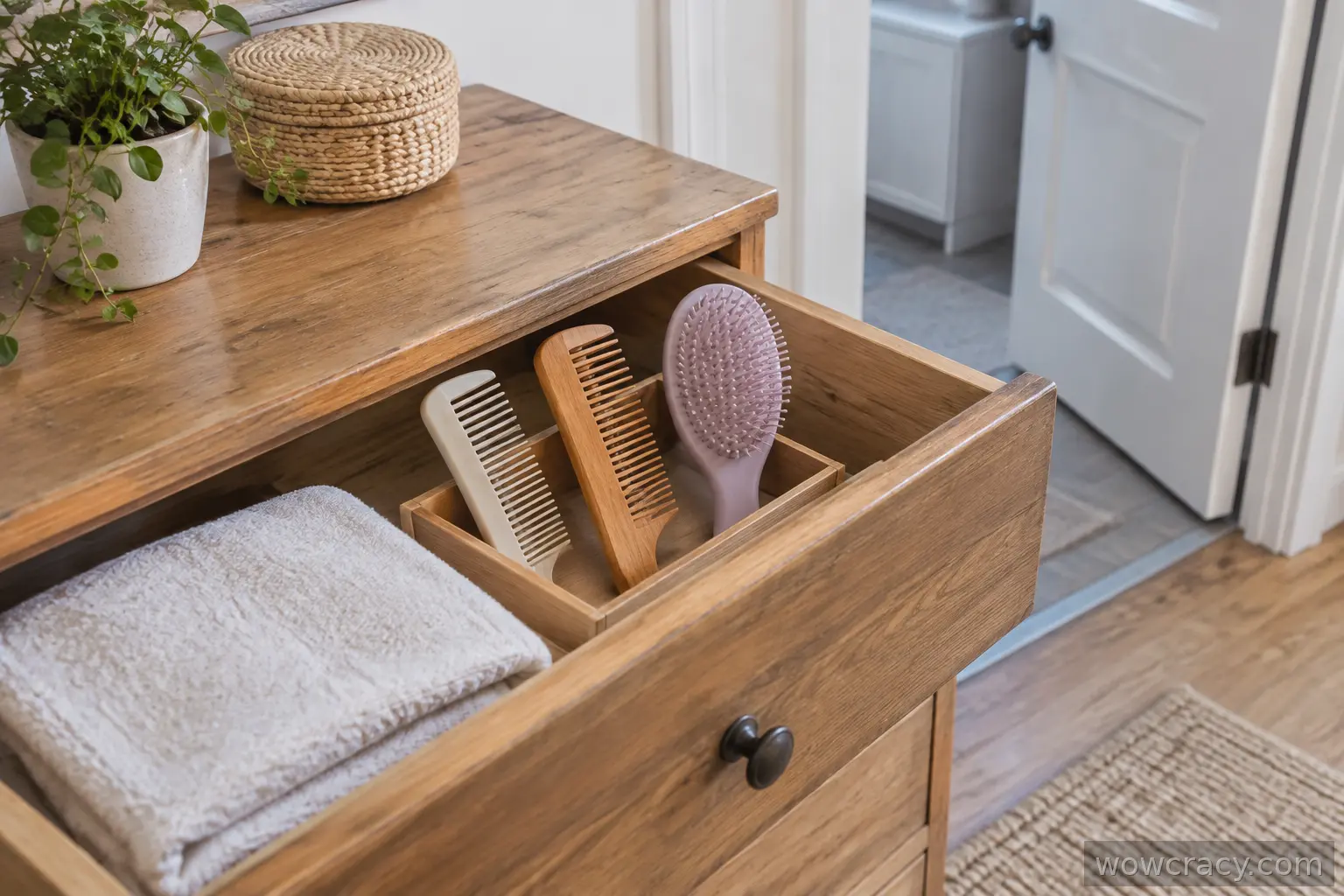
Do not share a comb with other people, especially if there are scalp problems. This is a simple hygiene rule that reduces the risk of transmitting microorganisms.
For natural bristles, use a cleaner approved by the manufacturer. Not every shampoo or conditioner is suitable for a brush; some leave a coating. Keep wooden and glued parts out of soaking water.
Frequently asked questions
Can a comb be washed in a dishwasher?
No, most combs and hairbrushes are not intended for dishwashers. High temperature and aggressive products can deform plastic, delaminate wood or damage the glued joint.
How to remove hair from a brush if it is tangled very tightly?
Gently loosen the hair with your fingers or a suitable brush-cleaning tool without piercing the cushion. Do not pull sharply. Wet the bristles only if the instructions for your model allow it.
What should I use to wash a wooden comb so as not to damage it?
If the manufacturer permits it, use a well-wrung soft cloth with a little mild soap, remove the soap with a clean barely damp cloth and wipe the surface dry. Do not soak wood.
How often should a hairbrush be replaced?
There is no universal replacement interval: construction and condition matter. Replace a brush with cracks, splinters, damaged teeth, a separating cushion or persistent odour rather than replacing it solely because a year has passed.
A simple cleaning checklist
Let us summarise the practical sequence that suits most tools:
- Remove loose hair while the tool is dry.
- Check the material, construction and care instructions.
- Use an approved mild cleaner without abrasives.
- Remove cleaner residue without soaking delicate parts.
- Air-dry in the position recommended for the model.
- Inspect the teeth, bristles and cushion; stop using a damaged tool.
This approach removes build-up while limiting unnecessary water and heat exposure. If general advice conflicts with the instructions for your brush, follow its instructions.