At 21:40 you finally sit down with a cup of tea, and on the table there’s a tab with a course you opened a week ago. Twenty minutes until bed. It seems like you won’t manage to get anything done in that time, and that’s exactly why the lesson gets postponed again to “when there’s more time.” The problem here isn’t the twenty minutes, but the fact that learning still has no concrete shape: it’s unclear what exactly to do during those twenty minutes and how to know that they weren’t wasted.
Short sessions work if you treat them not as a scaled-down version of a big course, but as a separate format with its own rules. Below is a plan you can put together in one evening and follow for weeks, even if your schedule keeps changing.
- First, not “to learn” but “to be able to do”
- What actually fits into 20 minutes
- How to alternate explanation, practice and review
- An example week for mastering spreadsheets
- How to combine learning and family without feeling guilty
- How to check progress without grades and tests
- What to change in the plan after missed sessions
- Frequently asked questions
- Can I learn two skills at once in 20 minutes a day?
- What should I do if there’s no quiet place at home?
- Do I need notes if the sessions are short?
- When should I change a skill or give it up?
- A short algorithm for today
First, not “to learn” but “to be able to do”
The desire to “learn to work with spreadsheets” is too vague to fit a twenty-minute session around. The brain doesn’t understand where the finish line is, so each session seems endless and is easily cancelled in favour of laundry or a TV series.
Reframe the goal as an action you’ll be able to perform on your own, without prompts. Not “learn Excel,” but “put together the family’s monthly budget in a table with automatic totals.” Not “improve English,” but “hold a ten-minute conversation with a colleague about the holiday schedule.” Not “get to grips with a photo editor,” but “retouch five family photos for printing.”
Such a goal gives you three things: a clear completion criterion, a natural division into small steps, and the ability to test the result on a real task rather than on a test. If the goal still sounds abstract, ask yourself a simple question: what do I want to be able to do in six to eight weeks when someone asks me to demonstrate it?
It’s worth defining the boundaries right away. For a budget in a spreadsheet, it’s enough to learn formatting, simple formulas and totals — leave macros and complex functions for later or don’t touch them at all. Narrowing doesn’t diminish the skill, it makes it achievable.
What actually fits into 20 minutes
Twenty minutes isn’t time to “scroll through the material.” It’s time for one small cycle: watch an explanation, immediately repeat the action with your own hands, and briefly reinforce it. If you break the session down too finely, you’ll spend all your time getting back into context; if too coarsely, you won’t manage to do anything on your own.
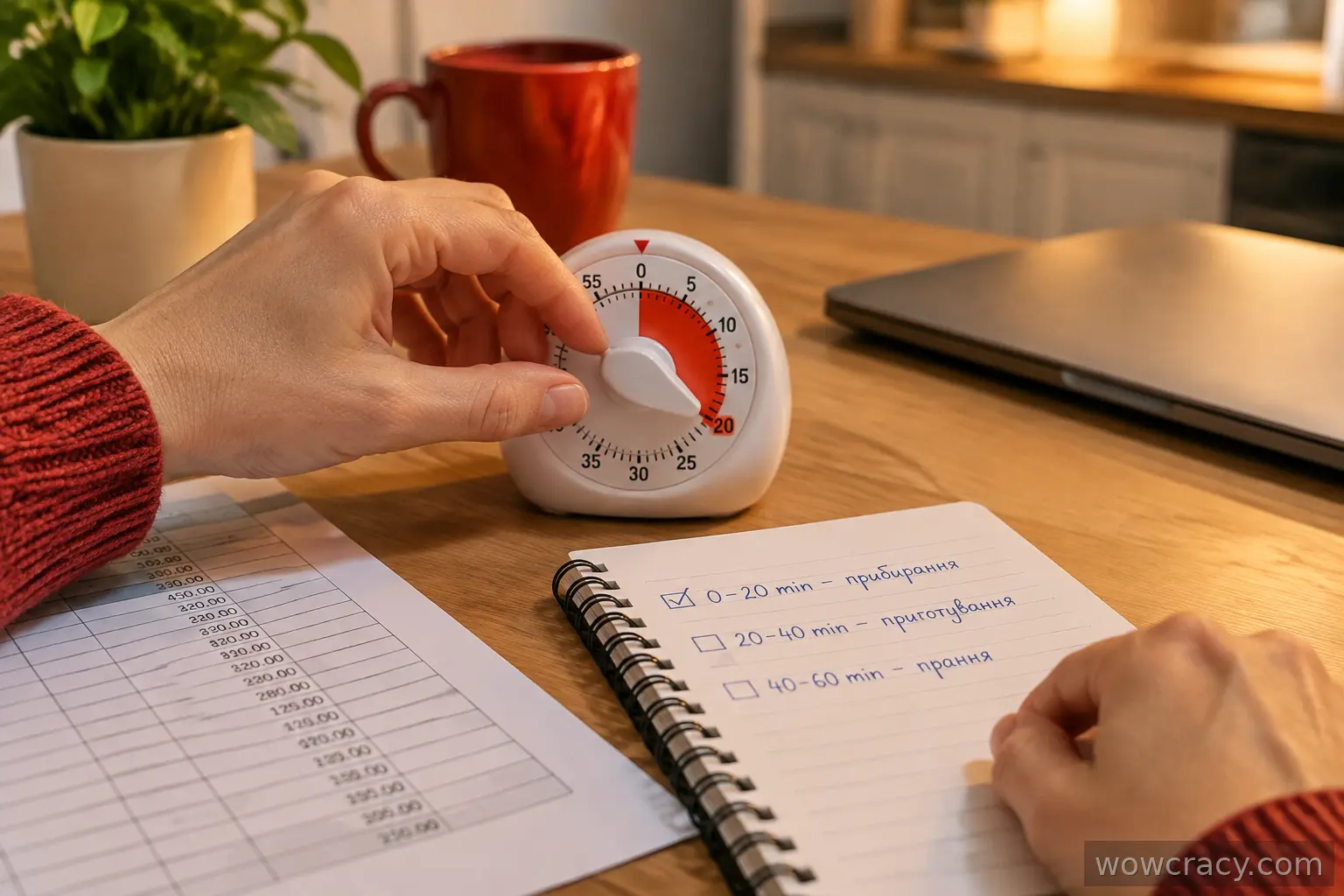
An approximate breakdown for one session:
- 3–4 minutes — returning to yesterday: what you did, what worked, what you forgot.
- 5–7 minutes — a new explanation or walkthrough of an example, preferably with one specific question in advance.
- 8–10 minutes — your own practice on a real file, document or situation.
- 1–2 minutes — a short note: what works now and what remains unclear.
Practice should be greater than consumption of material. This is the main difference between short learning sessions and watching videos at 1,5 speed. If you only watched and listened for twenty minutes, next time you’ll have to start almost from scratch.
A separate note on preparation. The most time is eaten up not by the learning itself, but by finding the file, the password, the right tab. Keep everything in one folder or on one tab and open it in advance — this saves those very five minutes that are always in short supply.
How to alternate explanation, practice and review
The most common mistake is learning something new every day without returning to the old. With short sessions this is especially harmful: new material displaces the previous material faster than you can reinforce it.
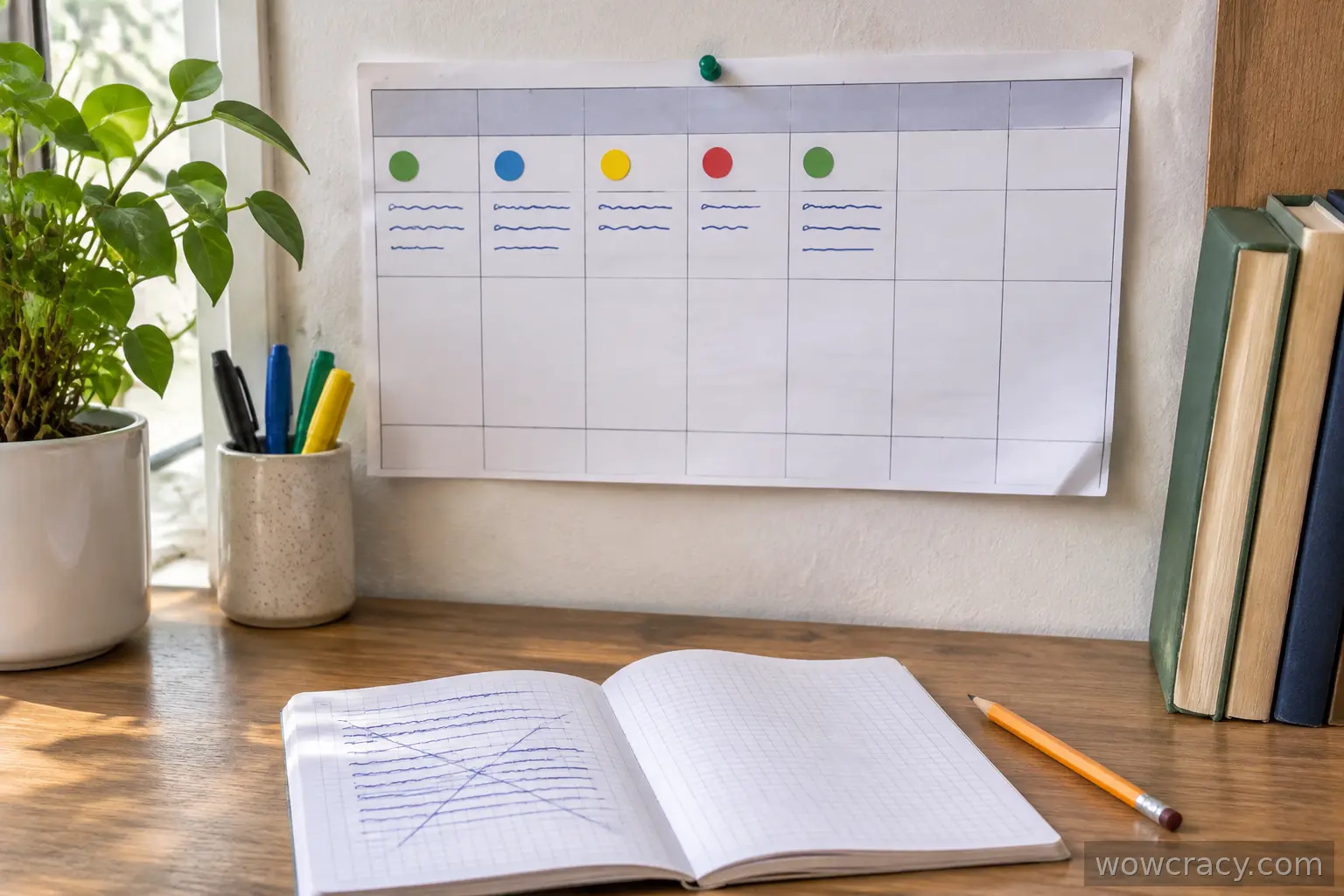
A workable weekly scheme for one skill looks like this: two or three sessions on new material, one on reviewing the previous material, one on a practical task that brings together everything learned. Review doesn’t mean rereading your notes: it’s an attempt to reproduce the action without a prompt. It’s exactly this effort that reinforces the skill.
An example week for mastering spreadsheets
Suppose the goal is to put together the family budget in a table with automatic totals by category. The week might look roughly like this:
| Day | What we do in 20 minutes | What should remain after the session |
|---|---|---|
| Monday | Create the file, enter the column headers, learn to format the date and amount | A table with five rows of real expenses |
| Tuesday | Review yesterday’s material without a prompt, add a simple addition formula | A column with a total for one day |
| Wednesday | New topic: expense categories and sorting | A list of 4–5 categories of your own |
| Thursday | Review: reproduce the formula and sorting on new data | Errors fixed that you didn’t notice yesterday |
| Friday | New topic: total by category | One working total formula |
| Saturday | Practical task: enter the week’s expenses and check the totals manually | A finished table you can show to another person |
| Sunday | A free day or 10 minutes to review your notes | An understanding of what to carry over to next week |
Such a schedule doesn’t require daily heroism. If Saturday falls through, it’s no big deal: the practical task moves to Sunday or Monday, and the week’s topic stays the same. What matters is not turning a missed session into a reason to start all over again.
How to combine learning and family without feeling guilty
Twenty minutes are easily “eaten up” by household chores if they don’t have a protected place in the schedule. Agree with your household on a specific time — not “sometime in the evening,” but, for example, from 21:00 to 21:20, when the children already have something to do and your partner knows you’re busy. This isn’t selfishness, but a way to avoid constant internal bargaining.
For learning after work, tying it to an existing habit works well: right after dinner, before your favourite TV series, on the commute home. What matters is that this time doesn’t compete with the hardest tasks of the day — otherwise it will lose every time.
If it’s noisy at home, don’t hesitate to use headphones with wordless music or short windows when no one disturbs you. But don’t try to study while cooking dinner or talking to a child: divided attention turns twenty minutes into zero.
It’s also worth thinking separately about a week when everything goes off plan — a child’s illness, a crunch at work, guests. On such days it’s better to cut the session down to five minutes of review than to cancel it entirely. The minimal version preserves the habit, while a full pause destroys it.
How to check progress without grades and tests
A grade of “good” or “bad” says nothing about the skill. It’s far more useful to regularly perform the same practical task and compare the result with the previous one. For spreadsheets, this could be the same budget file: at first you fill it in manually, two weeks later — with formulas, two weeks after that — with totals by category.
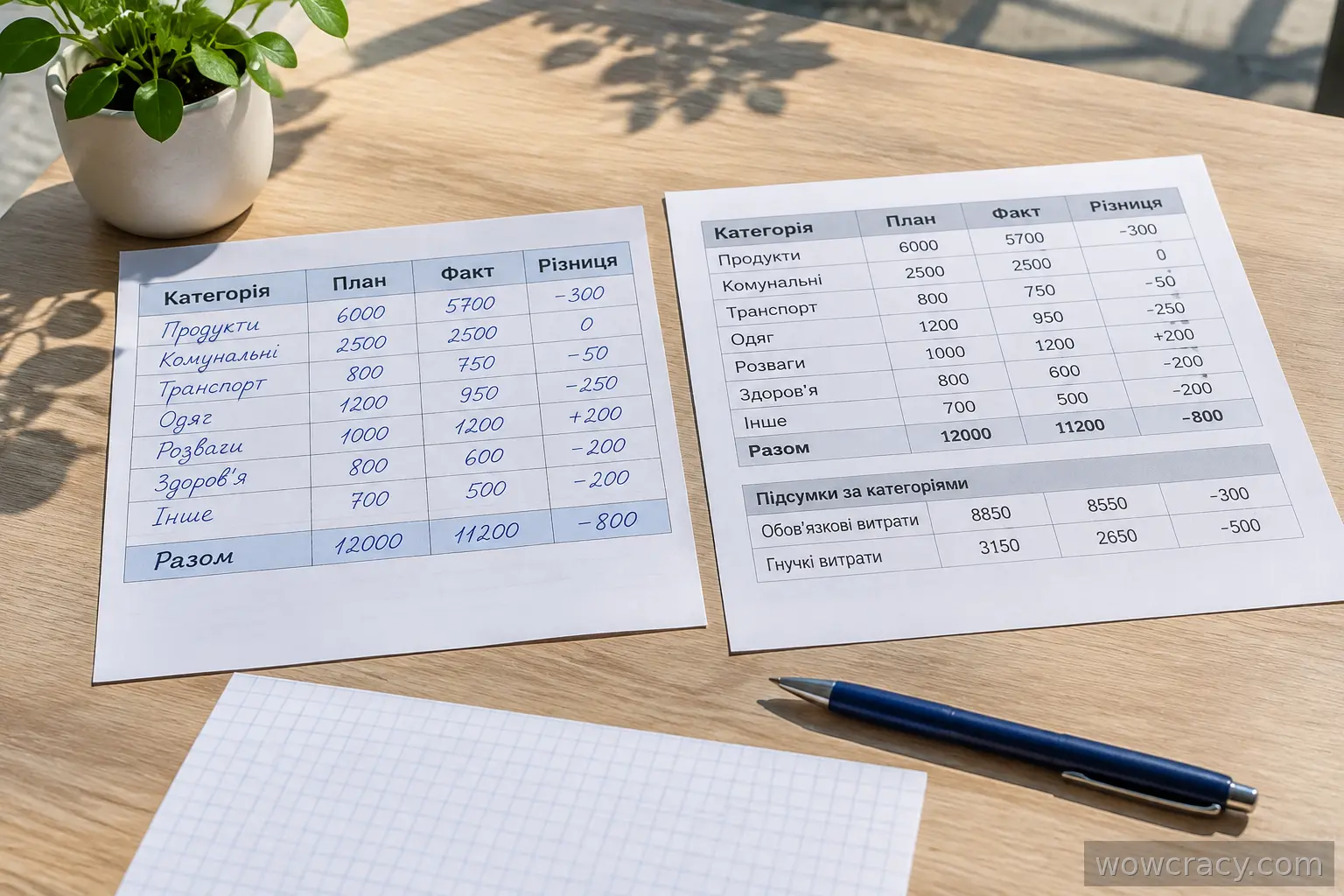
Useful markers of progress:
- you perform the action without a prompt, even if slowly;
- you notice your own mistakes and can correct them;
- you explain to another person what you’re doing and why;
- a task that previously took twenty minutes now takes ten.
These signals are more reliable than the percentage of a course watched. They show that the skill is moving from “I’ve seen how it’s done” to “I can do it myself.” At the same time, don’t expect quick results: with twenty minutes a day, real progress becomes noticeable over a few weeks, not a few sessions.
What to change in the plan after missed sessions
A missed session is a normal part of learning, not proof of a lack of discipline. The problem arises when a person tries to make up for everything at once: doubles the sessions, sits over the material for hours and after a few days is completely exhausted. After that, learning is abandoned altogether.
A more practical rule: after a break, return not to the place where you stopped, but to the last action you confidently performed on your own. Devote one session to reviewing that action, and only then move on. This way you restore confidence rather than fight a debt.
If the break was long — several weeks — it’s worth reviewing the plan itself. Perhaps the topic was too big for your time, or the session was in an unfortunate place in the schedule. Sometimes it’s enough to move your learning to the morning or shorten the session to ten minutes for it to become real again.
And one more thing: don’t compare your pace with someone else’s. Courses and social media often create the impression that a skill is mastered in a month. For a person with a job and a family, a more realistic horizon is two to three months for one specific skill, and that’s perfectly normal.
Frequently asked questions
Can I learn two skills at once in 20 minutes a day?
You can, but not in the same twenty minutes. Divide them by days of the week or by time of day, so that each skill gets a full cycle of explanation and practice. If time is short, it’s better to focus on one — that way the result will be more noticeable.
What should I do if there’s no quiet place at home?
Any place where you won’t be disturbed for twenty minutes will do: the kitchen after dinner, the balcony, the car in a parking lot, a room with headphones. The main thing is to prepare your materials in advance and warn your household so that this time isn’t interrupted.
Do I need notes if the sessions are short?
Full notes take time that’s better given to practice. A few lines at the end of a session are enough: what worked, what didn’t, what to do next time. These notes will help you quickly remember where you stopped after a break.
When should I change a skill or give it up?
If after several weeks of regular sessions you see no practical result and get no enjoyment from the process, it’s worth reviewing the goal. Perhaps it’s too broad or doesn’t match your real needs. This isn’t a defeat, but useful information for the next plan.
A short algorithm for today
Choose one skill and formulate it as an action you’ll be able to perform on your own. Decide what exactly you’ll do in twenty minutes tomorrow, and prepare the files or materials for it. Protect this time in your schedule and warn your household. At the end of the session, write two or three lines about the result. If you miss a day — return to the last confident action, not to the whole course at once. And remember: twenty minutes a day, repeated over several weeks, gives more than rare hour-long bursts after which learning is again postponed to an indefinite time.