
You open a resume template and notice that your last job ended several years ago. A career break may involve childcare, caring for a relative, health, relocation, study or job searching. You do not need to disguise it: your resume should give an honest, clear account of your experience and its relevance to the role.
Briefly identify the period, then focus on your current skills and the work you can do. This makes the resume easier to follow, but cannot guarantee an employer’s response. You do not need to apologize, invent employment or share private details.
- Which resume structure to choose after a break
- How to briefly mark a break in a resume
- How to confirm the relevance of skills after a pause
- Which details can be left undisclosed
- Examples of wording for different situations
- How to answer questions about the break at an interview
- What to check before sending your resume
- Frequently asked questions
- Is it mandatory to indicate the reason for the break in a resume?
- Can I omit the break altogether?
- What if during the break there was no training or projects at all?
- Should volunteering be listed as work experience?
Which resume structure to choose after a break
Choose a format that suits your experience and the application requirements. Reverse chronological order makes your employment history clear. If helpful, add a short profile and key skills before it: a hybrid format. No format is best for everyone; keep dates accurate and relevant experience easy to find.
In a hybrid structure, after contacts and a short profile comes the “Key Skills” or “Professional Competencies” block, then “Work Experience” in reverse chronological order, followed by education, courses, languages, volunteering. This order allows you to first show what you can do now, and only then — when exactly you could do it. The pause does not disappear, but it stops being the main topic of the document.
If the break was very long or the experience before it no longer matches the market, it is worth considering an option where the “Experience” block is presented briefly, and the “Projects” or “Practice” block — in more detail. For example, a person who after ten years in accounting took data analytics courses can put first training projects on processing financial statements. This is not a fabrication: they really did them, just within the framework of training, not an employment contract.
You should not choose a format that hides dates completely. Recruiters are used to seeing years, and their absence raises more questions than an honestly marked pause. The structure should help the reader, not force them to guess.
How to briefly mark a break in a resume
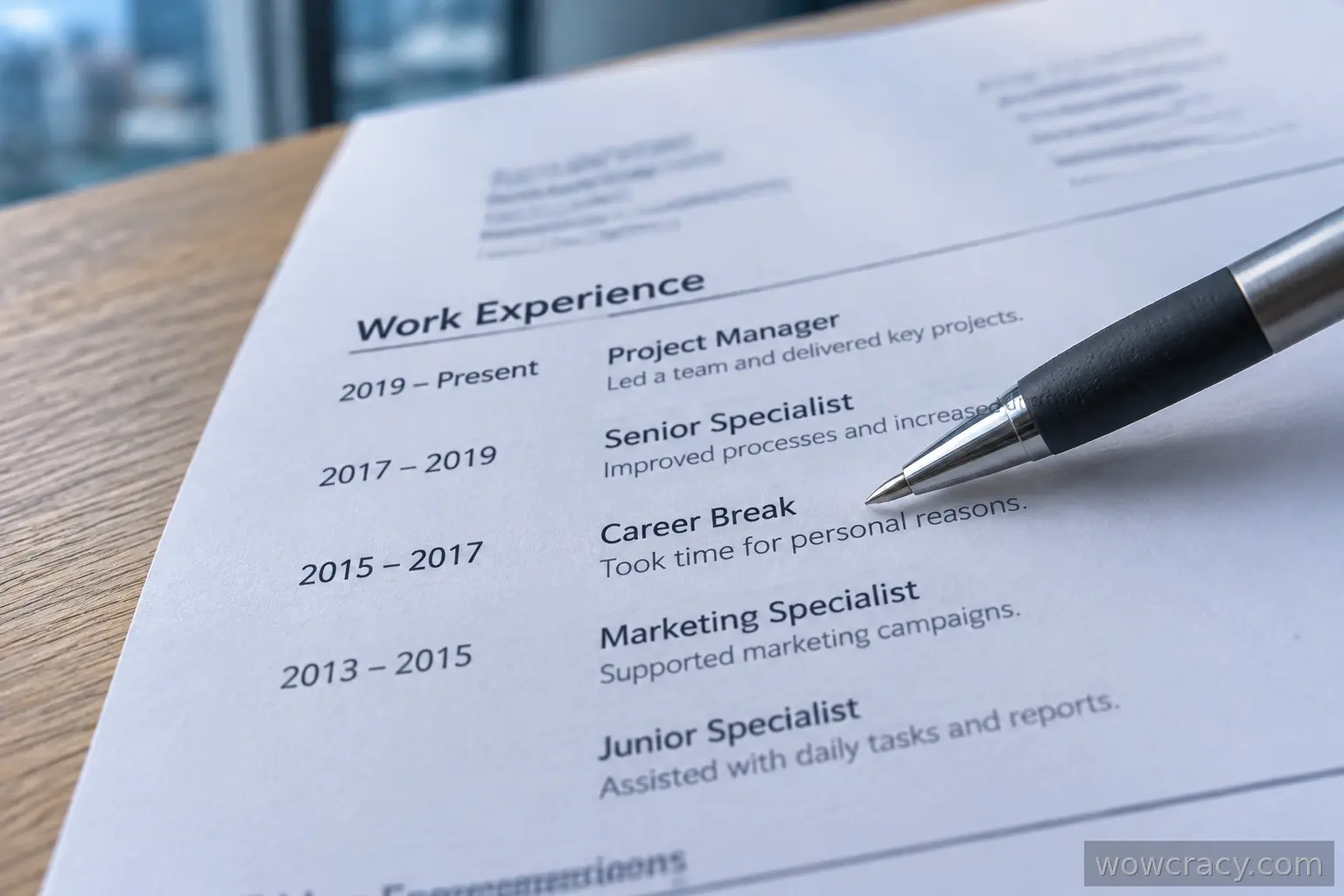
For a long break, a short entry with the dates is usually enough. You can give a neutral reason if you wish to share one; a personal history is unnecessary. Compare these two illustrative examples.
Too much personal detail: “Difficult circumstances forced me to interrupt my career, and I could not find work for a long time, so I am now ready for any position.” This uses space without explaining your suitability for a particular role.
More concise: “2021–2024 — career break for family reasons. Now returning to project management.” Add a course, certification or volunteer project only if it actually happened. You do not need to have undertaken these activities during your break.
If you want to give a reason, a broad description is enough: “caring for a family member,” “career break for personal reasons,” or “study and career change.” Diagnoses, family disputes and treatment details do not help describe your professional experience.
Distinguish formal parental leave from time outside employment caring for a child: use the description that fits your situation. For a health-related break, a neutral “career break” can avoid medical details. Do not claim “fully restored work capacity” simply to reassure an employer: a chronic condition or disability does not by itself determine your ability to do a particular job.
Keep dates consistent across sections. Check records if you cannot remember them accurately, rather than inventing months to create a seamless timeline. Genuine overlapping jobs or periods of study can be shown as such.
How to confirm the relevance of skills after a pause
Show evidence of skills relevant to the role: previous work results, a portfolio, an independent project or recent training. Study, freelance work or volunteering during the break can also be included if applicable. You do not need to fill the break retrospectively with “productive activity.”
Specific examples are more useful than broad claims: name a course you actually completed, its year and a task you carried out. For work or volunteer projects, describe your contribution and results you are permitted to share. Do not disclose confidential reports or other people’s personal data to substantiate your experience.
If you kept up with changes in your field, name a relevant webinar, publication or tool you explored. If you did not, do not add these activities to fill space. Instead, identify what you need to update now and describe your next steps realistically.
For technical specialties, links to GitHub, a portfolio, or independent projects work well. For writing and language roles — texts, translations, event organization. For managers — volunteer coordination, which in structure resembles project management. The main thing is to show that your skills are not outdated, or that you have consciously updated them.
A cover letter can briefly explain your interest in the role and relevant experience. For example: “I am returning to marketing; my audience research experience matches your team’s needs.” You do not need to say that every personal circumstance has been “resolved” or promise full-time availability if you seek a different schedule.
Which details can be left undisclosed
Keep the resume focused on qualifications and job requirements. Rules on health questions, checks and personal information depend on the country, role and stage of recruitment. A blanket instruction to “disclose anything that might affect work” is therefore inappropriate. A neutral description of the break is usually enough for the resume itself.
If you need workplace or scheduling adjustments, consider which conditions would help you perform the specific tasks. Discuss them at an appropriate stage under the applicable local rules. This is separate from explaining a career break; your resume does not need to prove “complete recovery.”
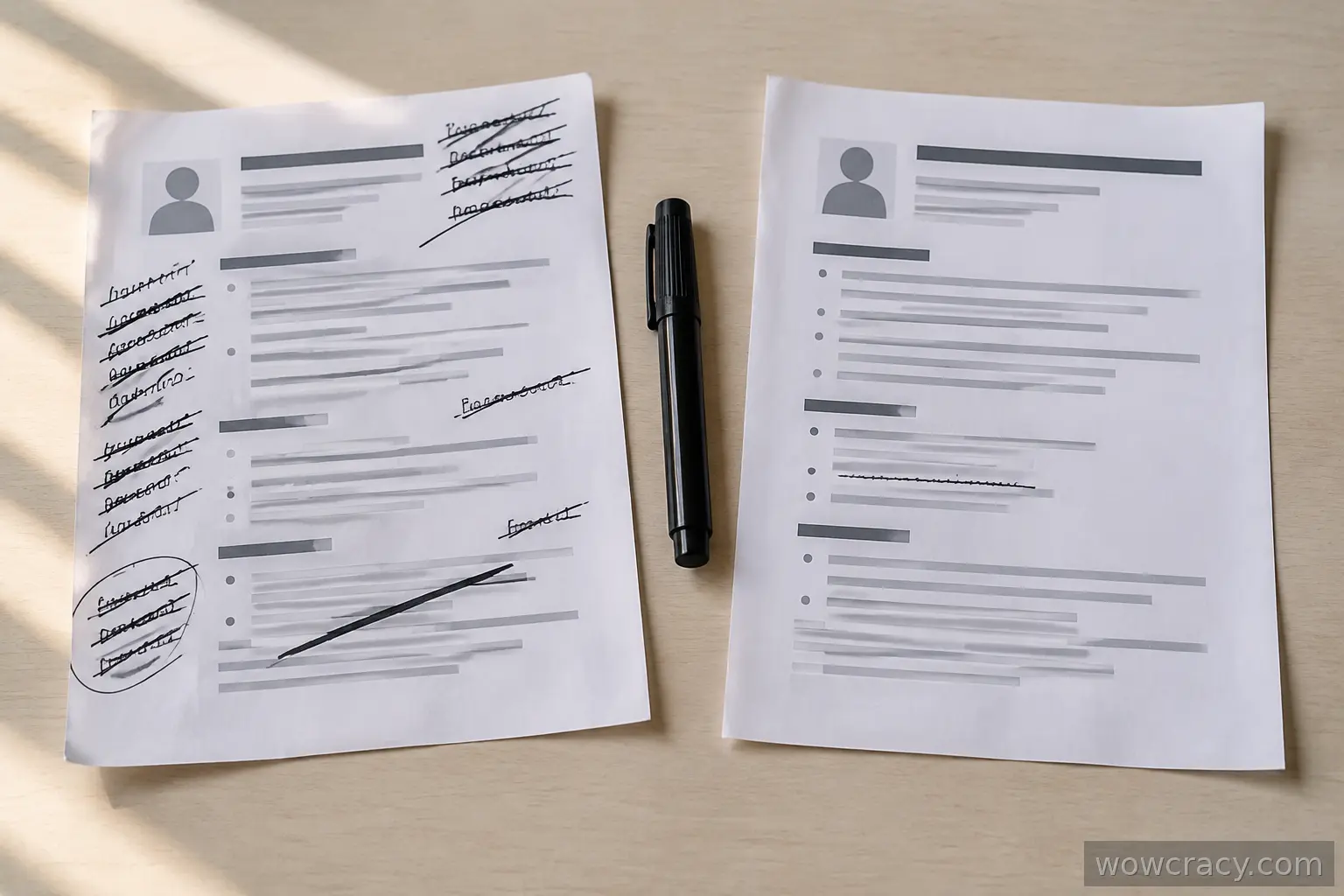
A child’s age, treatment history or family disputes are usually unnecessary in an account of your experience. If asked about the break, you can answer briefly: “These were personal circumstances. I would like to discuss how my experience fits your needs.” Do not add details you do not wish to share.
If a role involves specific checks or medical requirements, clarify their legal basis, the information required and when it should be provided. Submit necessary documents through an agreed secure channel rather than putting medical information in a general resume. Do not make false statements; if uncertain, check the rules where you are applying.
Examples of wording for different situations
The table gives illustrative wording and dates. Use only descriptions that fit your circumstances; activities in the final column are optional and must be genuine.

| Situation | Illustrative wording | Optional addition, if applicable |
|---|---|---|
| Childcare | 2020–2023 — career break for childcare | A course or volunteering |
| Caring for a relative | 2022–2024 — career break for family reasons | Recent training |
| Health | 2021–2023 — career break | Relevant skill evidence without medical details |
| Career change | 2022–2024 — study and retraining | Training projects or portfolio |
| Job search | 2023–2024 — job search | Actual job-search activities |
Your break may have involved only caring responsibilities, recovery or job searching. Do not supplement it with invented courses or networking. Briefly identify the period and show the experience you have; if helpful, separately describe genuine steps you are taking to return now.
Another example for a cover letter: “After three years outside paid work, I am returning to marketing. During this time I completed two courses, managed communications for a volunteer project, and updated my portfolio. I am ready to discuss how this can be useful to your team.” There are no excuses here, nor excessive frankness.
How to answer questions about the break at an interview
Prepare for a question about the break, although it may not be asked. A short answer can connect the period, relevant experience and your interest in the role. You do not need to apologize for the break or recount personal difficulties.
For example: “Yes, I had a career break for family reasons in 2021–2024. I am now returning to analytics and would like to discuss how my previous experience matches your needs.” If asked for personal details, you can say: “I would prefer to focus on the professional side.” Mention courses and projects only if applicable.
Prepare one or two specific reasons the role interests you: the tasks, sector or opportunity to use particular experience. This helps move the conversation from the past break to possible future work without guessing the recruiter’s motives.
What to check before sending your resume
Before you click “Send,” go through a short checklist. It will help you avoid common mistakes that arise specifically in a resume after a break.

- Work and break dates are accurate and consistent.
- Any reason given avoids unnecessary personal details.
- Skills are supported by genuine relevant examples; courses during the break are optional.
- Dates agree across sections; genuine concurrent work is shown accurately.
- The profile explains current skills and fit for the role.
- A cover letter, if needed, adds relevant facts rather than apologies.
Read the resume as someone who does not know you. Are the relevant skills, experience and timeline clear? If not, improve the profile and work examples. A clear resume cannot guarantee an offer, but gives a more accurate picture of your application.
Frequently asked questions
Is it mandatory to indicate the reason for the break in a resume?
In a general resume, you can use a neutral description of the period without personal details. If a separate application form requests more information, check the requirements for that role and country. There is no single legal rule covering every application.
Can I omit the break altogether?
Not every short gap needs its own entry. For a longer period, a “career break” entry can make the timeline clearer. Either way, do not extend employment dates or invent work to conceal a gap.
What if during the break there was no training or projects at all?
Do not invent experience. Write the truth: “break for personal circumstances.” At the interview, emphasize your readiness to catch up quickly and the specific steps you have already taken to return.
Should volunteering be listed as work experience?
Yes, if it is related to the position. Mark it as a separate block or in the “Additional” section so that it is clear: this is not paid work, but real practice.
The most reliable strategy for a resume after a break is not to hide the pause and not to justify it. Mark the period neutrally, show what you did to return, and let the employer see your present value. If in doubt, start with the profile: one paragraph about who you are now and what you can do for the team often matters more than any explanation of the past.