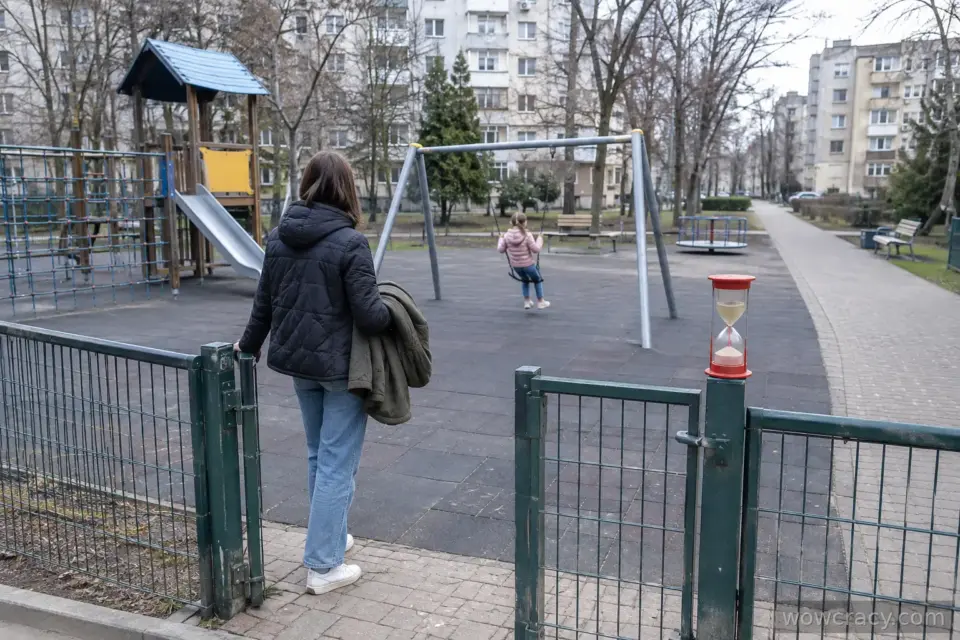
At half past six in the evening you say: “Time to go home.” Your child jumps off the curb one more time, grabs the swing, and shouts that they won’t leave. You feel irritation rising and want to say: “If you don’t come now, we’ll never come again.” Sound familiar? Such a reaction is understandable, but it doesn’t help end the outing—it only adds tension.
The goal of this guide is to show how to leave the playground without threats, punishments, or bargaining, while maintaining respect for the child and for your own boundaries. You will find specific phrases, a sequence of actions, and explanations of why this works.
- Why the child resists and what it means for parents
- How to warn about the end of play: signals the child understands
- What choice can be offered to maintain boundaries
- What to do during strong protest: step-by-step sequence
- How to discuss the situation after calming down
- What mistakes parents most often make
- A short algorithm for the next outing
- Frequently asked questions
- How many times should the warning be repeated?
- Can I let the child cry?
- What to do if the child runs away from the playground?
- Does a timer warning help?
- What is important to remember
Why the child resists and what it means for parents
Preschool children can find it difficult to stop an absorbing game and move to another activity. Self-regulation and an understanding of time are still developing, while tiredness, hunger or too much stimulation can make transitions harder. Consider the situation and the child’s needs when trying to understand a protest.
A predictable leaving routine helps a child understand what comes next. Try to follow a clear agreement and explain changes. A strong protest does not prove that parents have been inconsistent: children differ in how they respond to tiredness and transitions.
Check basic needs first: is the child hungry, tired, too hot or overwhelmed by noise? Having eaten or slept recently does not rule out discomfort. Adapt your help to their condition rather than labelling them stubborn simply for protesting.
How to warn about the end of play: signals the child understands
Try preparing your child in advance, for example: “Five more minutes, then we’ll get ready to go home.” Near the end, name one final action: “One more slide, then we’ll go to the exit.” This is an option to try, not a rule that works for every child. Johns Hopkins Medicine recommends preparing children for transitions between activities.

Keep the message short and specific. Instead of “soon”, try: “One more slide, then we’ll pick up the backpack.” Choose an ending that fits the time you actually have, without starting another long play session.
If visual cues make sense to your child, try a timer or a simple picture sequence. A clock hand is useful only if the child understands that agreement. Treat the timer as a cue rather than a punishment; choose another approach if it increases distress.
Make sure your child has heard you: move closer, use their name and calmly repeat the agreement. One reminder may be enough, or another may help. There is no universal number of warnings.
What choice can be offered to maintain boundaries
Offer a small, genuine choice with two options you can accept: “Shall we walk to the exit holding hands or side by side?” or “Shall we wave to the slide or the swings first?” The American Academy of Pediatrics recommends simple, limited choices. Do not offer another hour if you cannot stay.
Once it is time to leave, the choice concerns how to make the transition. Try: “Will you carry the backpack, or shall I?” or “Shall we take the short route or go past the tree?” Offer only safe routes that fit the time available.
Sometimes it’s appropriate to offer a choice about the farewell ritual: “Wave to the swing with your hand or say ‘goodbye’ out loud?”. This helps the child emotionally complete the play.
Don’t offer a choice with punishment as an alternative. The phrase “Either you go or I’ll leave you here” is not a choice but a threat. It destroys trust and doesn’t teach the child cooperation.
What to do during strong protest: step-by-step sequence
During intense crying or shouting, a child may struggle to take in long explanations. Focus on safety, a calm voice and a short, clear message. Save discussion of the cause for a time when they can listen.

- Pause and take a breath. Use a steady voice and check that your child is in a safe place.
- Acknowledge the feeling briefly. “You’re upset because you want to keep playing.” Do not demand an answer during intense crying.
- Repeat the boundary. “It’s time to go home. I’ll help gather our things.” Longer explanations can wait.
- Offer help. Ask whether they need a hand or help with their belongings. Do not pull them by the arm or use carrying as a punishment.
- Leave together. Do not walk to the gate expecting your child to follow. If it is safe, allow a short pause and stay close; if there is immediate danger, stop the unsafe movement and move the child to safety.
If the child physically resists (pushes, grabs a post), don’t use force except when there is a safety threat. Wait a few seconds, reduce the number of words to one phrase: “I’m here. Time to go home.” Sometimes you just need to stand nearby until the wave of emotions subsides.
A strong protest alone does not indicate poor parenting or establish a single cause. Stay close and help your child get through the difficult moment safely.
How to discuss the situation after calming down
Return to the conversation when both of you are calm enough to listen. There is no universal 20–40-minute waiting period. Instead of a reproach, ask: “What was hardest about leaving?” or “What could we try next time?” A short recap may be enough for a younger child.

Acknowledge your feelings too: “It was hard for me when you screamed. I understand you wanted to play.” This teaches the child that emotions can be discussed without shame. Then find a solution together: “Maybe next time we’ll bring a timer and you’ll say yourself when it’s finished?”.
Do not promise another visit unless you know it is possible. Say: “We won’t come back today. We’ll plan the next outing later.” If circumstances change, explain that simply.
What mistakes parents most often make
Even experienced parents sometimes resort to methods that seem quick but harm the relationship. Here are a few typical mistakes.
- Threats of punishment. “I won’t buy ice cream,” “I’ll leave you here,” “We won’t come again”—this creates fear, not understanding of the boundary.
- Bargaining. “Five more minutes” ten times in a row—the child understands that the boundary is unstable.
- Ignoring emotions. “It’s okay, stop it”—the child feels their feelings don’t matter.
- Unnecessary physical coercion. Grabbing by the hand and pulling by force increases anxiety and resistance.
- Inconsistency. Today you leave after a warning, tomorrow—at the first call. The child loses their reference point.
Avoiding these mistakes doesn’t mean being perfect. Sometimes you’re tired and react sharply. It’s important to notice this and return to calm interaction.
A short algorithm for the next outing
Here is a sequence you can apply today.
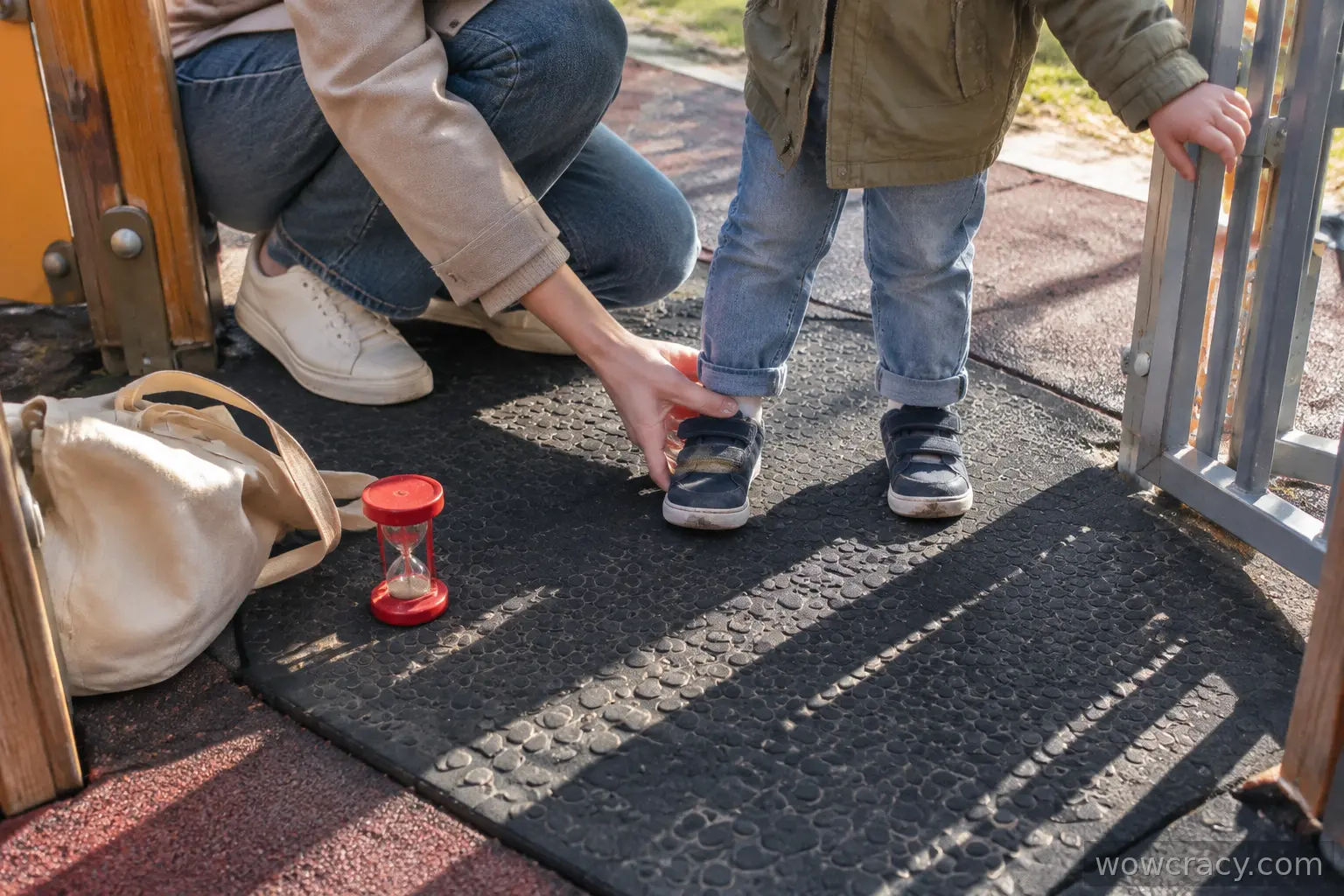
- Give an advance cue your child can understand.
- Name one final action that fits the time available.
- Calmly say: “It’s time to go home.” Courtesy is compatible with a clear boundary.
- Offer a small choice, such as who carries the backpack or which safe route to take.
- During a protest, shorten explanations, acknowledge feelings and check safety.
- Stay close and leave together, without pretending to abandon the child.
- Discuss the next transition when both of you are ready.
This algorithm doesn’t guarantee instant calm, but over time the child gets used to a predictable transition. The main thing is consistency and respect for feelings.
Frequently asked questions
How many times should the warning be repeated?
There is no fixed number. Try an advance warning and one short reminder, making sure the child has heard you. Then help them finish and leave together. Do not walk away to make them chase you.
Can I let the child cry?
Yes. You do not need to demand that crying stop immediately. Stay nearby in a safe place, avoid shaming and offer support. Crying does not remove the need to stop dangerous actions, such as running towards a road.
What to do if the child runs away from the playground?
First of all—safety. If the child runs beyond the boundaries, they need to be caught up and stopped. In this case, you can take them by the hand and say: “I won’t let you run onto the road. I’m holding your hand until we reach a safe place.”
Does a timer warning help?
A visual timer helps some children see that a transition is approaching. Others find it upsetting or uninteresting. Try it as a neutral cue and assess the response, without expecting guaranteed calm.
What is important to remember
Ending an outing is a skill that both children and adults master. Don’t expect everything to go smoothly the first time. But if you are consistent, respect the child’s feelings, and don’t resort to threats, the transition may become easier over time. Boundaries without threats are not permissiveness but clarity and care.
Speak with a paediatrician or child psychologist if episodes are frequent, prolonged, involve injury to the child or others, substantially disrupt daily life, or make safety difficult to manage. You can seek support sooner if the situation worries you.