Does your skin feel tight after washing, with flakes on your cheeks? Before adding products, review cleansing and moisturizing. “Dry” and “dehydrated” are common skincare terms, but they cannot tell you the cause of symptoms on their own.
Dryness and water loss can overlap. Basic care often starts with the same steps: reduce irritation and use a moisturizer that helps retain water. Symptoms, tolerance and any underlying skin condition guide the choice.
- What “dry” and “dehydrated” mean
- Signs worth observing
- Why the feeling of tightness does not give a precise answer
- How to simplify cleansing so as not to overload the skin
- How moisturizer ingredients work
- When flaking requires a dermatologist’s consultation
- Minimal changes worth trying first
- Frequently asked questions
- Can you determine your skin type on your own?
- Does drinking water help cope with skin dehydration?
- How long to wait for improvement after changing care?
- Can scrubs be used for dry skin?
- Is care for dry and dehydrated skin different in winter?
What “dry” and “dehydrated” mean
In cosmetic descriptions, “dry skin type” usually means a tendency toward low oiliness. Medical skin dryness is not simply a shortage of sebum: it also involves water loss and barrier function and can be temporary or persistent.
In skincare, “dehydrated” describes reduced water content. An oily surface does not rule out dryness or irritation. Flaking, fine lines and tightness cannot tell you whether skin separately lacks water or lipids.
The outer skin barrier is often compared with a brick wall: cells are the bricks and surrounding lipids the mortar. This is a simplified model. Barrier disruption and low water content can occur together rather than being two independent problems.
Signs worth observing
Note when symptoms appear, which areas are affected and what you applied. This is more useful for deciding the next step than a home test for an “exact type.”
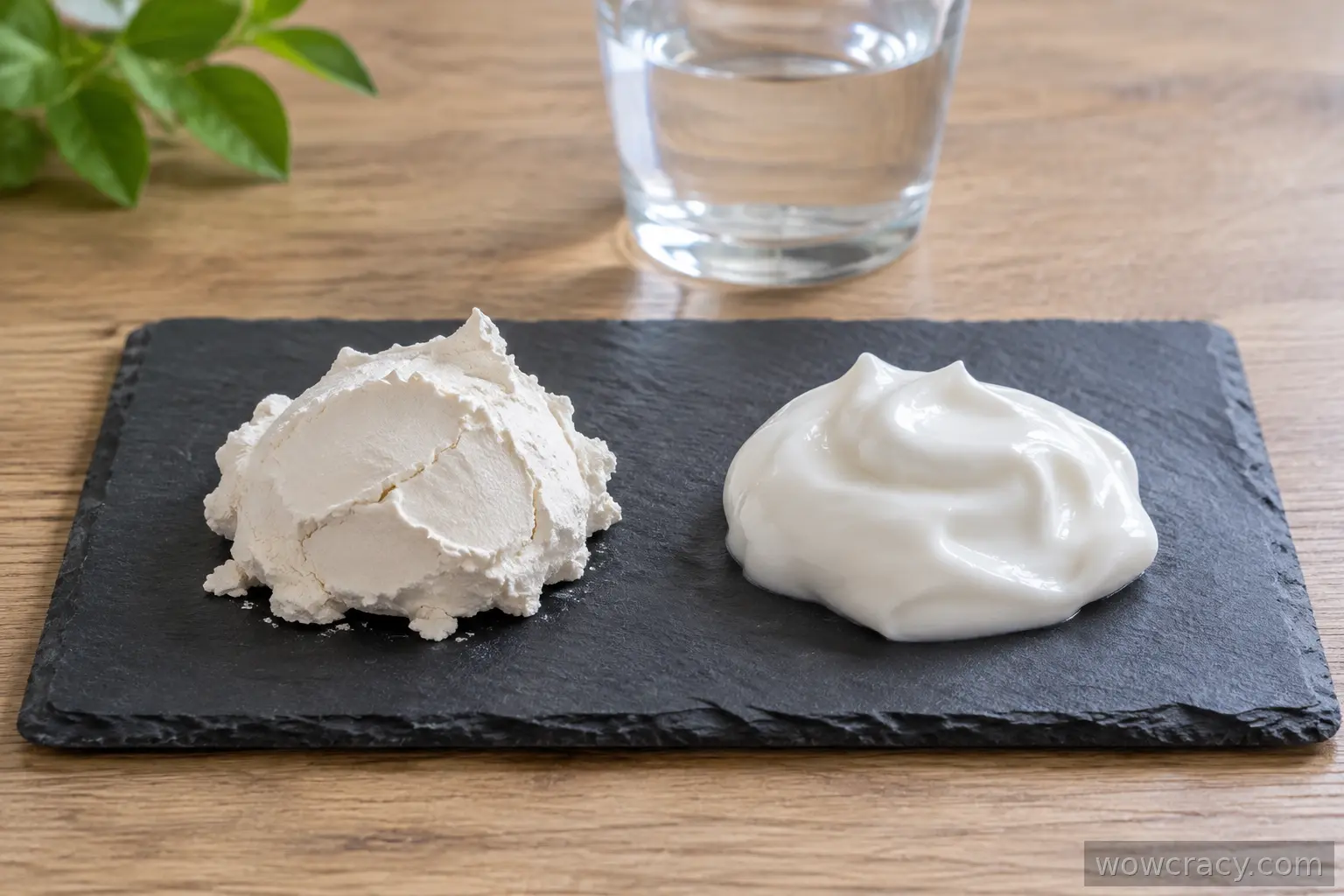
Common signs of dryness include:
- feels rough to the touch, sometimes with small flakes;
- has a dull appearance, may itch after a shower;
- reacts to aggressive cleansers with redness or burning;
- a light lotion may be insufficient for marked dryness; tolerance guides product choice.
Dryness or irritation can also appear as:
- looks dull but is not necessarily rough to the touch;
- has fine lines that smooth out quickly after a moisturizing product;
- may shine in the T-zone but feel tight after washing;
- sometimes reacts with redness to usual products that previously did not cause discomfort.
These lists overlap and are not a diagnostic test. For mild discomfort, simplify care and observe the response. Do not wait several weeks if there is pain, cracking, oozing or worsening symptoms; seek medical advice.
Why the feeling of tightness does not give a precise answer
Tightness after washing may reflect irritation or over-cleansing, but does not identify skin type. Check water temperature, washing frequency, rubbing and your response to the particular product.
Hot water and prolonged washing can worsen dryness. Try lukewarm water and brief, gentle cleansing. Persistent tightness despite changes needs assessment of the cause rather than simply another cream.
Another myth — “you need to drink more water and dehydration will pass.” Water from within is important for overall health, but it does not always solve the problem of dehydration of the stratum corneum. The skin receives moisture from the body, but if the barrier is damaged, it quickly loses it to the outside. Therefore, external moisturizing and barrier protection remain key.
How to simplify cleansing so as not to overload the skin
Start by reviewing products and habits followed by burning or tightness. Avoid introducing several products at once, which makes reactions harder to identify.
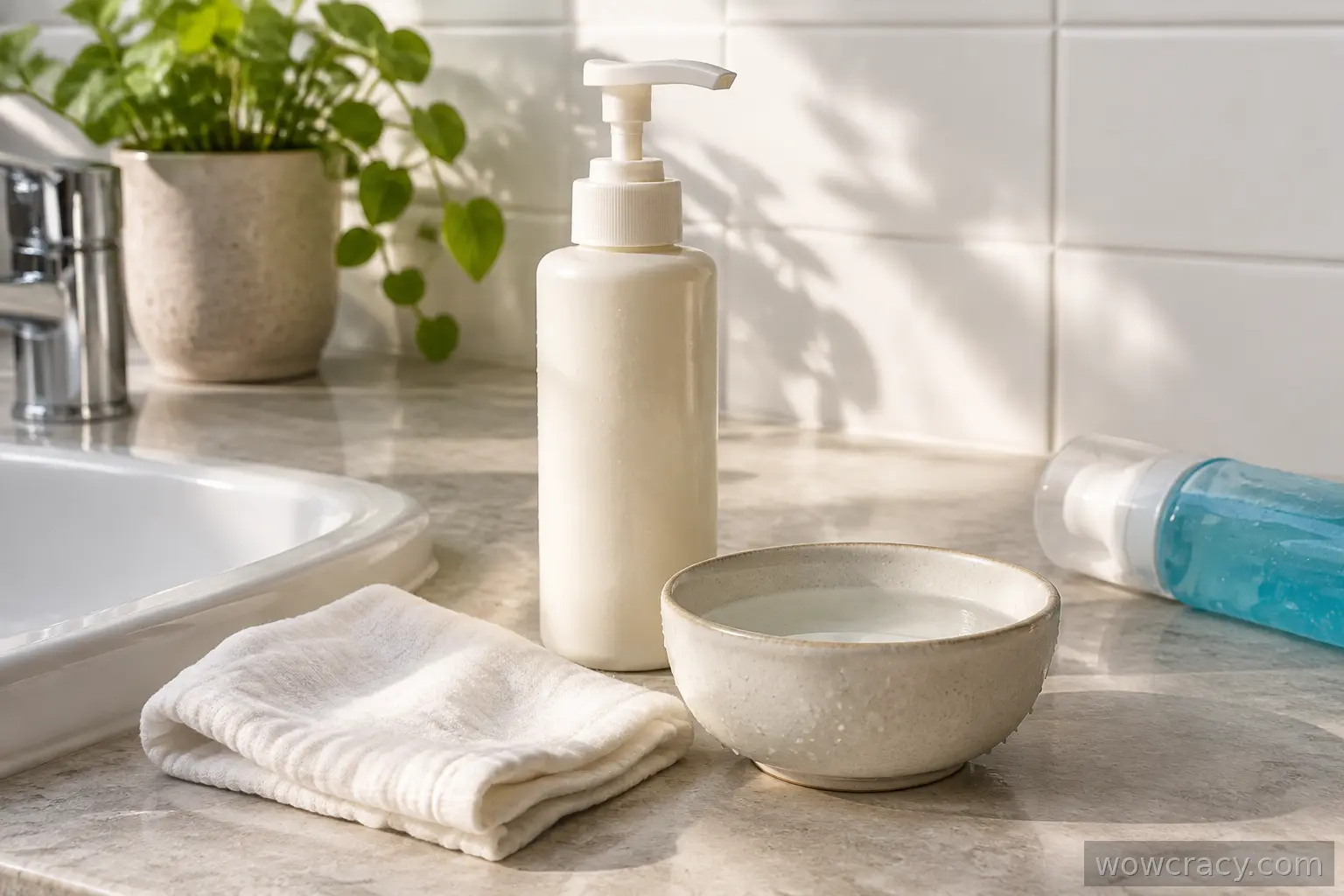
Here is what to review:
- Water temperature. Warm or cool water is more comfortable than hot. Hot water dissolves lipids and increases dryness.
- Product. Choose a gentle fragrance-free formula; foam, gel or oil texture alone does not determine irritation.
- Frequency. Avoid washing more often than needed. Follow micellar-product directions; rinse if directed or if residue causes discomfort.
- Gloves and washcloths. Mechanical friction increases irritation. Avoid harsh scrubs with large particles until the barrier is restored.
After washing, gently pat your skin and apply a tolerated moisturizer while it is still slightly damp. Reapply when skin feels dry as needed.
How moisturizer ingredients work
A formula can combine humectants that bind water, emollients that soften skin and occlusives that reduce water loss. “Hydrating” and “nourishing” on packaging are not distinct medical categories.
| Component | Role | Who it suits |
|---|---|---|
| Hyaluronic acid, glycerin, panthenol | Attract and retain water in the stratum corneum | Different skin types, depending on formula tolerance |
| Squalane, plant oils, ceramides | Restore the lipid barrier, soften | Dry areas; results depend on the whole formula |
| Petrolatum, lanolin (in protective creams) | Create an occlusive layer, reduce water loss | Very dry areas if tolerated; seek advice before treating oozing lesions |
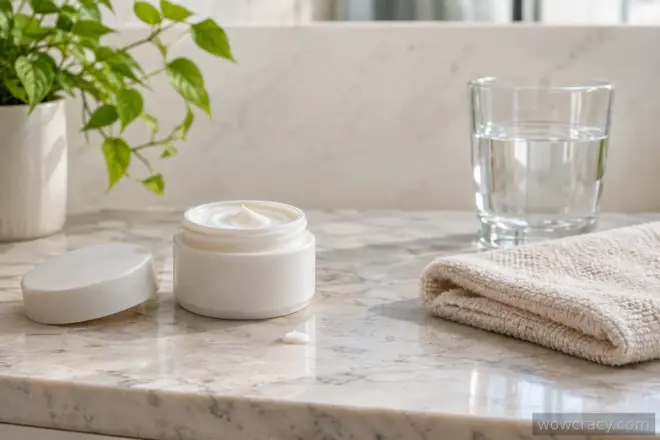
A separate serum and cream are not essential. Start with one fragrance-free moisturizer; a cream or ointment may suit pronounced dryness better than a light lotion. Oilier areas may need a lighter formula. Let tolerance guide you rather than the skin-type label alone.
Change care gradually. Try a new cosmetic on a small area first as directed; this does not guarantee that an allergy cannot occur. Stop using it if burning, itching or a rash develops.
When flaking requires a dermatologist’s consultation
Mild flaking on dry skin is a common thing, especially in autumn and winter. But there are situations when self-care will not help, and delay can worsen the condition.

Consult a doctor if:
- flaking is accompanied by pronounced itching, pain or burning;
- cracks, oozing or redness appear on the skin that do not go away;
- flaking spreads to new areas, a rash appears;
- symptoms persist despite gentle care or become worse;
- there are concomitant diseases (for example, atopic dermatitis, psoriasis, diabetes) that can affect the skin’s condition.
A dermatologist can distinguish dryness from other conditions, prescribe appropriate treatment and advise which products should be excluded. Do not try to “endure” severe flaking on your own or use aggressive scrubs to get rid of it — this can damage the barrier even more.
Minimal changes worth trying first
If you are not sure where to start, here is a short algorithm. It does not replace a doctor’s consultation but helps take the first steps and gather observations for a specialist.
- Switch to a gentle cleanser without aggressive surfactants and lower the water temperature.
- Apply a moisturizing cream or emulsion to damp skin immediately after washing.
- Pause irritating cosmetic acids, retinol and scrubs. Discuss changes to prescribed treatment with your clinician.
- Track comfort, flaking and product reactions. Do not continue experimenting if symptoms worsen.
- If there is no relief or the condition worsens, consult a dermatologist.
Remember: the goal is not “perfect” skin within a week but stable comfort. Sometimes it is enough to remove one irritant for the skin to recover on its own.
Frequently asked questions
Can you determine your skin type on your own?
Observation can describe oiliness and reactions to care, but cannot reliably distinguish dryness, irritation, dermatitis or allergy. Discuss recurring symptoms and treatment with a dermatologist.
Does drinking water help cope with skin dehydration?
Sufficient water consumption is important for the body as a whole, but by itself it does not eliminate dehydration of the stratum corneum. If the barrier is damaged, water evaporates quickly. Therefore, external moisturizing and barrier protection remain the main measures.
How long to wait for improvement after changing care?
Timing depends on the cause and skin condition. Barrier recovery cannot be promised within a fixed number of days. Seek a dermatologist if gentle care does not help, and sooner if symptoms worsen.
Can scrubs be used for dry skin?
Pause scrubs and home peels while skin is irritated and flaking. Do not try to rub away every flake. Discuss future exfoliation with a dermatologist once the cause is clear.
Is care for dry and dehydrated skin different in winter?
Dry winter air may call for more frequent moisturizing or a richer tolerated formula. Protect skin from wind with clothing. Use a humidifier only as needed, keep it clean and avoid making the room damp or causing condensation.