Red lentil and carrot soup in water — hearty, aromatic and meat-free. Served as a thin soup with pieces of vegetables or as a puréed cream soup.
This soup is made without meat broth, but thanks to red lentils it turns out rich and nutritious. Red lentils cook faster than green or brown, so the soup can be ready in 40–50 minutes. Carrot adds sweetness, and sautéed onion adds depth of flavor. The main secret is in the proportion of liquid: for a thin soup take 1,2–1,3 l of water per 200 g of lentils, for a thick cream soup — 1 l. Below is the basic recipe with the option to adjust the thickness during cooking.
- Estimated nutrition
- Ingredients
- Main ingredients
- Step-by-step photos
- Prepare the lentils
- Chop the onion
- Chop the carrots
- Fry the onion
- Add the carrot
- Add the lentils
- Pour in the water
- Check the doneness
- Season
- Blend if desired
- Adjust the thickness
- Serve
- Tips
- Ingredient substitutions
- Storage
- How to change the texture
- What to serve with
Estimated nutrition
| Per serving | |||
|---|---|---|---|
| Calories | Protein | Fat | Carbohydrates |
| 252 kcal | 8 g | 8 g | 38 g |
| Per 100 g | |||
| Calories | Protein | Fat | Carbohydrates |
| 63 kcal | 2 g | 2 g | 9,5 g |
Ingredients
Main ingredients
- Red lentils — 200 g
- Carrots — 2 pcs (approximately 150 g)
- Onion — 1 pcs (approximately 100 g)
- Water — 1,2 l
- Sunflower oil — 2 tbsp
- Salt — 1 tsp (to taste)
- Ground black pepper — 0,5 tsp
- Bay leaf — 1 pcs
- Fresh parsley — 10 g (for serving)
Step-by-step photos
-
Prepare the lentils
Sort through the red lentils, remove stones and damaged grains. Rinse under cold water until the water runs clear. Leave in a colander to drain excess liquid.
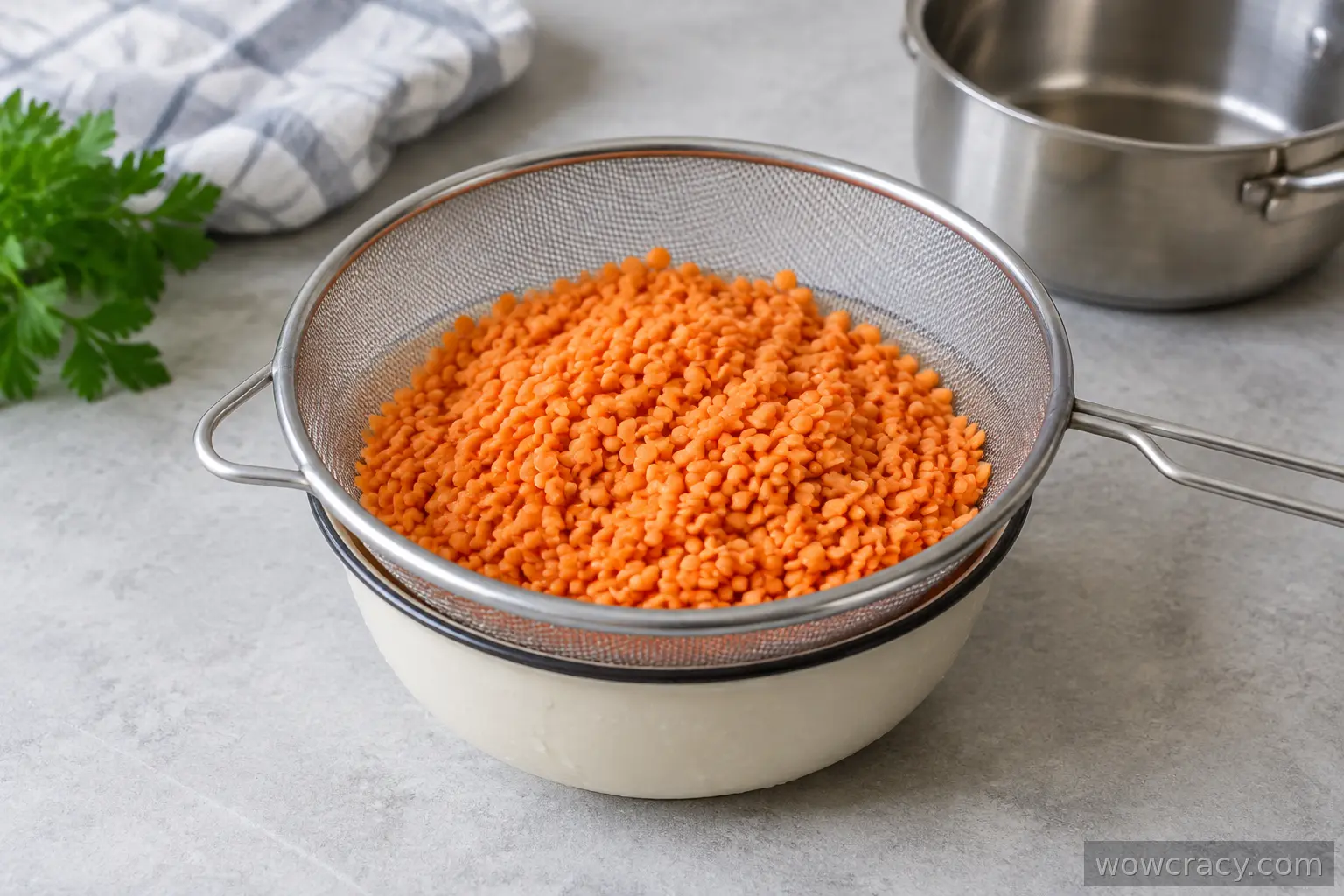
Step 1. Prepare the lentils -
Chop the onion
Peel the onion and cut it into small cubes approximately 0,5 cm. Try to cut evenly so the onion fries uniformly.
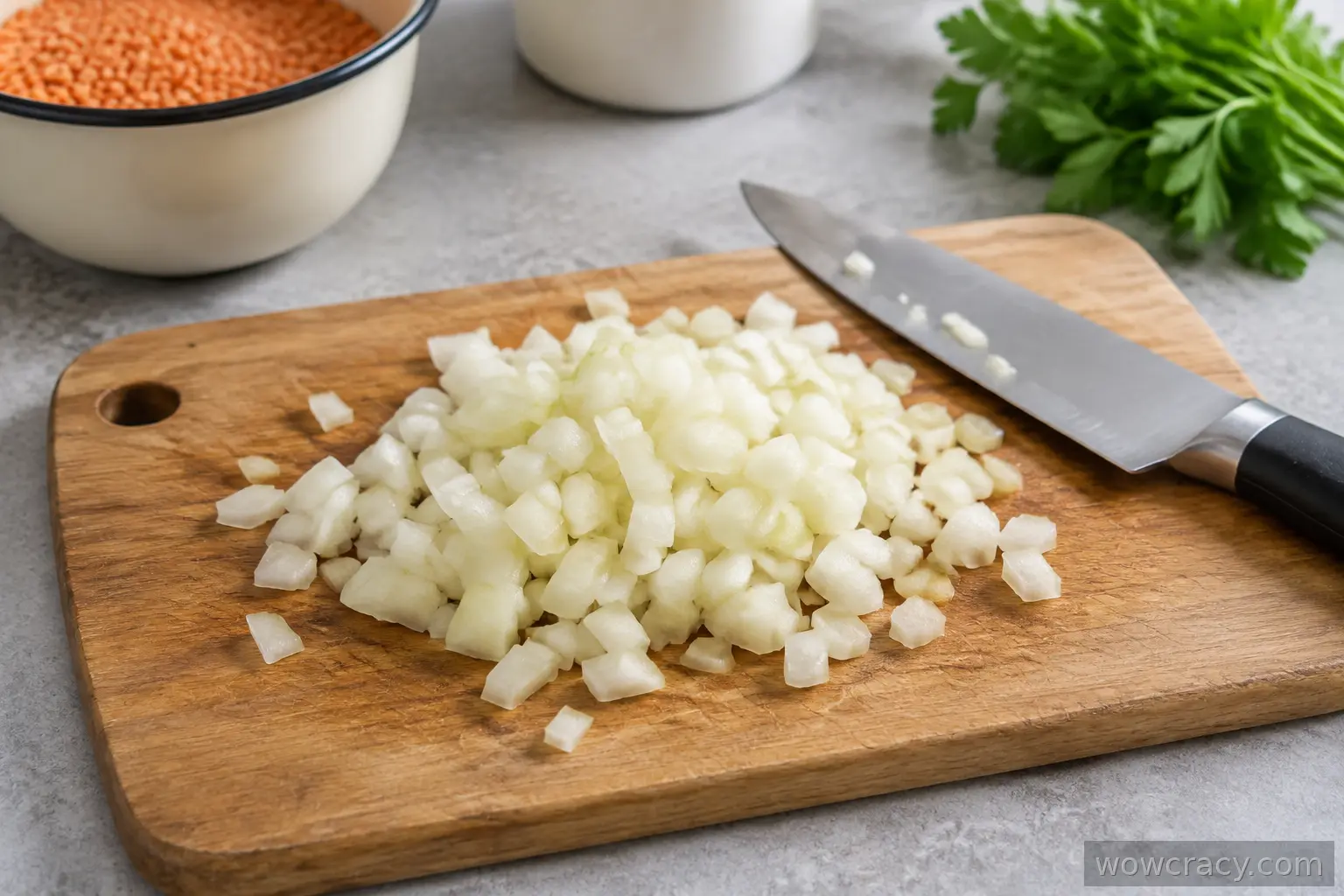
Step 2. Chop the onion -
Chop the carrots
Peel the carrots and cut into cubes approximately 1 cm. If you want a more uniform texture, grate the carrots on a large grater.
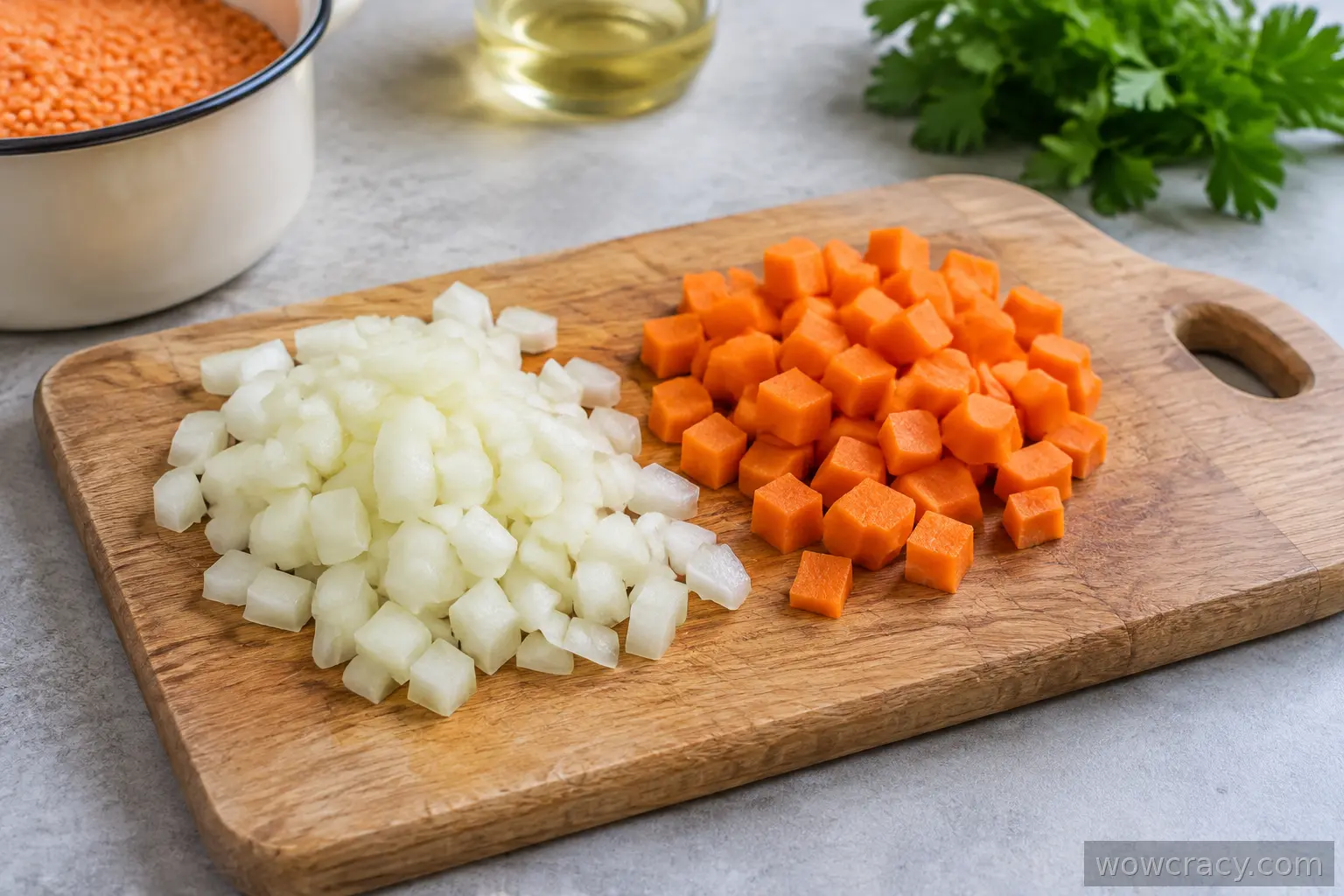
Step 3. Chop the carrots -
Fry the onion
In a pot with a thick bottom, heat 2 tablespoons of oil over medium heat. Add the chopped onion and fry for 3–4 minutes, stirring, until it becomes soft and translucent. Do not allow it to brown heavily.
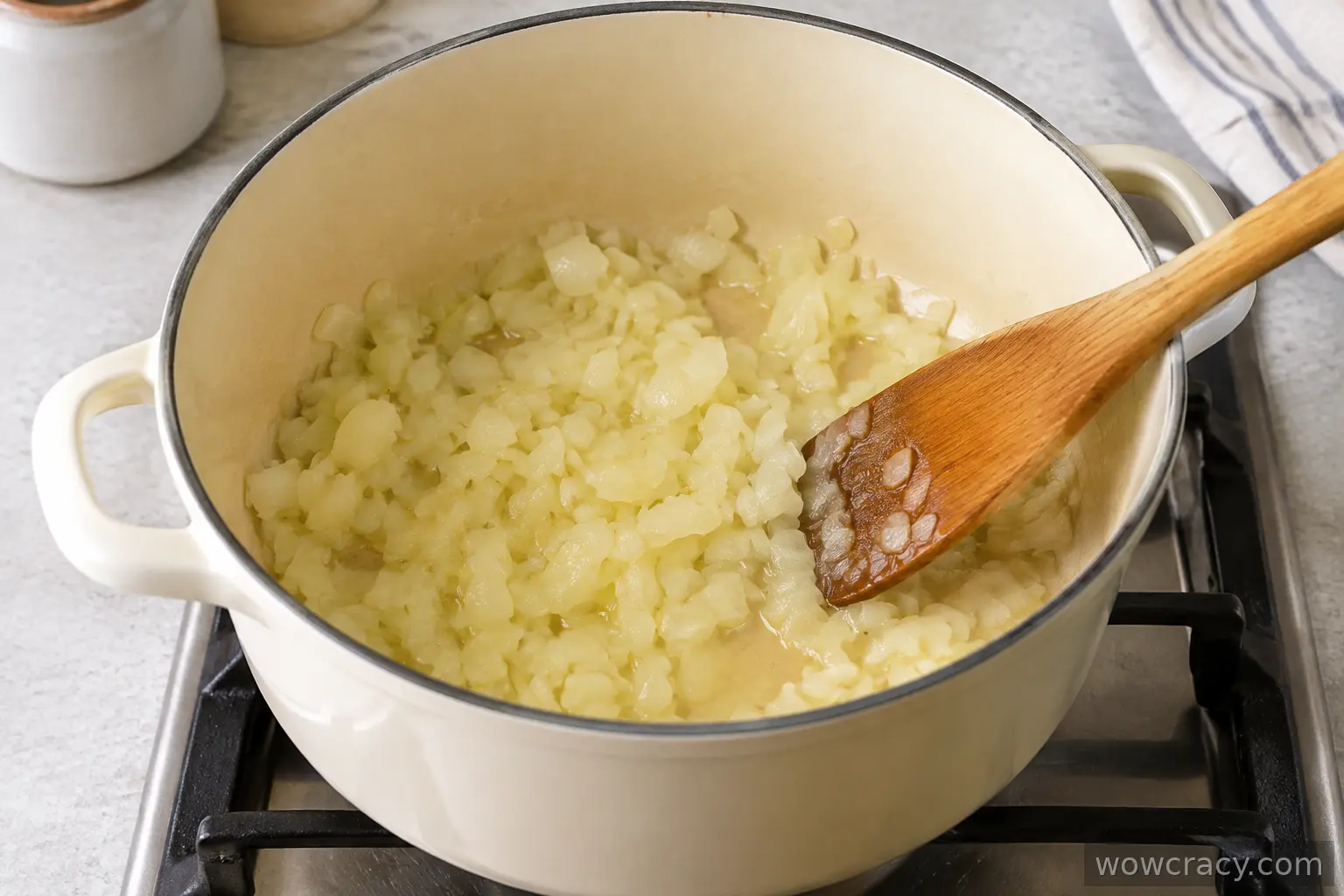
Step 4. Fry the onion -
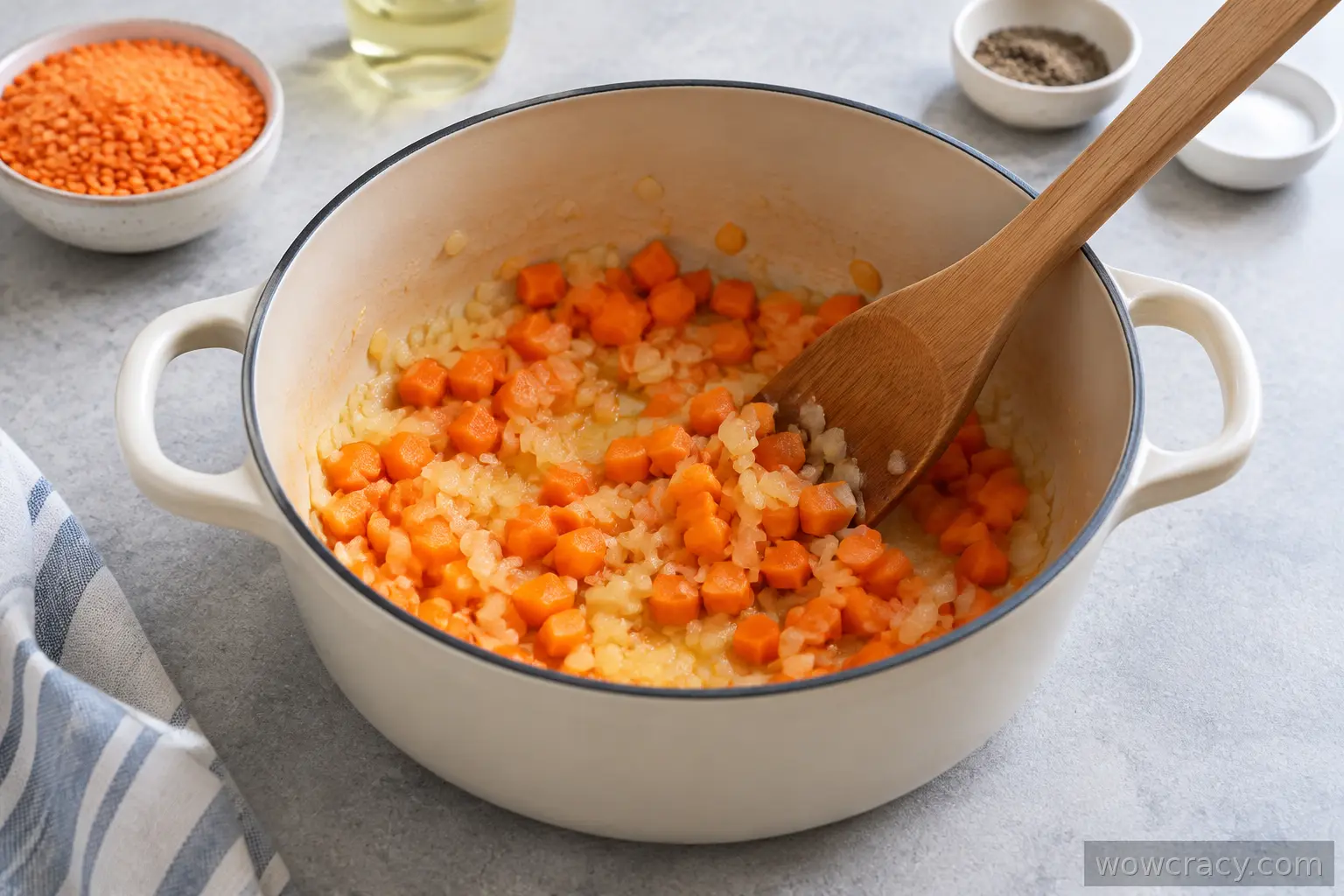
Add the carrot
Add the chopped carrot to the onion. Stir and fry for another 5 minutes, until the carrot softens slightly. It should remain bright orange, not burnt.
Step 5. Add the carrot -
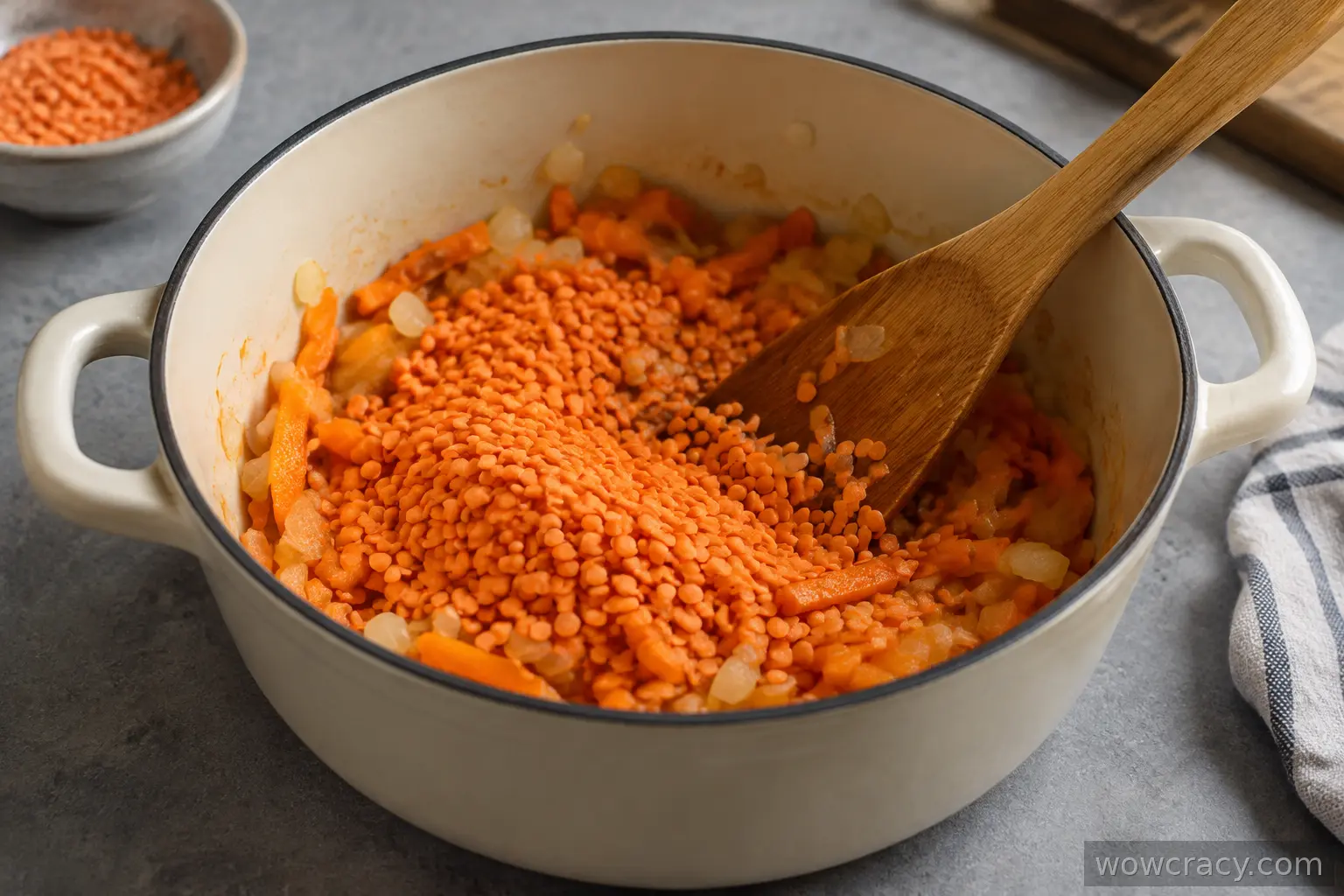
Add the lentils
Add the rinsed red lentils to the vegetables in the pot. Stir with a spatula so the lentils mix with the oil and vegetables, and heat through for 30 seconds.
Step 6. Add the lentils -
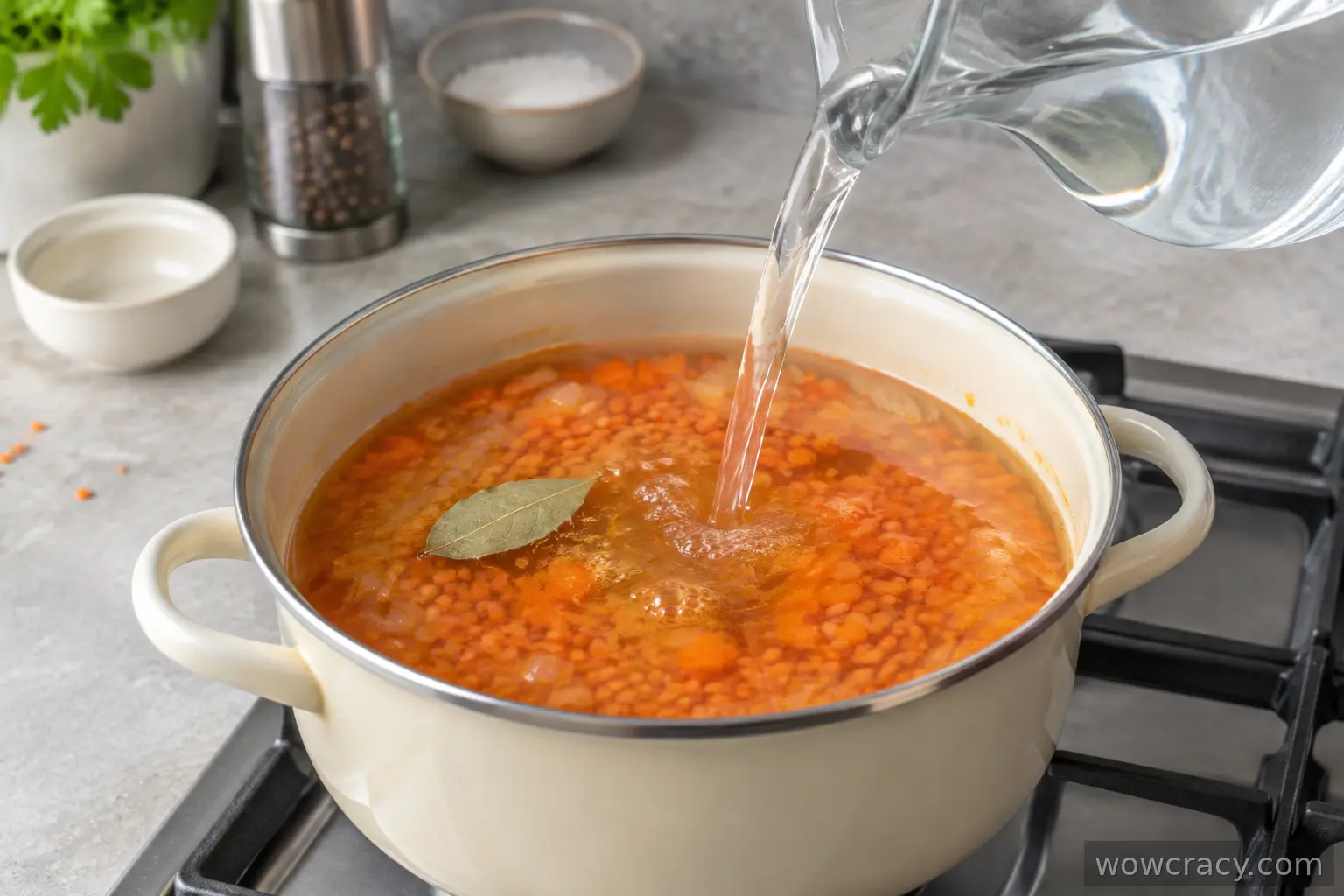
Pour in the water
Pour in 1,2 liters of cold water. Add the bay leaf. Bring to a boil over high heat, then reduce the heat to low, cover with a lid and cook for 20 minutes. Stir periodically so the lentils do not stick to the bottom.
Step 7. Pour in the water -
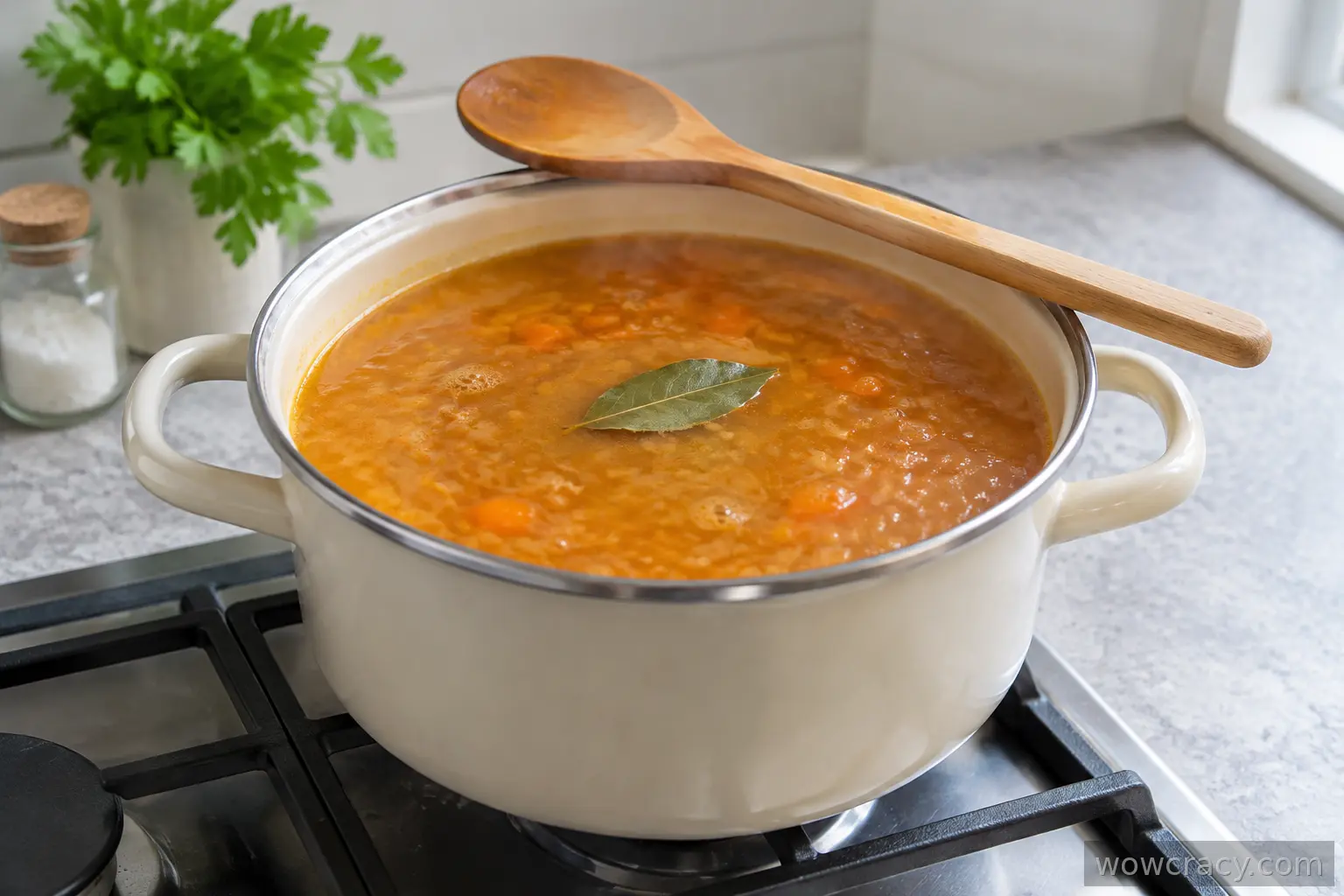
Check the doneness
After 20 minutes, check the lentils: they should be fully cooked and soft. The carrot should be easily pierced with a knife. If the lentils are still firm, cook for another 5 minutes.
Step 8. Check the doneness -
Season
Remove the bay leaf. Add 1 teaspoon of salt and 0,5 teaspoon of ground black pepper. Stir and let the soup simmer for another 2 minutes. Adjust the taste if needed.
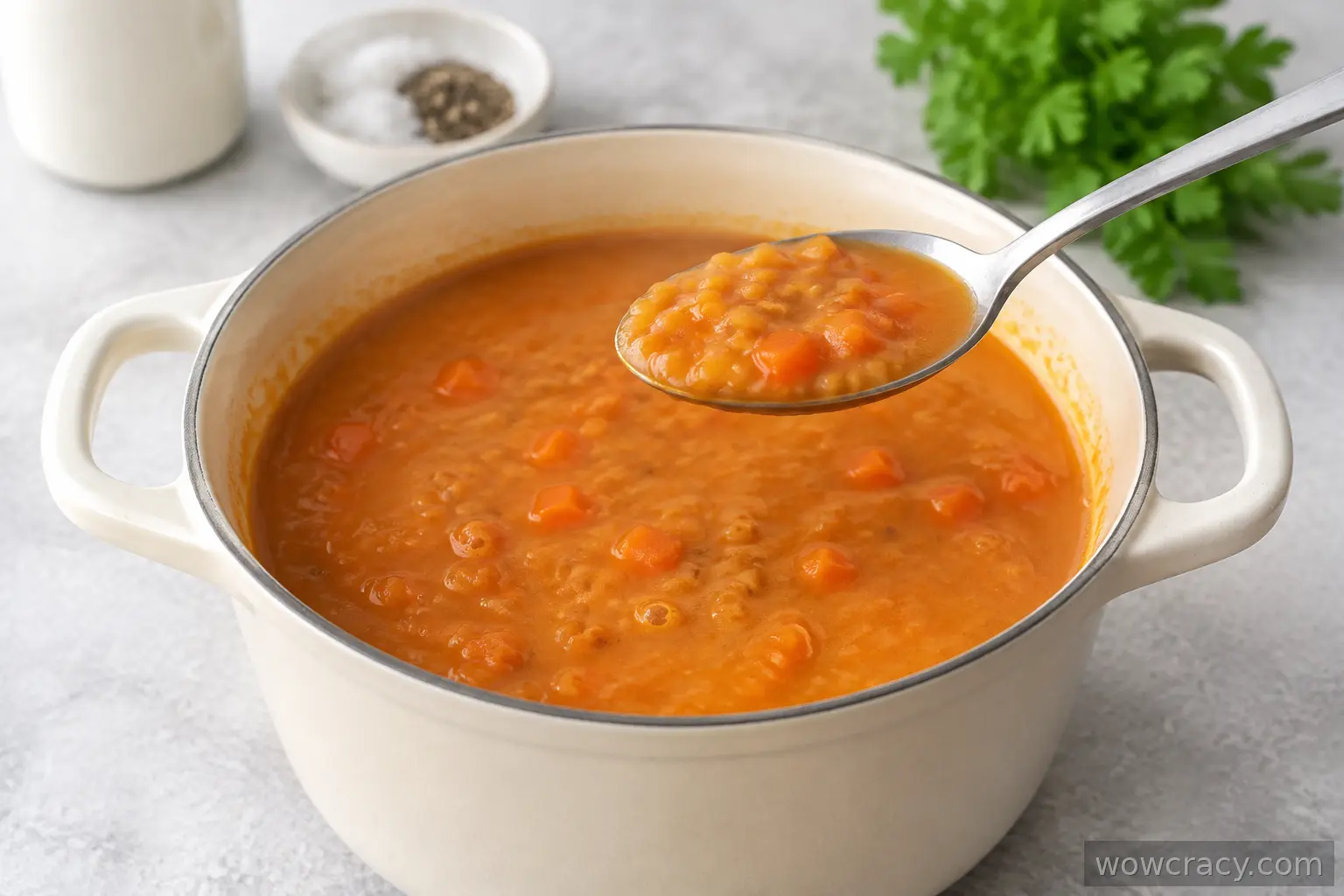
Step 9. Season -
Blend if desired
For a creamy texture, remove the pot from the heat and blend the soup with an immersion blender until smooth. If you want to keep pieces of vegetables, skip this step.
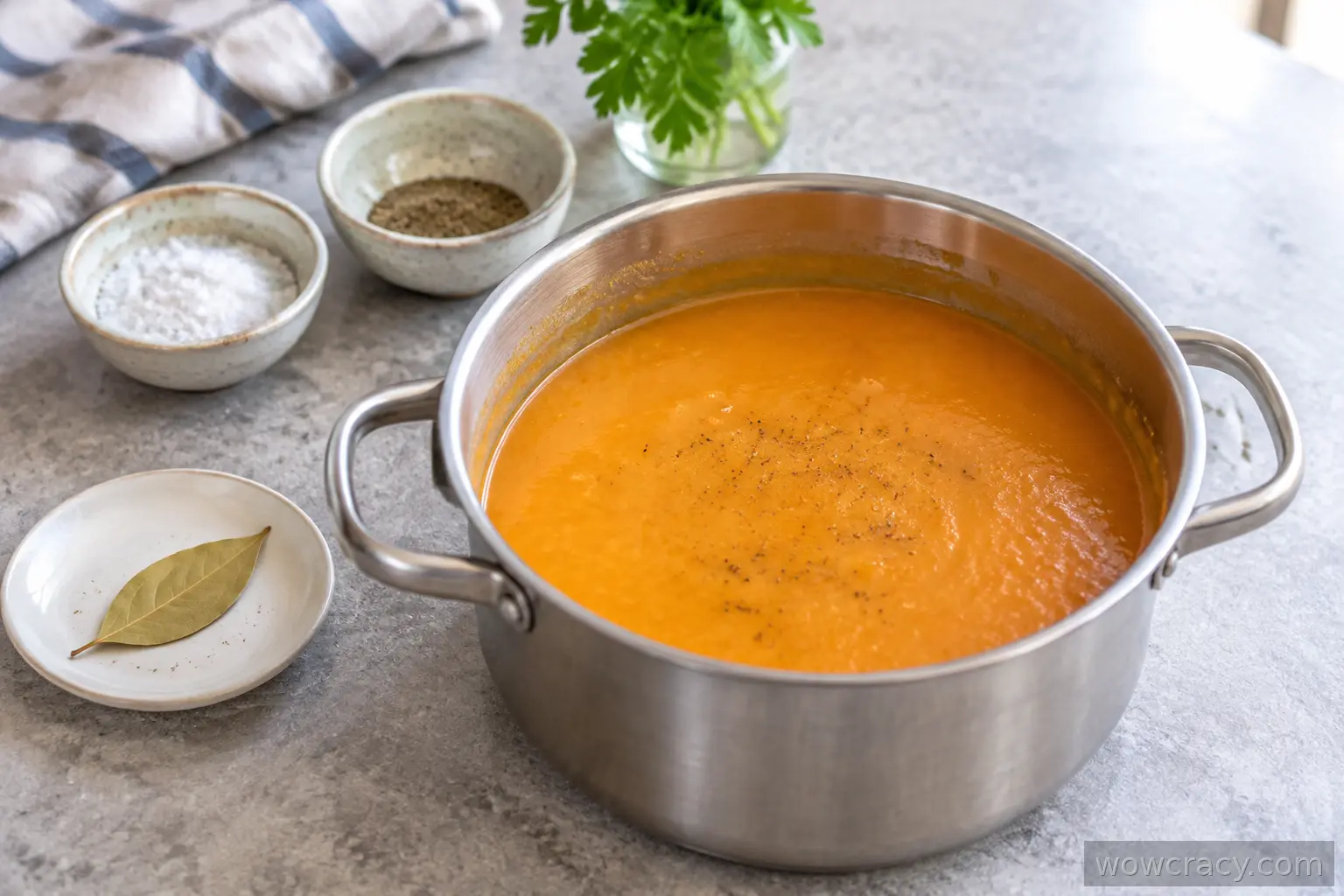
Step 10. Blend if desired -
Adjust the thickness
If the soup seems too thick, add 100–200 ml of hot water or vegetable broth and stir. If it is too thin, simmer uncovered for another 5 minutes over low heat.
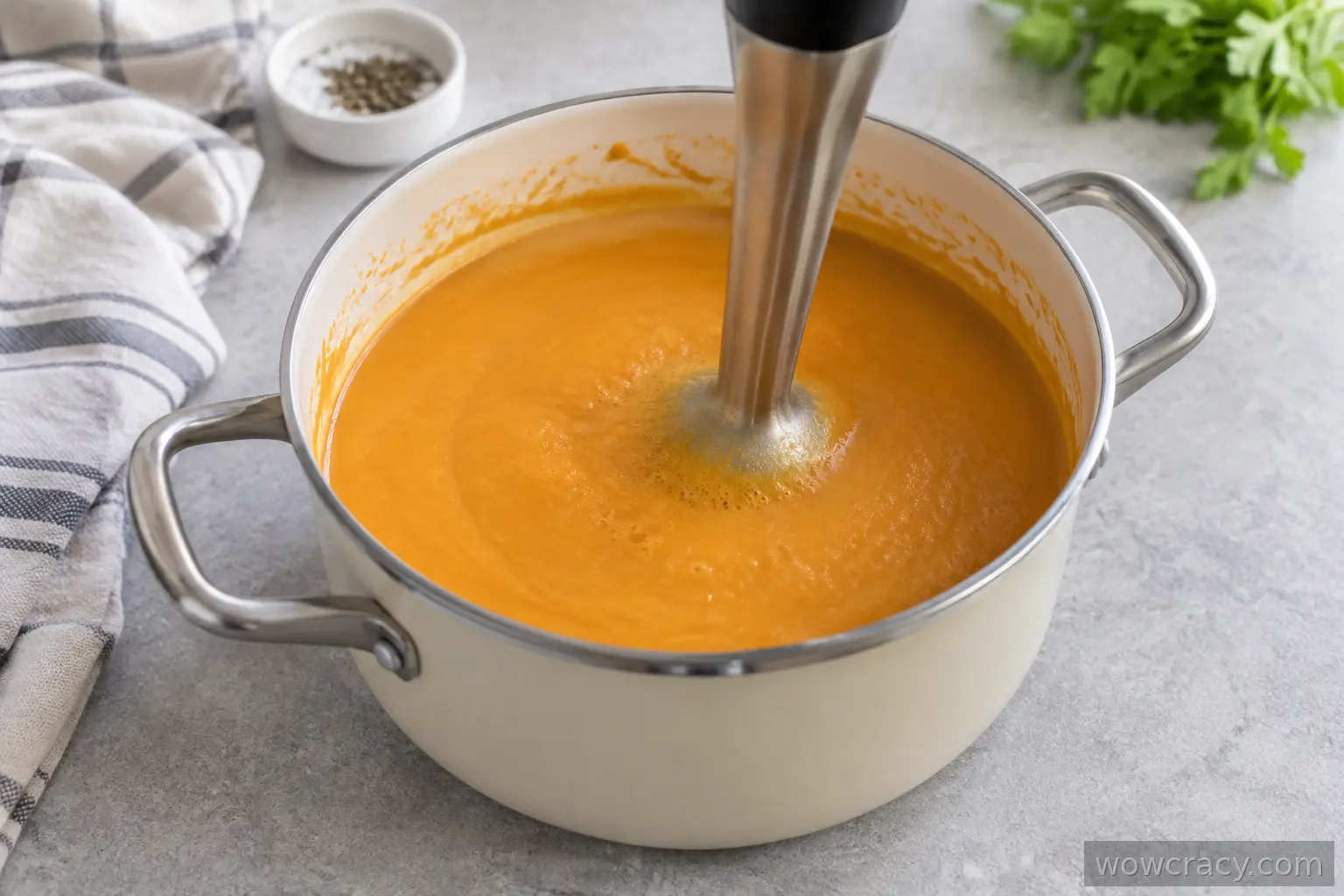
Step 11. Adjust the thickness -
Serve
Ladle the soup into warmed plates. Sprinkle with freshly chopped parsley. If desired, add a spoonful of sour cream or yogurt.
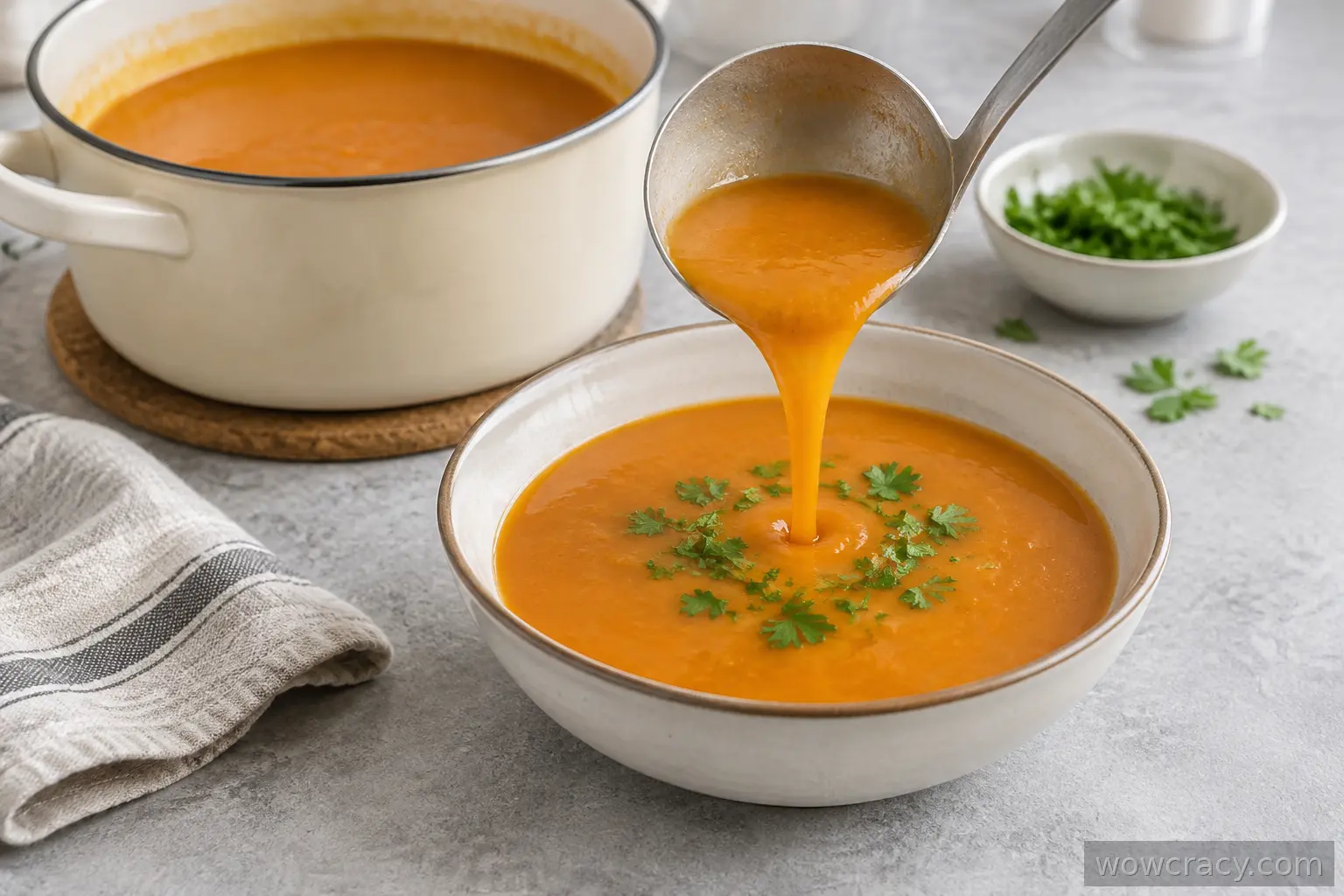
Step 12. Serve
Tips
- Red lentils cook quickly, so do not boil them for too long, otherwise the soup will become too thick.
- The taste of the soup will improve if you add a pinch of smoked paprika or ground coriander.
- For a richer flavor, sauté the vegetables over medium heat without increasing it, to avoid bitterness.
Ingredient substitutions
- Instead of water, you can use vegetable broth — in that case, add salt more carefully.
- Sunflower oil can be replaced with olive oil or butter (if a lean version is not required).
- Fresh parsley can be replaced with dill or green onion.
Storage
- Store the soup in the refrigerator in a closed container for up to 3 days.
- Before serving, reheat on the stove or in the microwave; if needed, add a little water.
- The soup can be frozen in portions for up to 2 months. After thawing, stir thoroughly.
How to change the texture
For a soup with pieces of vegetables, cut the carrot into 1 cm cubes and do not blend the soup with a blender. For a puréed consistency, blend the soup with an immersion blender after adding the lentils, then if needed thin it with hot water. If the soup seems too thick, add 100–200 ml of hot water or vegetable broth. If it is too thin — simmer for another 5 minutes without a lid.
What to serve with
Serve with rye bread, croutons, a spoonful of sour cream or yogurt, fresh herbs, pumpkin seeds or a slice of lemon. The soup tastes good with smoked paprika and a pinch of hot pepper.