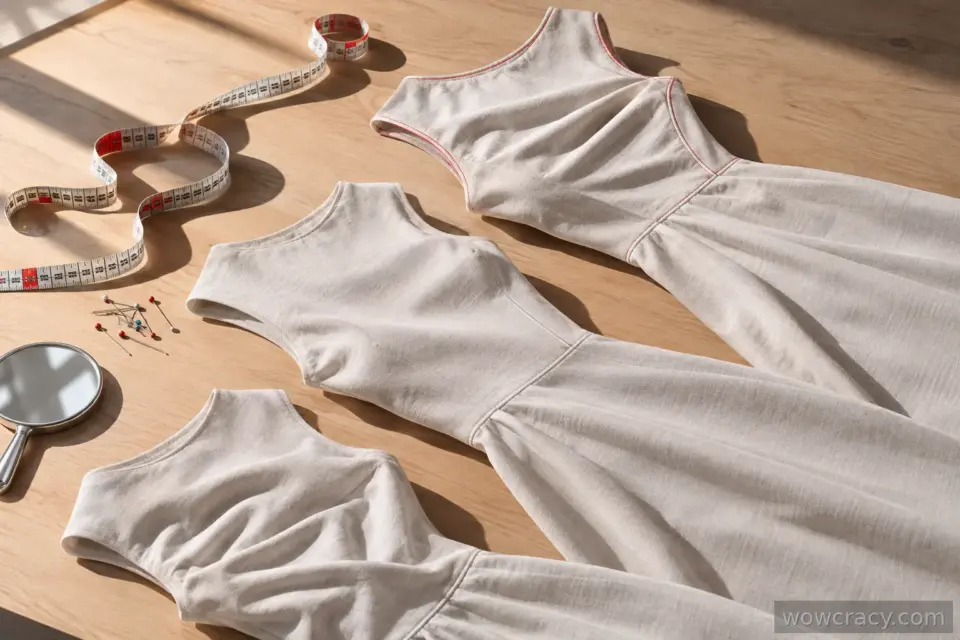
You’re standing in front of the mirror in the fitting room and it seems like the item “almost fits”: it pulls somewhere, gathers into folds somewhere else, the sleeves are a bit off, but overall it seems fine. A familiar situation? The problem is that we often evaluate clothes with our eyes rather than through feel and objective signs. In reality, there are two fundamentally different sources of discomfort: the wrong size (when the garment is too big or too small for your body) and a bad cut (when the size is yours, but the construction doesn’t match the features of your figure). Telling them apart means saving time, money and nerves while shopping.
- What to check while standing: basic reference points
- What creases can tell you about fit
- Checking while sitting: the waist and hip zone
- Movement — the best test for freedom
- When a different size will help
- When to look for a different cut
- How to check fit, step by step
- Frequently asked questions
- Can the fit be fixed with a tailor?
- Do creases always mean the wrong size?
- What about clothes that fit well while standing but are uncomfortable when moving?
- Should you rely on the brand’s size chart?
- Practical summary
What to check while standing: basic reference points
Stand upright with your arms relaxed. On a conventional set-in sleeve, the shoulder seam usually sits near the edge of the shoulder. Raglan, oversized and dropped-shoulder designs work differently, so judge the seam together with comfort and movement.
Check for gaping buttons and pulling across the chest or back. Folds can reflect too little or too much room, armhole shape, posture or fabric behaviour. Their direction alone cannot identify the cause.
Check sleeve length with your arms relaxed and while moving. The wrist is a useful reference for a classic shirt; how much cuff shows below a jacket is a style choice. Sleeve length alone does not determine size: another length option, cut or alteration may work better.
What creases can tell you about fit
Creases are not just “unattractive.” They are an indicator of how the fabric interacts with your figure. It’s important to distinguish two types: tension folds (the fabric is stretched, rays form from the point of tension) and excess folds (the fabric sags, horizontal or diagonal folds form).
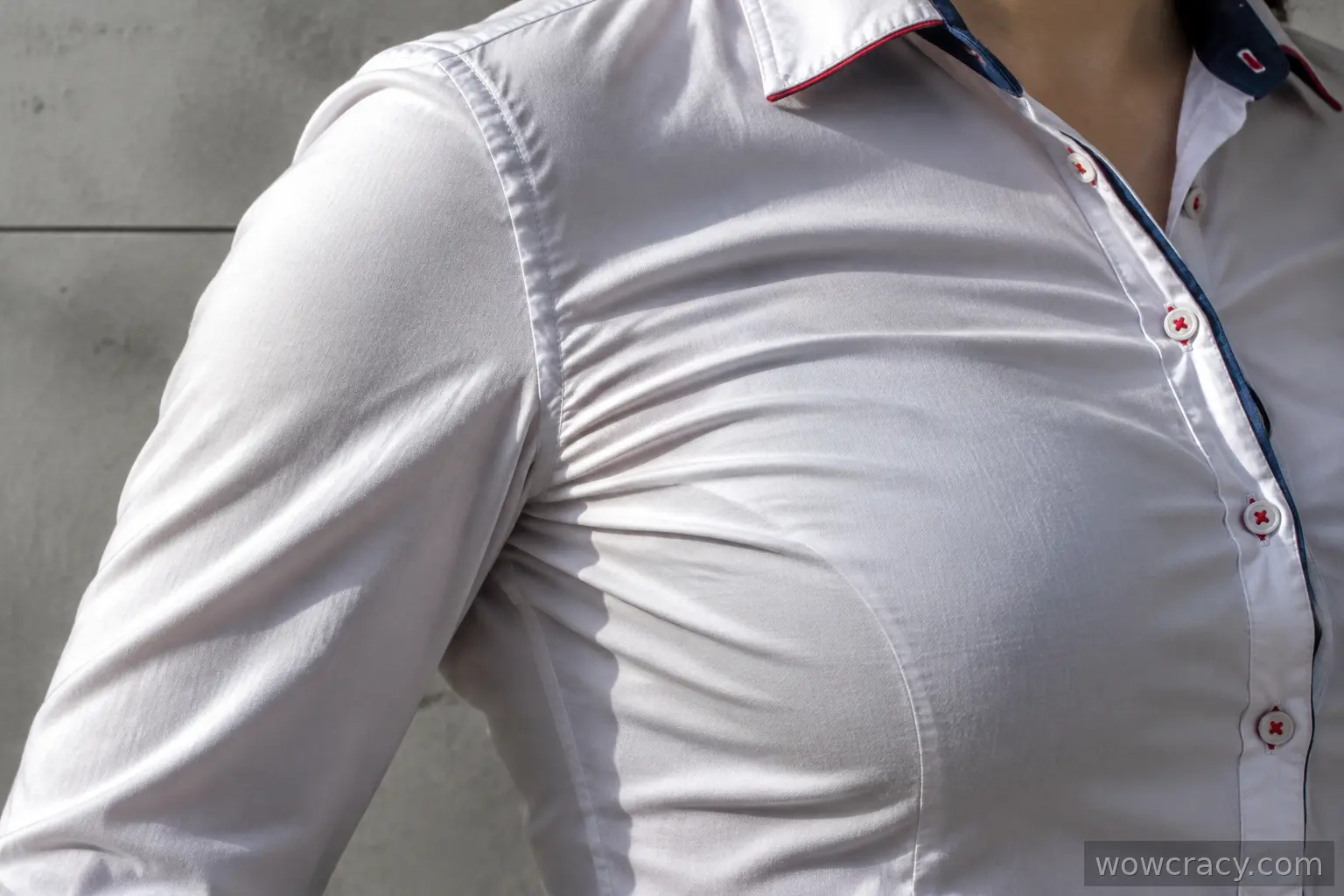
Gaping buttons, a strained fastening or overstretched seams suggest insufficient room in that area. Compare the next size and check the rest of the garment too. Folds above the waist or below the shoulder blades may also relate to back length or posture.
Diagonal lines near the bust are a reason to check room, darts and armhole placement. They do not prove that the garment was designed for a larger bust. Try another cut if the next size still pulls or becomes too loose elsewhere.
Checking while sitting: the waist and hip zone
Sit down on a chair. Look at how the waistband or the top edge of a skirt or trousers behaves. If the waistband digs into the belly and the fabric stretches at the hips, the item is too small in the waist or hip circumference. If the waistband hangs loosely and gathers into folds, it’s too big.
In trousers, check rise, room through the hips and comfort at the crotch. The inseam determines leg length, not rise. Compare both another size and another cut if sitting creates strong pressure or excessive bunching.
Check skirt or dress length and comfort while sitting. A hem normally rises somewhat; acceptable coverage depends on length, fabric and intended use. A rising hem alone does not establish a cutting fault.
Movement — the best test for freedom
Move as you expect to in the garment: raise your arms, sit, bend and walk. Pain, strong pressure or strained seams are reasons to reject the fit. Some fabric movement is normal; check whether it interferes with everyday activities.
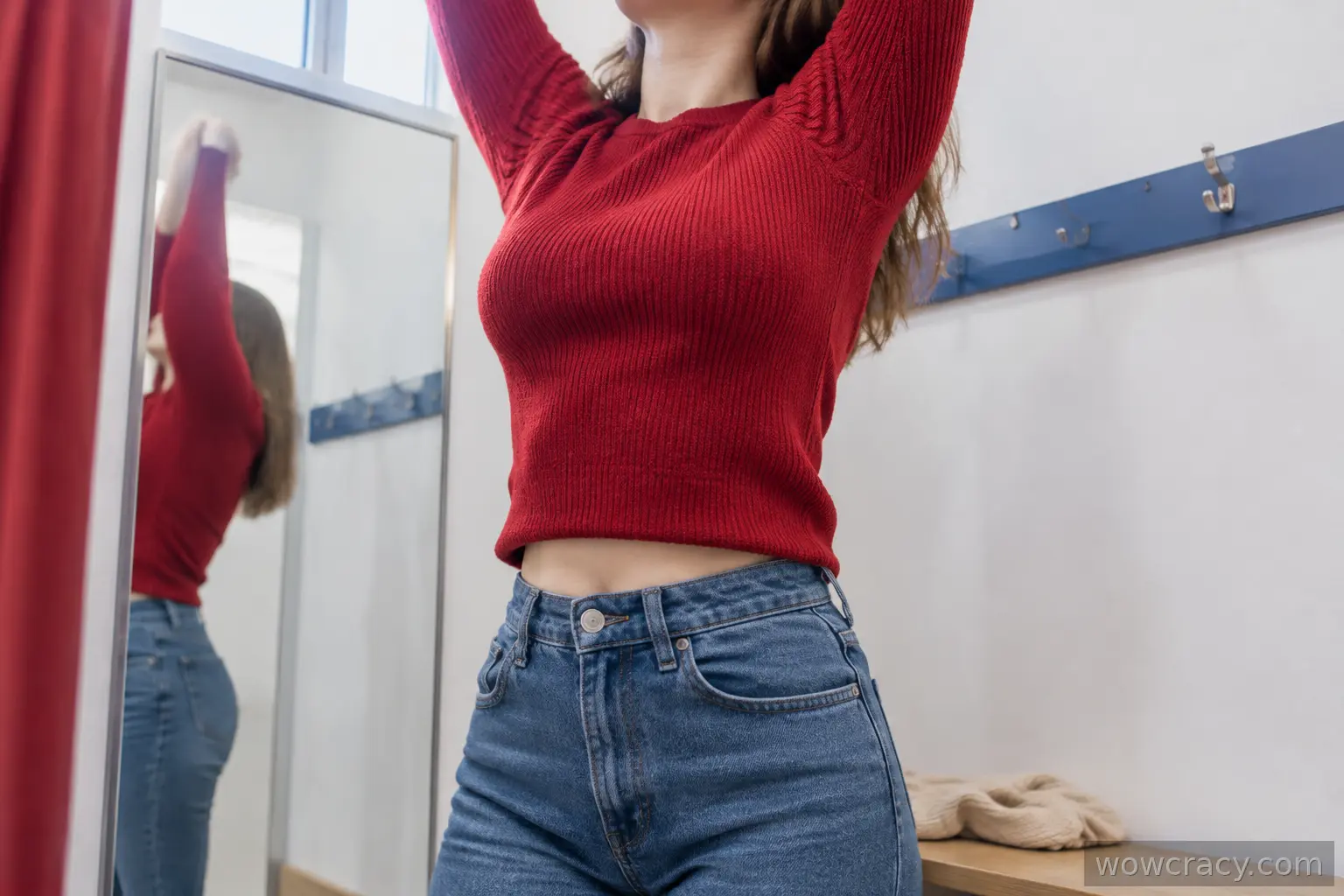
Pay attention to the feeling in the belly and hip area when squatting. If the waistband digs in or you have to unbutton a button, the item is too small. If you feel that the fabric “moves around” and hinders your movements, it’s too big.
Freedom of movement is not just comfort. It is also a sign that the item has the right balance: the front and back parts of the garment match your posture. If, when moving, the item skews or slides to the side, this may be a signal of a bad cut, even if the size is yours.
When a different size will help
A different size is the right solution if the problems are concentrated in zones that are easy to fix by changing the size. Here are typical signs:
- Buttons gape or the zipper doesn’t fasten without effort — the size is too small.
- In a conventional design the shoulder seam is displaced and the garment is generally tight or loose: compare another size.
- If only sleeve length is wrong, consider another length option or an alteration; changing size also changes room.
- The waistband hangs loosely or digs in evenly around the entire circumference — the size is not yours.
- The fabric stretches evenly in all directions — the item is too small.
If you see that in one place the item is too big and in another too small, it’s no longer just about size. It’s a signal that the cut doesn’t match your figure.
When to look for a different cut
It happens that you’ve tried on several sizes and none fits perfectly. In that case, the problem is not the size but the construction. Here are the signs that you need a different cut:
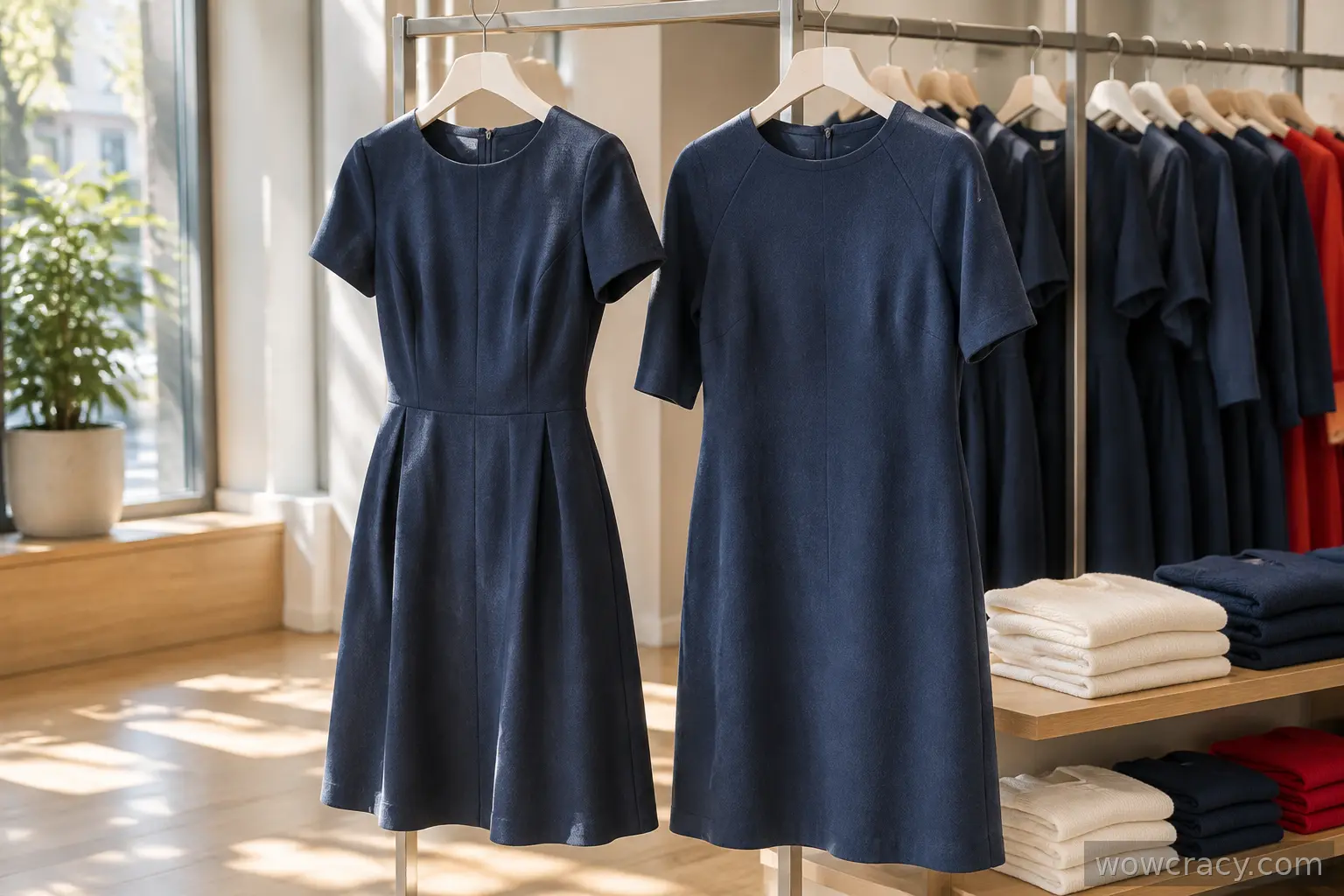
- Diagonal creases in the chest or shoulder blade area remain in all sizes.
- The shoulder seam is perfect, but in the waist or hip area the item “doesn’t cooperate” — too big or too small in one zone.
- The item fits well while standing but skews or slides when moving.
- The length of the sleeves or hem doesn’t match your proportions, although the size seems to be yours.
- The fabric forms folds in places where there shouldn’t be any (for example, under the armpits or on the belly), regardless of size.
In such cases, changing the size won’t help. You need to look for a different model, a different brand or a different type of cut (for example, with a higher rise, with a different armhole shape, with raglan instead of a set-in sleeve).
How to check fit, step by step
To avoid getting confused during a fitting, follow a simple order of actions. It will help separate size from cut.
- Check shoulder placement against the design: set-in, raglan or dropped shoulder.
- Fasten all buttons and zippers without effort. If you have to suck in your belly, the item is too small.
- Raise your arms up: does it pull in the armpits? If so, it’s too small or the armhole is narrow.
- Bend forward: do deep folds form on the back? If so, it may be too big or the cut doesn’t account for posture.
- Squat down: the waistband should not dig in or hang loosely.
- Walk around: the item should not skew or slide.
- Assess folds together with tension, comfort and the fit of the next size; direction alone is not a diagnosis.
If the garment is generally tight or loose, compare the next size. If the shoulders fit but the waist or hips do not, try another cut as well. The number of uncomfortable areas alone does not determine the answer.
Frequently asked questions
Can the fit be fixed with a tailor?
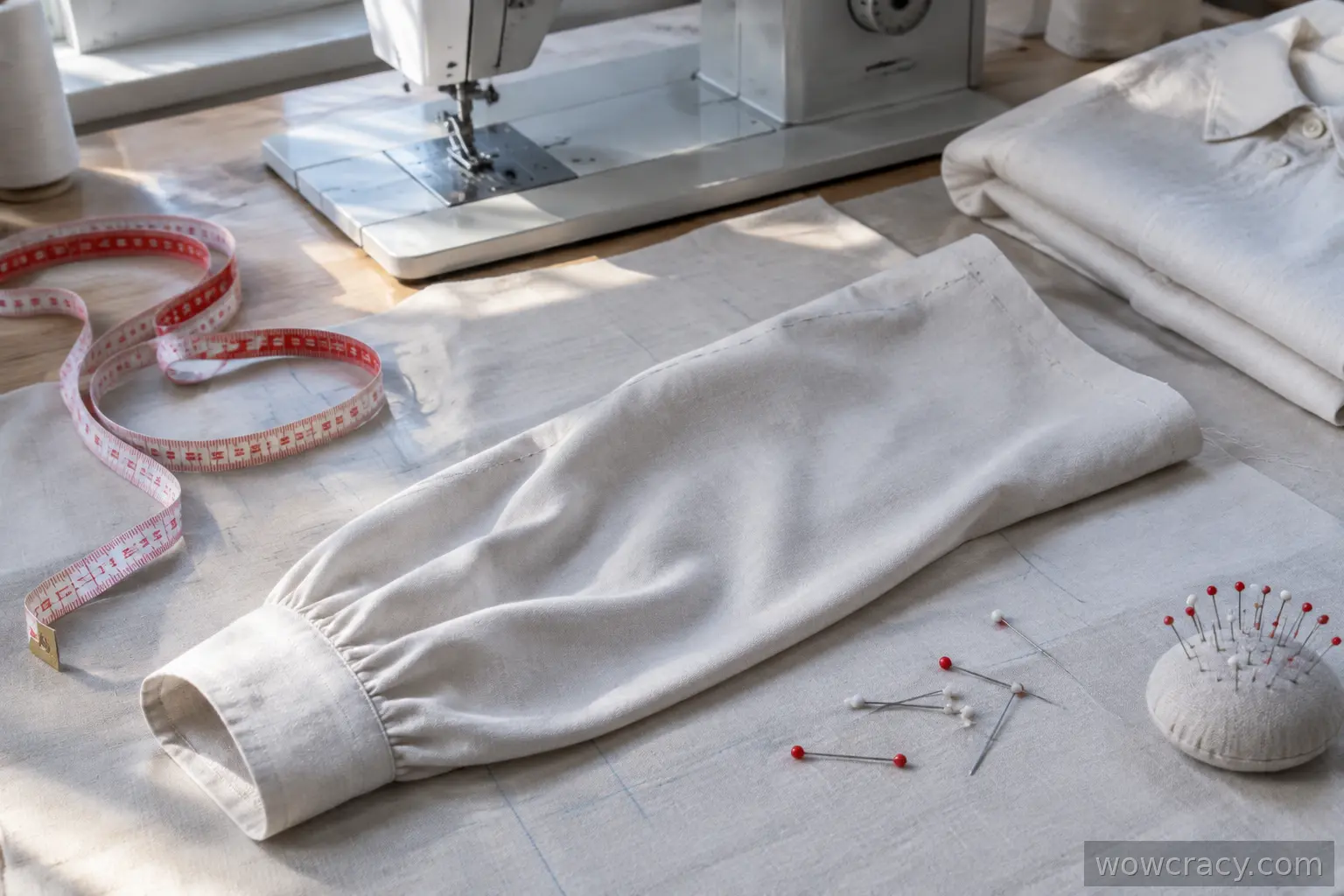
Sometimes yes. If the item is too big at the waist or the sleeves are too long, this can be fixed. But if the problem is in the balance of the garment (for example, diagonal creases or incorrect shoulder fit), alterations can be complex and expensive. In such cases, it’s better to find a different cut.
Do creases always mean the wrong size?
No. Some creases are part of the design (for example, pleats on a skirt or draping). It’s important to distinguish decorative elements from those that arise from tension or excess fabric.
What about clothes that fit well while standing but are uncomfortable when moving?
This may be a sign of a bad cut or insufficiently elastic fabric. Try another model with a looser cut or with added elastane.
Should you rely on the brand’s size chart?
Size charts vary. Rely on your measurements and reviews, but always try things on if you have the opportunity. If you buy online, choose stores with an easy return procedure.
Practical summary
Consider seam placement, fabric tension and everyday movement together. Compare the next size, then another cut if fixing one area makes another worse. A good fit suits your comfort and the garment’s design; the label is only a guide.