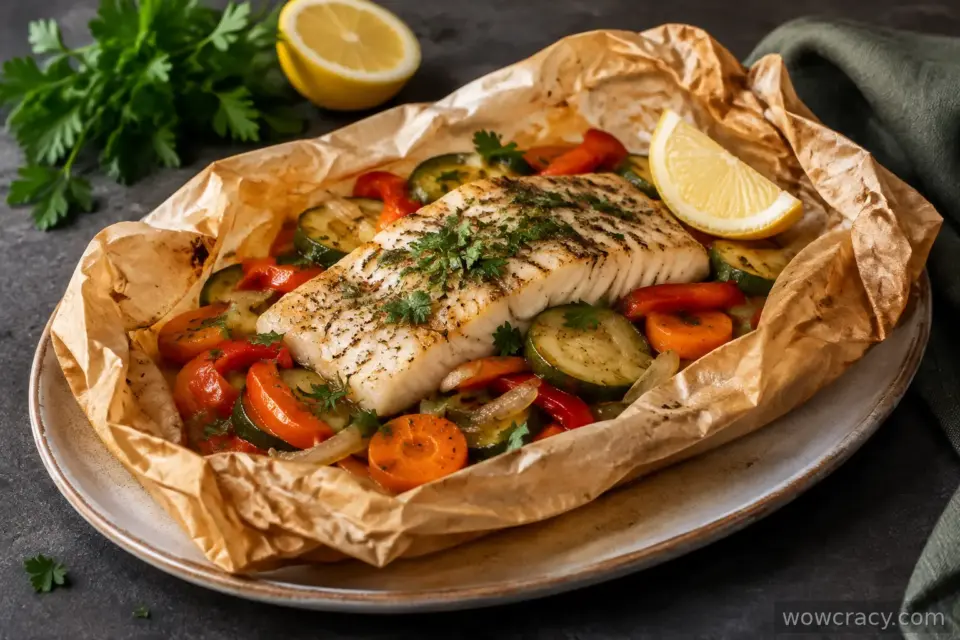
A step-by-step recipe for hake with vegetables baked in separate parchment parcels: preparing the fillet, cutting the vegetables to an even thickness, forming the portions and checking doneness.
Baking in parchment works like a little steam chamber: inside the parcel the fish cooks in its own juices and in the steam from the vegetables, so hake fillet stays juicy even without sauce. But this technique has one condition — the vegetables must be done in the same time as the fish. Thin hake fillet cooks quickly, so the courgette, carrot and sweet pepper need to be cut small and evenly.
Below are four separate portions, each in its own parcel. That makes serving convenient, and it’s even easier to check doneness: the parcel opens in one movement, and you can immediately see whether the fillet has lost its translucency in the centre and the vegetables have turned soft.
- Estimated nutrition
- Ingredients
- Fish and vegetables
- For serving
- Step-by-step photos
- Prepare the fillet
- Slice the zucchini
- Slice the carrots
- Slice the pepper and onion
- Mix the vegetables with the oil
- Prepare the parchment
- Arrange the vegetables
- Add the fish
- Close the parcels
- Bake in the oven
- Check for doneness
- Serve with herbs
- Tips
- Ingredient substitutions
- Storage
- How to tell the fish is done
- Comparison of vegetables for the parcel
Estimated nutrition
| Per serving | |||
|---|---|---|---|
| Calories | Protein | Fat | Carbohydrates |
| 295 kcal | 26 | 15 | 14 |
| Per 100 g | |||
| Calories | Protein | Fat | Carbohydrates |
| 105 kcal | 9,3 | 5,3 | 5 |
Ingredients
Fish and vegetables
- hake fillet — 600 g
- zucchini — 300 g
- carrot — 200 g
- sweet pepper — 200 g
- onion — 150 g
- olive oil — 3 tbsp
- lemon — 1 pcs
- salt — 1 tsp
- ground black pepper — 0,5 tsp
- dried thyme — 1 tsp
For serving
- fresh parsley — 20 g
- lemon — 0,5 pcs
Step-by-step photos
-
Prepare the fillet
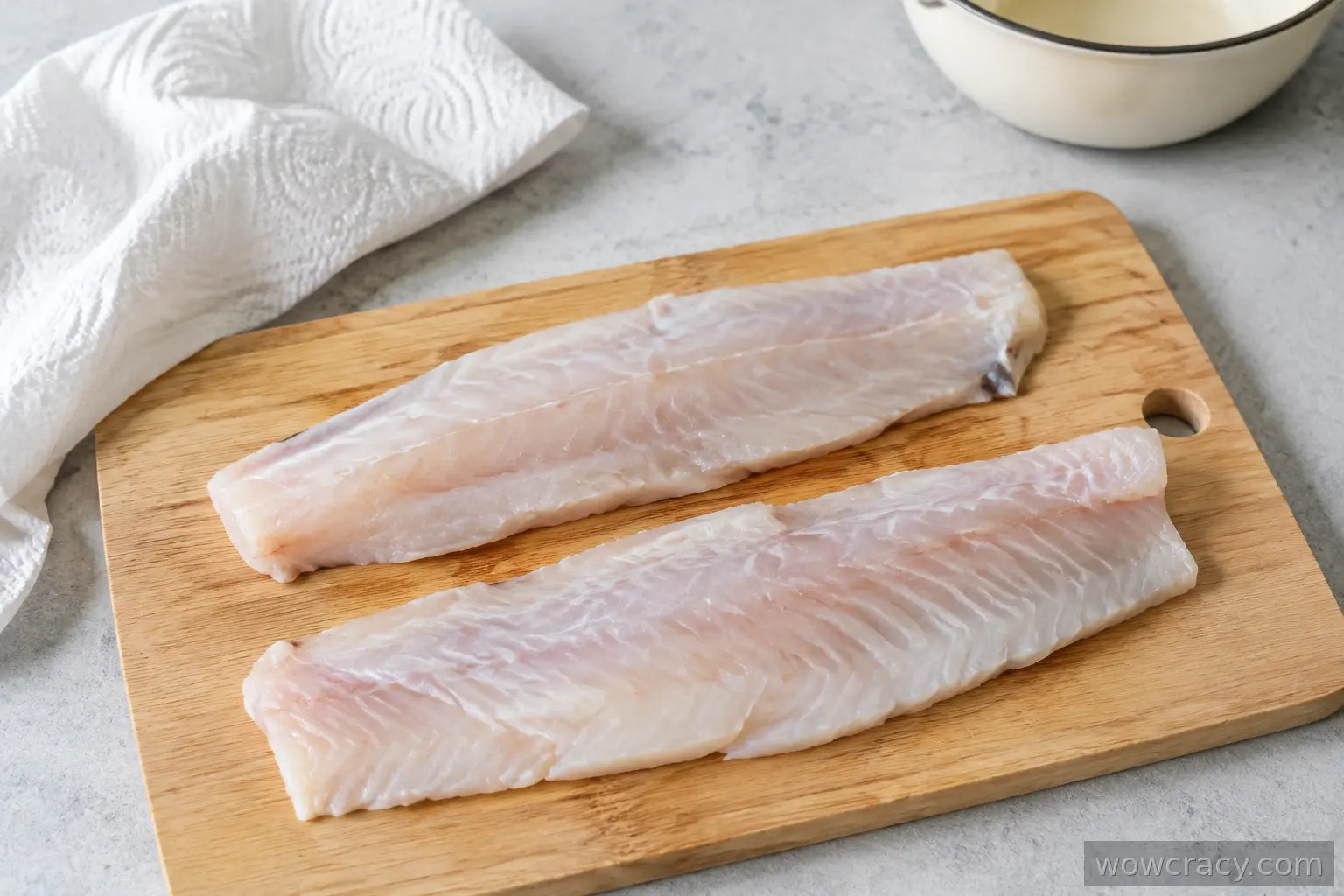
Take the hake fillet out of the refrigerator, pat it dry with a paper towel on both sides and place it on a board. Run your fingers over the entire surface of the flesh, looking for small bones: pull them out with tweezers or a fork, moving along the grain. If the fillet is more than 2,5 cm thick at its thickest point, cut it in half lengthwise so the pieces cook evenly.
Step 1. Prepare the fillet -
Slice the zucchini
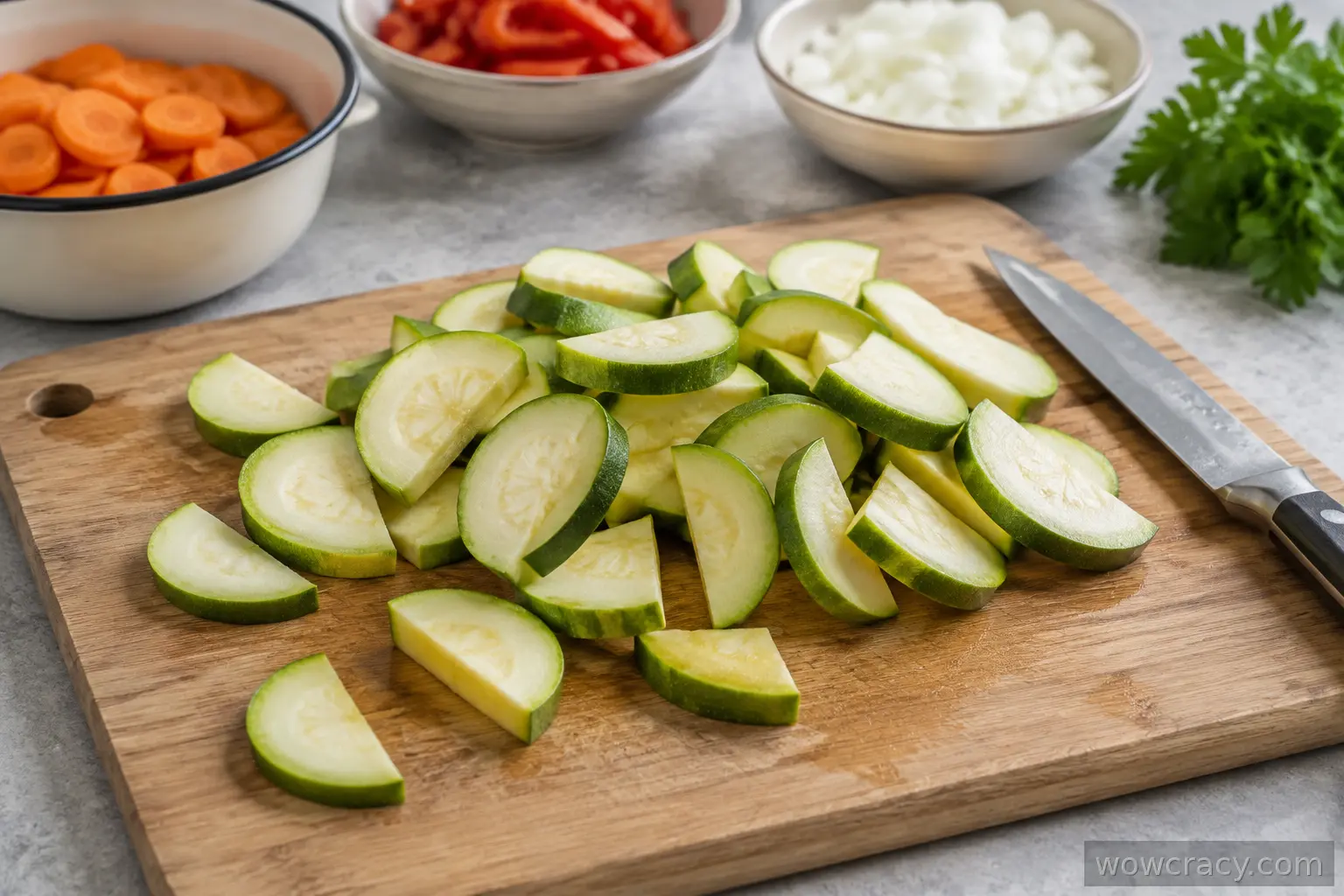
Wash the zucchini, pat it dry and slice it into rounds about 5 mm thick — no thinner than that, otherwise the vegetable will turn to mush. Cut the large rounds in half.
Step 2. Slice the zucchini -
Slice the carrots
Peel the carrots and cut them into thin rounds about 3 mm thick. This is the densest vegetable in the set, so it sets the baking time: thicker pieces will stay firm.
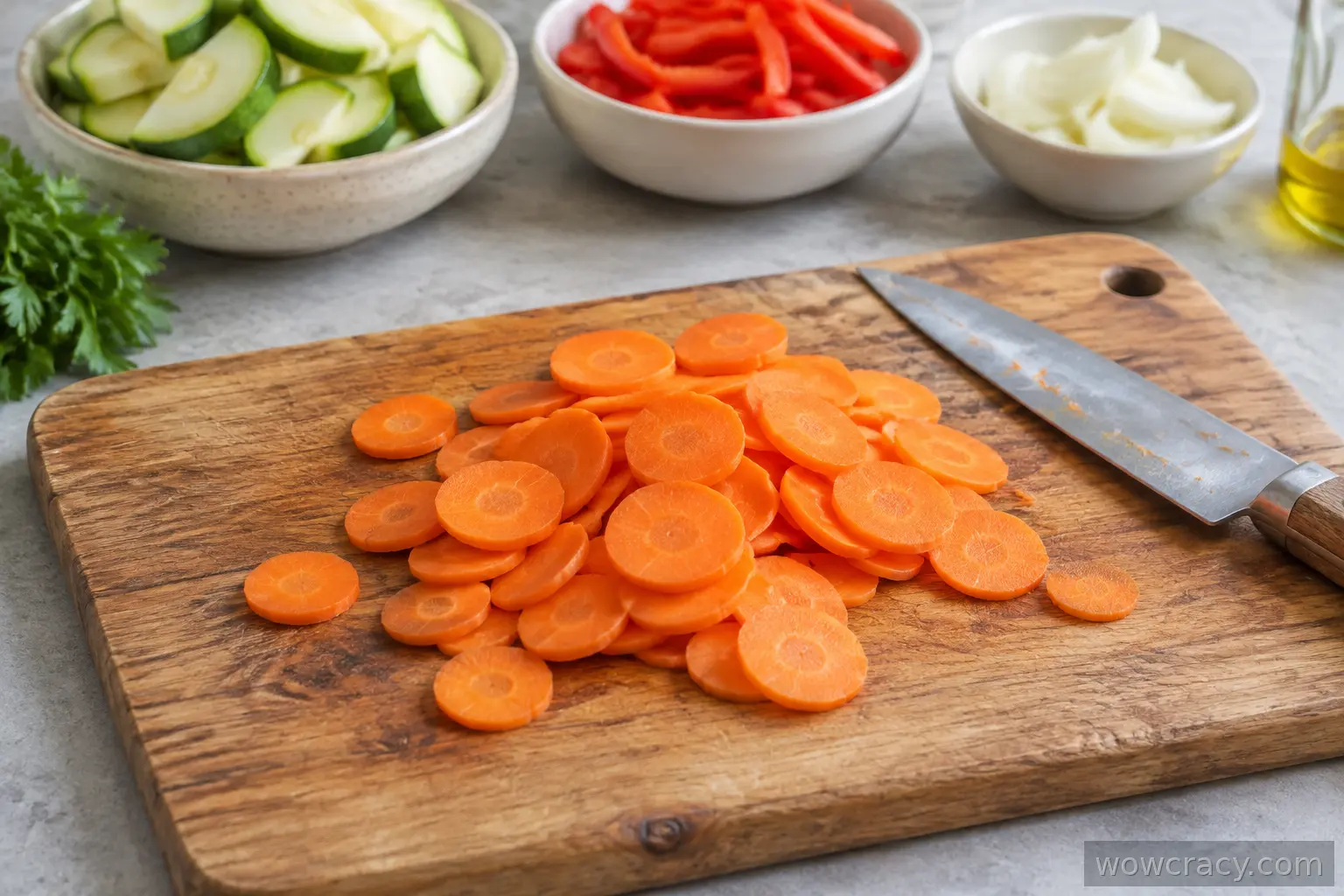
Step 3. Slice the carrots -
Slice the pepper and onion
Remove the seeds from the bell pepper and cut it into strips about 5 mm wide. Peel the onion and cut it into half-rings 3 mm thick.
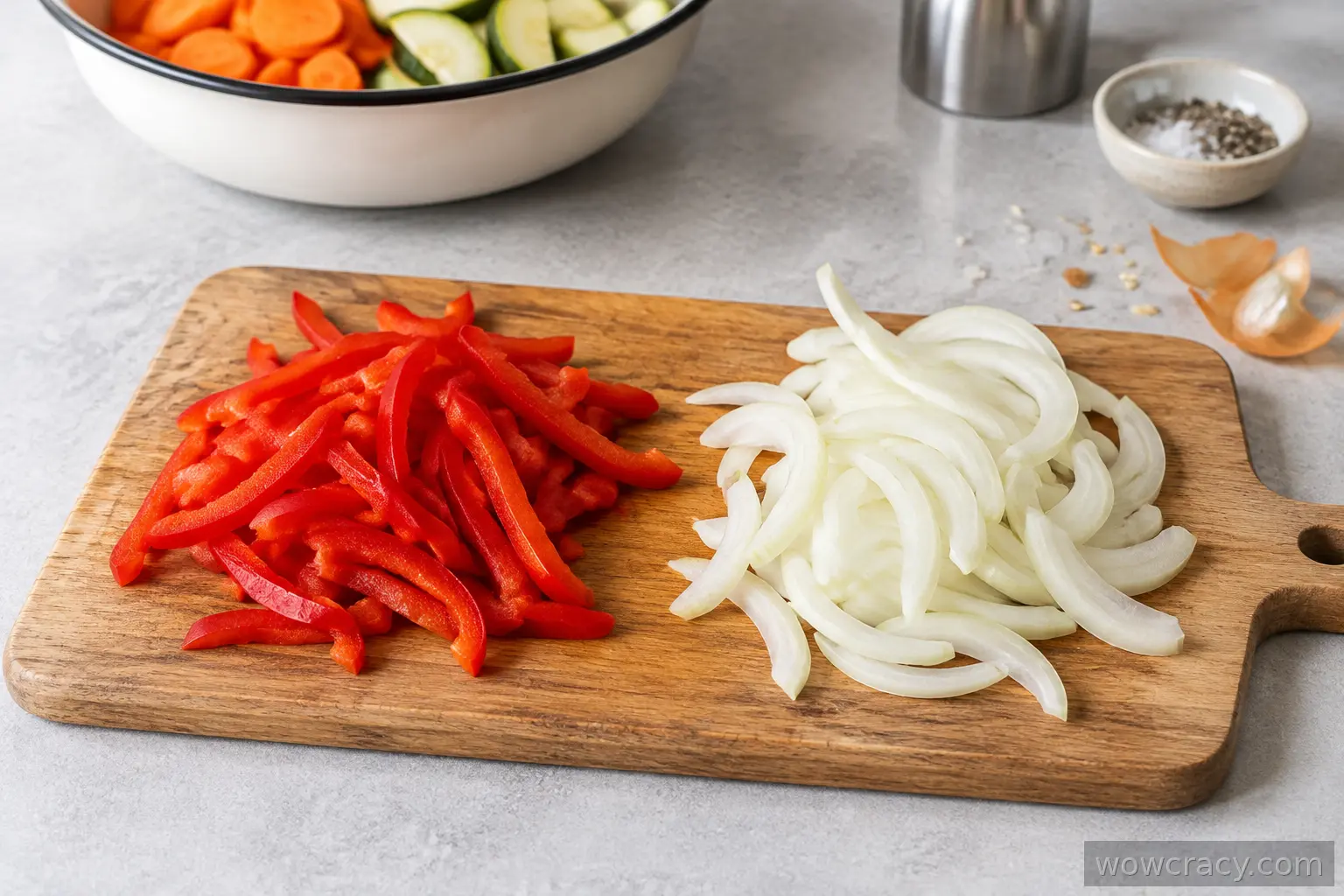
Step 4. Slice the pepper and onion -
Mix the vegetables with the oil
Put all the sliced vegetables in a large bowl, add 2 tablespoons of olive oil, half the salt, half the pepper and the thyme. Mix with your hands so the oil evenly coats every piece.
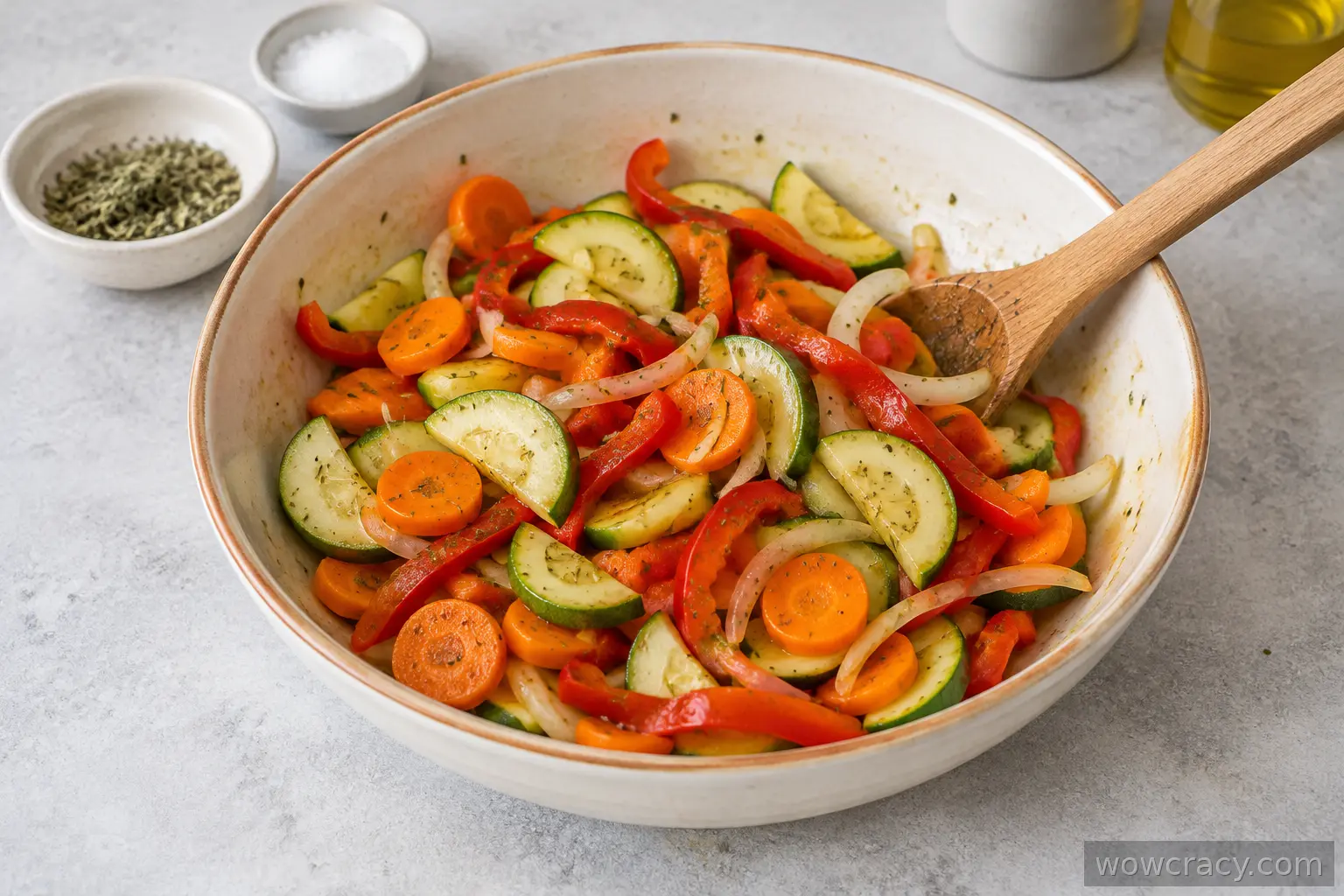
Step 5. Mix the vegetables with the oil -
Prepare the parchment
Cut four sheets of parchment approximately 40 × 35 cm. Fold each in half along the longer side and smooth it out to make a kind of little book with a crease in the middle.
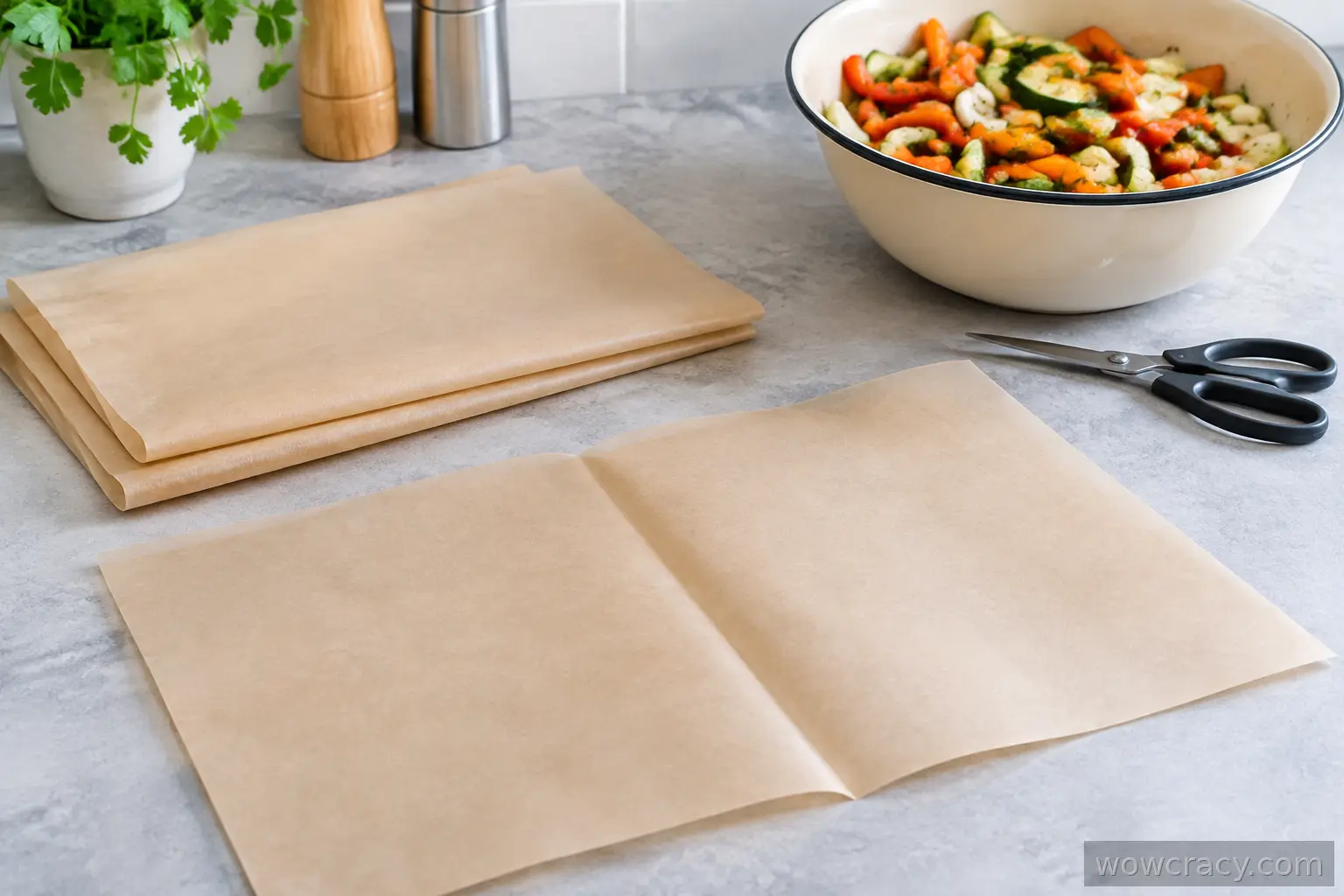
Step 6. Prepare the parchment -
Arrange the vegetables
Unfold the sheets and divide the vegetable mixture into four equal portions, placing it on one half of each sheet closer to the crease. Spread the vegetables in a layer about 1,5 cm thick — an even layer bakes evenly.
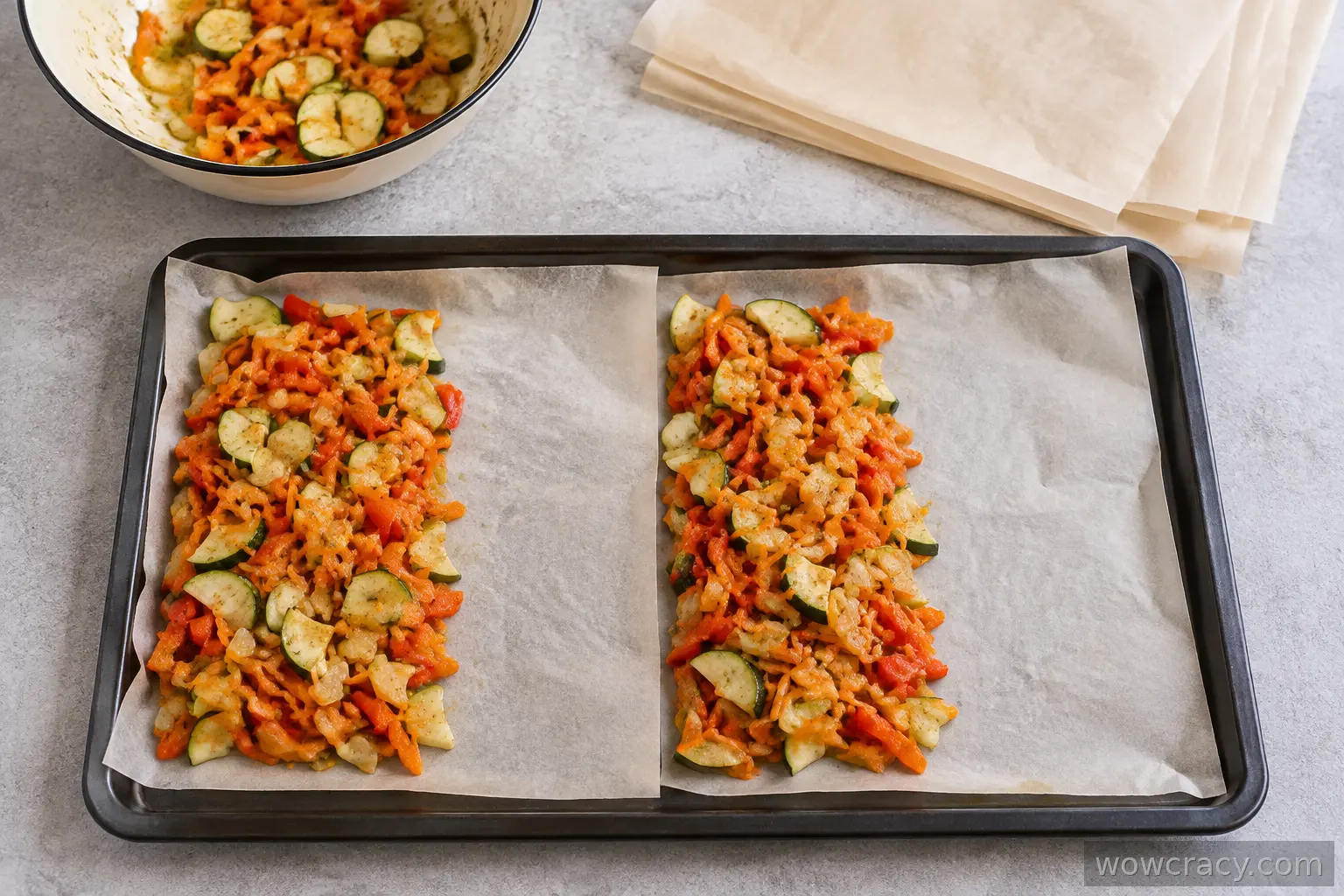
Step 7. Arrange the vegetables -
Add the fish
Place one piece of fillet on each vegetable bed. Season the fish with the remaining salt and pepper, drizzle with the juice of half a lemon and sprinkle with the remaining olive oil.
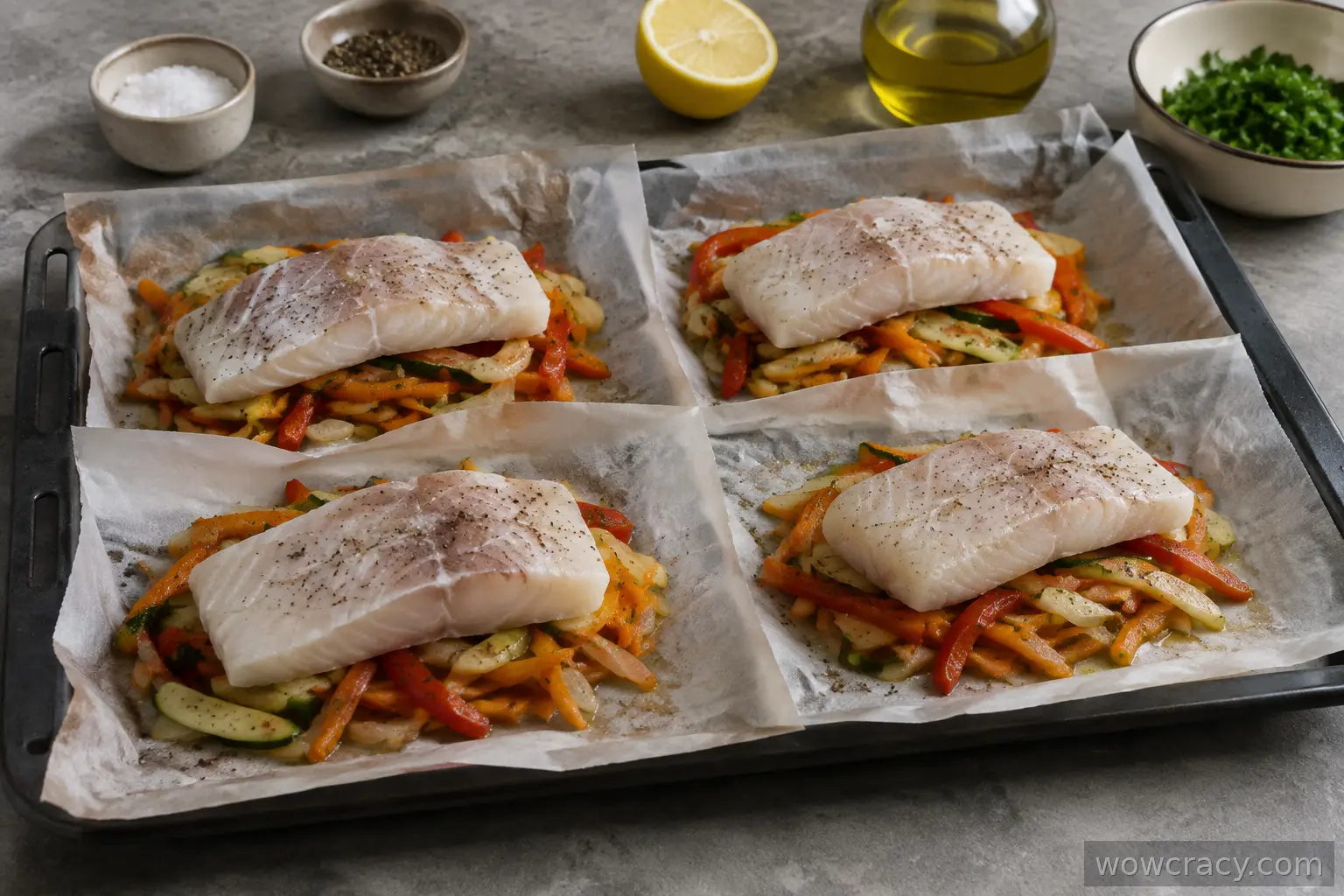
Step 8. Add the fish -
Close the parcels
Fold the parchment around the fish and vegetables so the top half covers the bottom. Roll the edges into tight double folds around the perimeter, working from one corner to the other, and press them with your fingers. The parcel should hold together without toothpicks and leave a little space inside for steam.
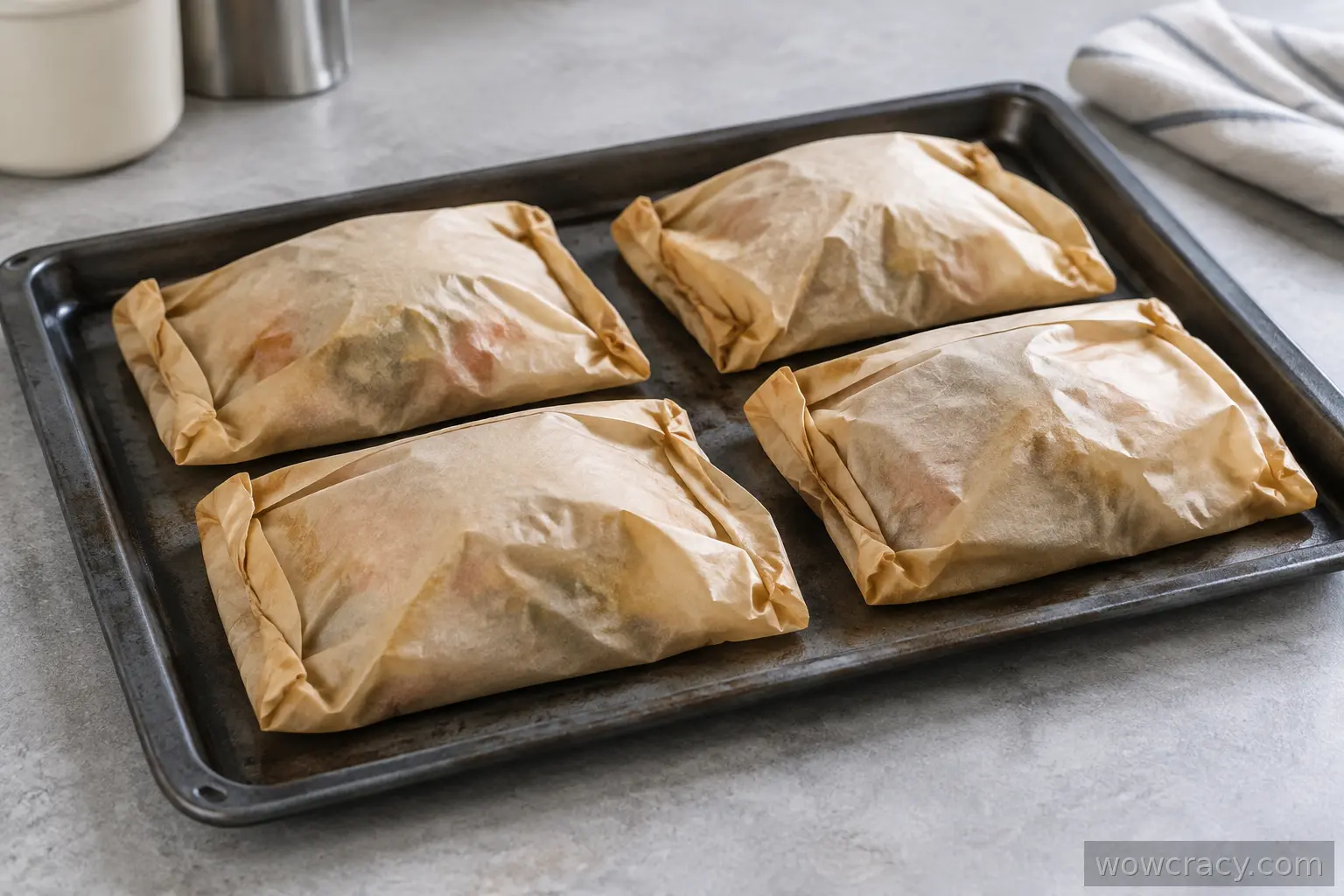
Step 9. Close the parcels -
Bake in the oven
Preheat the oven to 200 °C. Place the parcels on a baking sheet and put it on the middle rack. Bake for 20–22 minutes without turning.
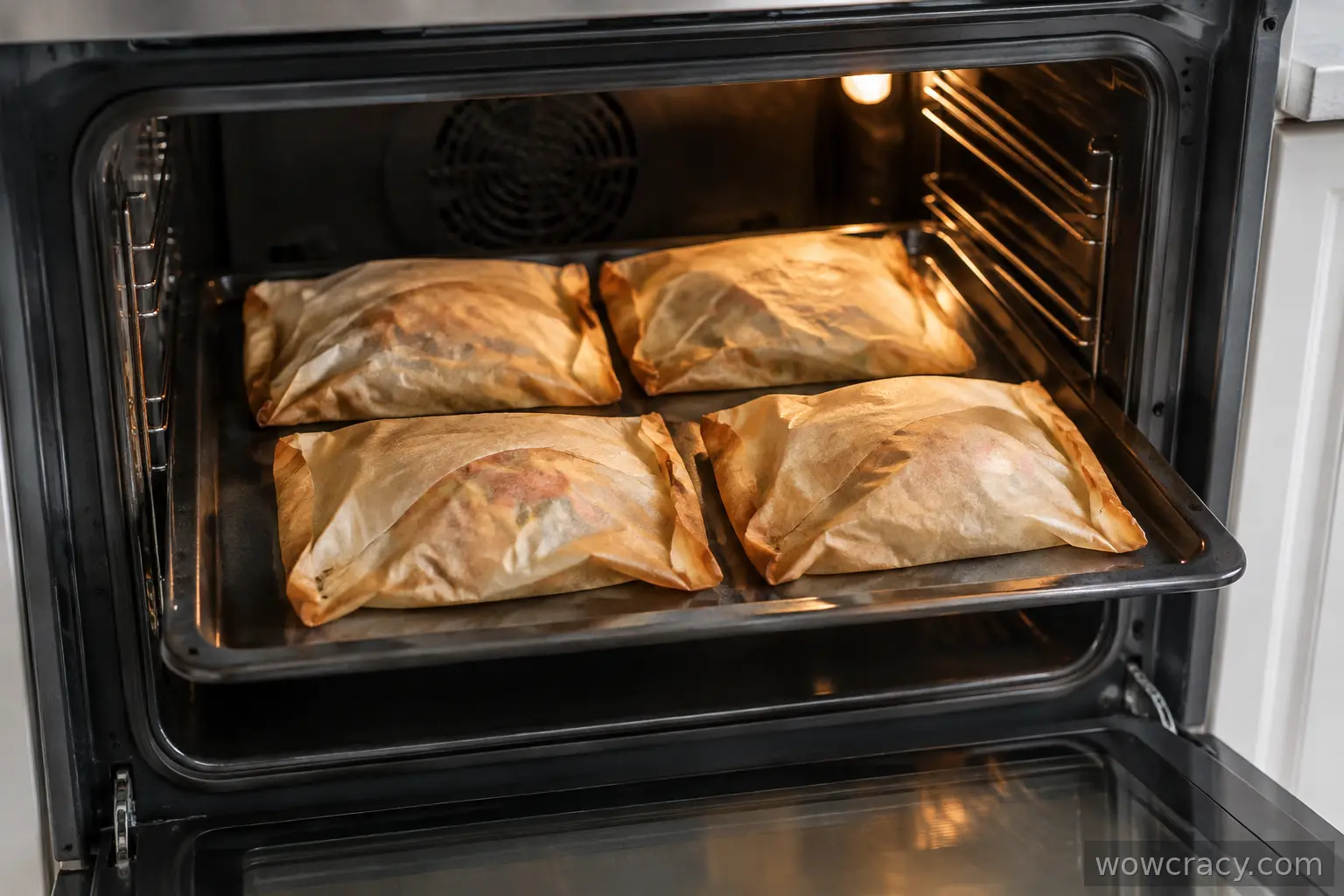
Step 10. Bake in the oven -
Check for doneness
Remove the baking sheet from the oven and carefully open one parcel at the side, letting the steam escape. Check the thickest part of the fillet: the flesh should be white and opaque, with no translucent centre, and the vegetables should be soft under a fork. If the fish is still glassy, close the parcel and return it to the oven for another 3–4 minutes.
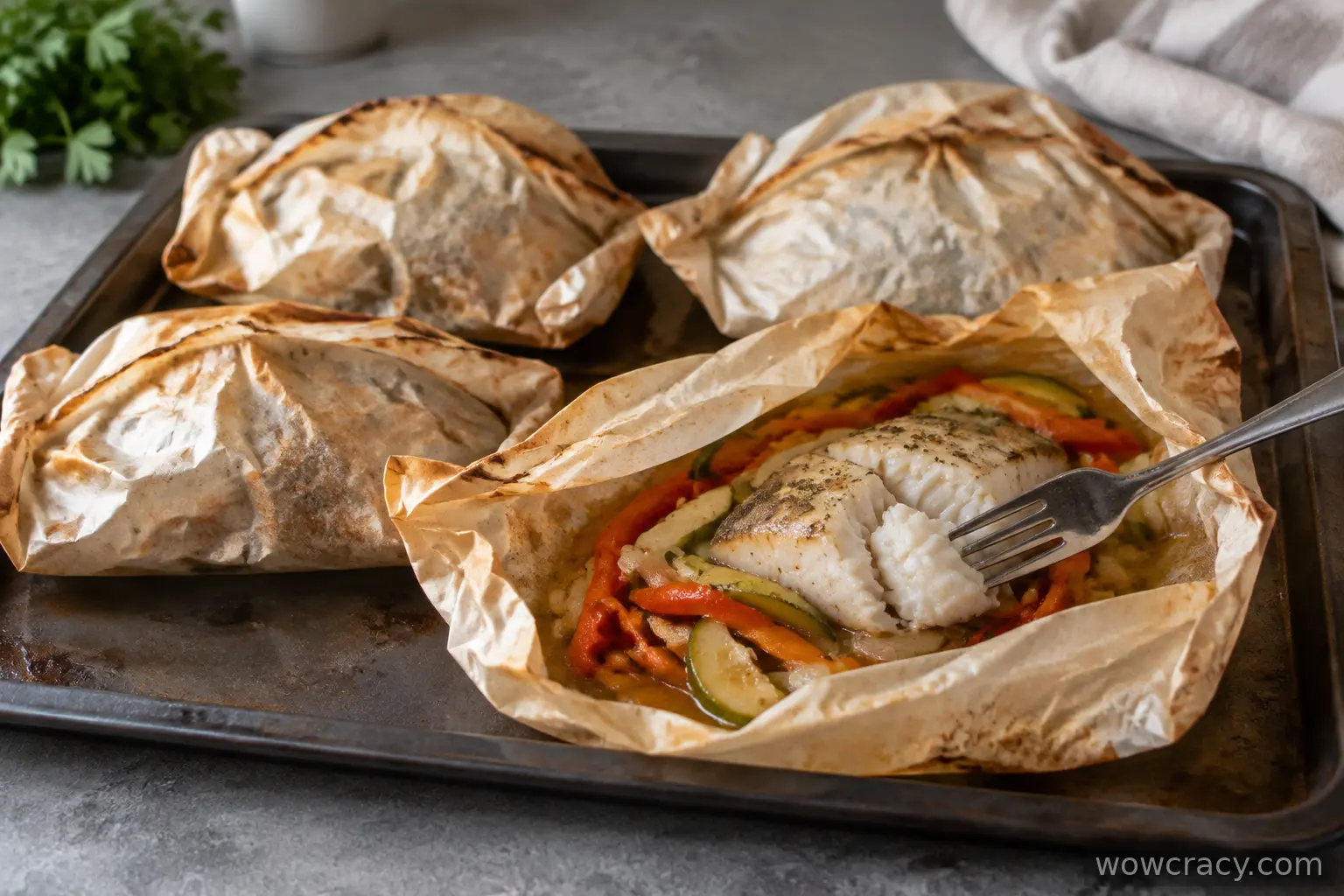
Step 11. Check for doneness -
Serve with herbs
Transfer each parcel to a plate, open it at the top and sprinkle with chopped parsley. Serve immediately, with the remaining lemon wedges, and use a spoon to scoop up the juice that has collected at the bottom of the parchment.
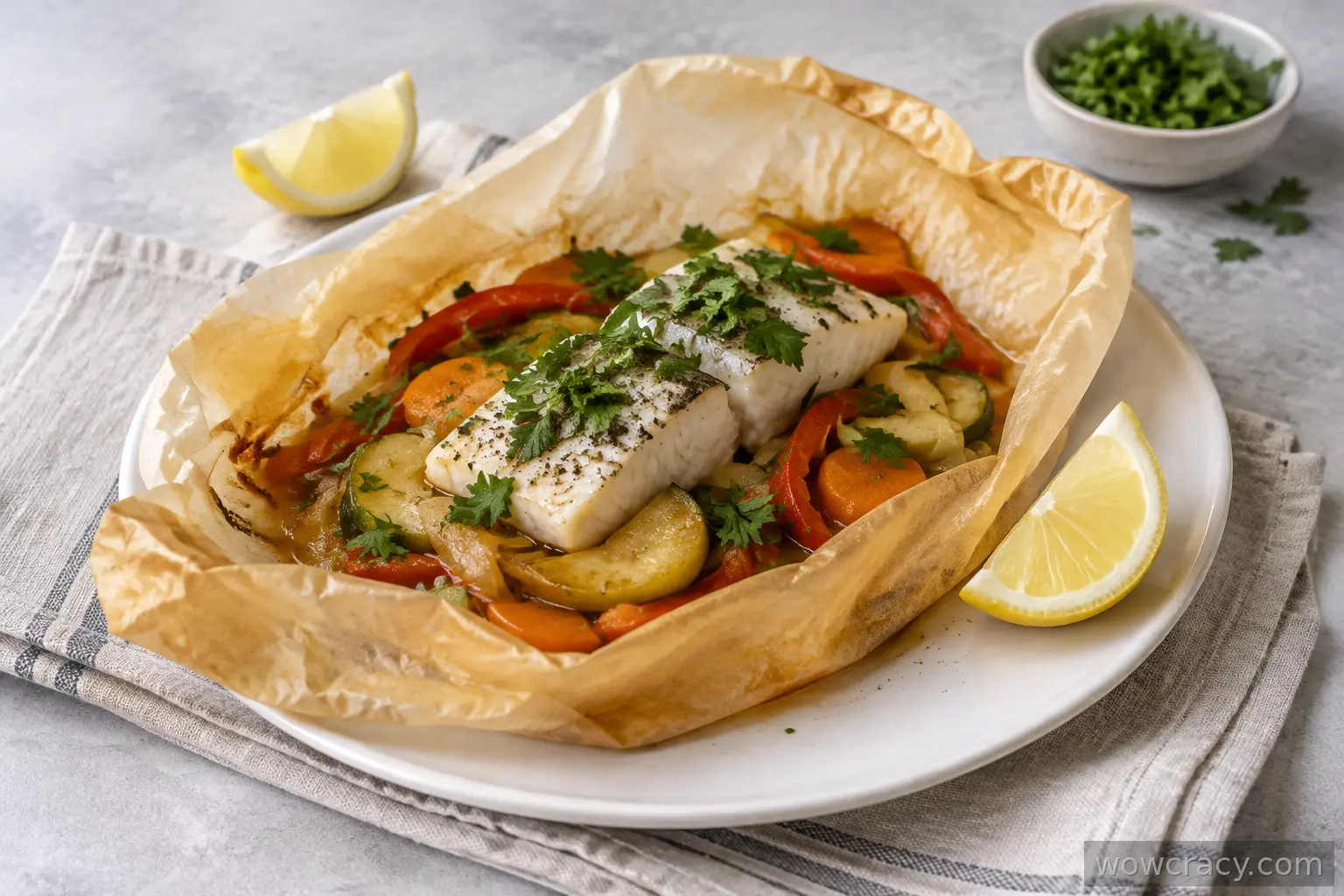
Step 12. Serve with herbs
Tips
- Do not bake fillets thicker than 2,5 cm whole — it is better to cut them lengthwise, otherwise the outer layers will dry out while the center cooks through.
- Make the folds along the edge of the parchment double and fairly wide: a thin edge unfolds from the steam and the dish dries out.
- Do not open the parcels for the first 18 minutes so that the steam does not escape and the fish does not lose its juiciness.
- If the oven heats unevenly, place the baking sheet in the lower third for 5 minutes, then move it to the middle rack.
Ingredient substitutions
- Hake can be replaced with another white fish with firm fillets — cod, pollock or pike perch; adjust the baking time according to the thickness of the pieces.
- Replace the marrow squash with zucchini or thinly sliced eggplant, previously salted for 10 minutes.
- Replace dried thyme with fresh — you will need about 2 teaspoons of leaves.
- Olive oil can be replaced with melted butter, but then reduce the temperature to 190 °C.
Storage
- Store the finished dish in a closed container in the refrigerator for no more than 2 days.
- Reheat in the oven at 160 °C for about 10 minutes under foil so the fish does not dry out; a microwave makes the fillet rubbery.
- Raw prepared fillet can be kept in the refrigerator for no longer than 24 hours before baking.
The thickness of the cut is no small matter here. Carrot slices about 3 mm thick and courgette about 5 mm have time to soften within 20–25 minutes, whereas larger pieces will stay crunchy while the fish has already dried out. If you want to swap the vegetables, go by density: potatoes or sweet potatoes need parboiling beforehand or very thin slicing, while tomatoes and spinach, by contrast, release a lot of moisture.
How to tell the fish is done
Hake fillet is done when the flesh has turned white and opaque through its whole thickness and there is no glassy translucency in the centre. Check the thickest part, gently separating the flakes with a fork: they should flake apart but not fall to pieces. If in doubt, return the parcel to the oven for another 3–4 minutes — better to leave it in a little longer than to serve raw fish.
Comparison of vegetables for the parcel
| Vegetable | Cut | Characteristic |
|---|---|---|
| Courgette | slices 5 mm | releases moisture, doesn’t dry out |
| Carrot | thin rounds 3 mm | dense, needs fine cutting |
| Sweet pepper | strips 5 mm | cooks quickly, adds sweetness |
| Onion | half-rings 3 mm | turns soft and aromatic |