When gel polish grows out or lifts, resist picking or peeling it: this can damage the nail surface. Some systems can be soaked off, but the method depends on the product and can still cause irritation.
The steps below are for a coating designed to soak off. Check the system name and directions first; do not treat unknown materials, damaged nails or inflamed skin yourself.
- First determine whether your coating is amenable to soaking
- What to prepare for the procedure
- Step-by-step instructions: how to remove gel polish without tearing it off
- Step 1. Prepare your nails
- Step 2. Apply cotton pads with liquid
- Step 3. Wrap in foil
- Step 4. Wait the required time
- Step 5. Remove the foil and check the result
- Step 6. Remove the remnants
- Why you must not tear off or scrape off the coating
- When to stop and consult a specialist
- Nail care after removal
- Frequently asked questions
- Can gel polish be removed with an acetone-free liquid?
- How many times can soaking be repeated?
- Is it safe to remove gel polish if there is a crack on the nail?
- What to do if the nail burns after removal?
- A short algorithm for safe removal
First determine whether your coating is amenable to soaking
First ask the technician or check the product name to identify the polish, base, overlay or extension material. Appearance and thickness cannot reliably tell you whether the system soaks off.
For a soak-off coating, follow the manufacturer’s directions for remover, preparation and timing. Some systems take about 10–15 minutes; others specify 20 or more. There is no universal timer for every gel polish.
Hard gel may require professional filing. Some other gel systems, acrylics and overlays do soak off, so the general name or thickness is not decisive. Have unknown or non-soluble material removed professionally rather than using an e-file at home.
If the coating stays hard after the specified time, recheck the system and preparation method. Do not extend exposure indefinitely or test it by force. Stop if the material is unknown or pain or irritation occurs.
What to prepare for the procedure
Removing gel polish is not just about the liquid. You will need a few simple things that are found in almost every home or sold in a small kit. Here is the minimum list:
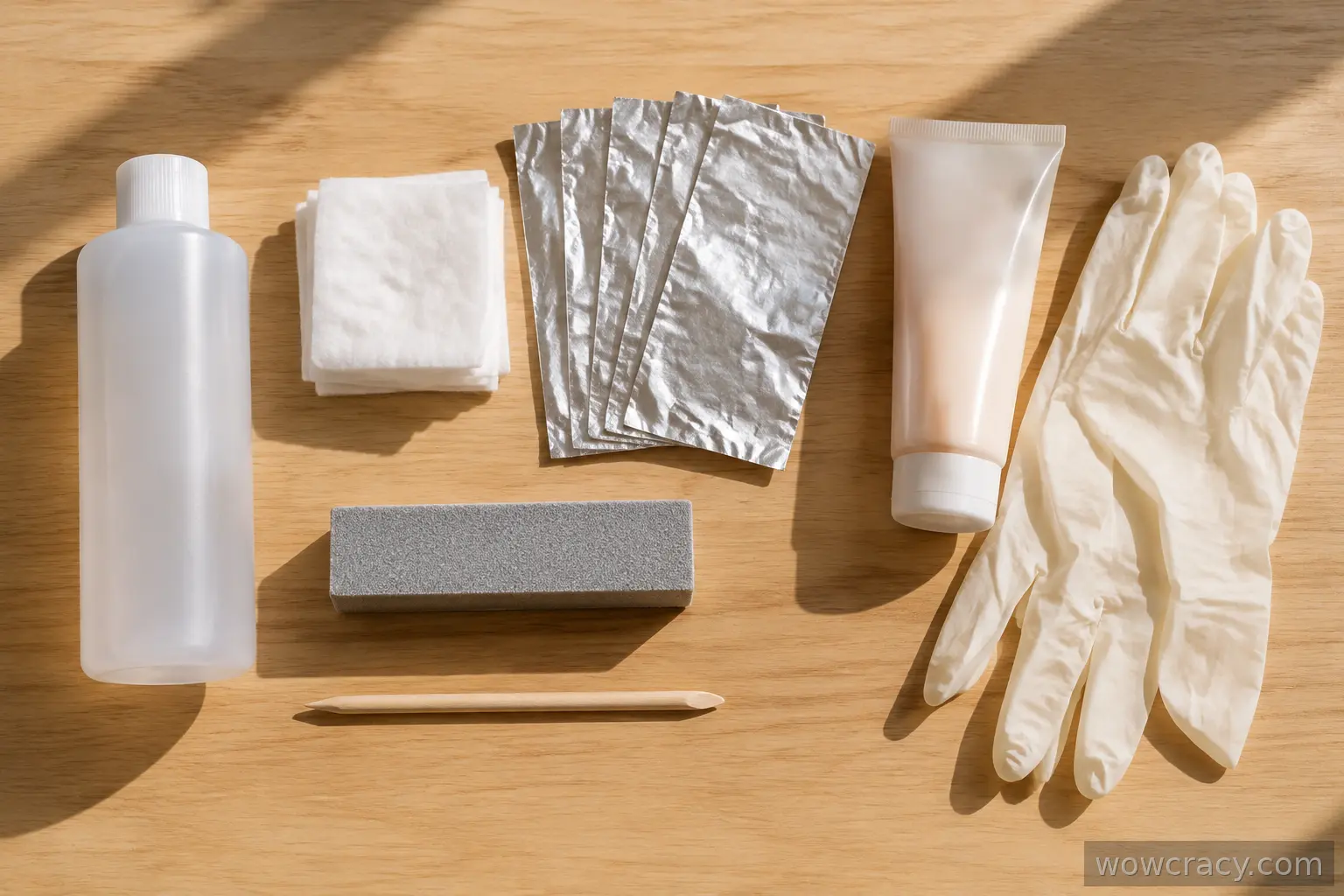
- Remover specified by the coating maker, often acetone-based for soak-off systems.
- Cotton pads or cosmetic wipes cut into small squares.
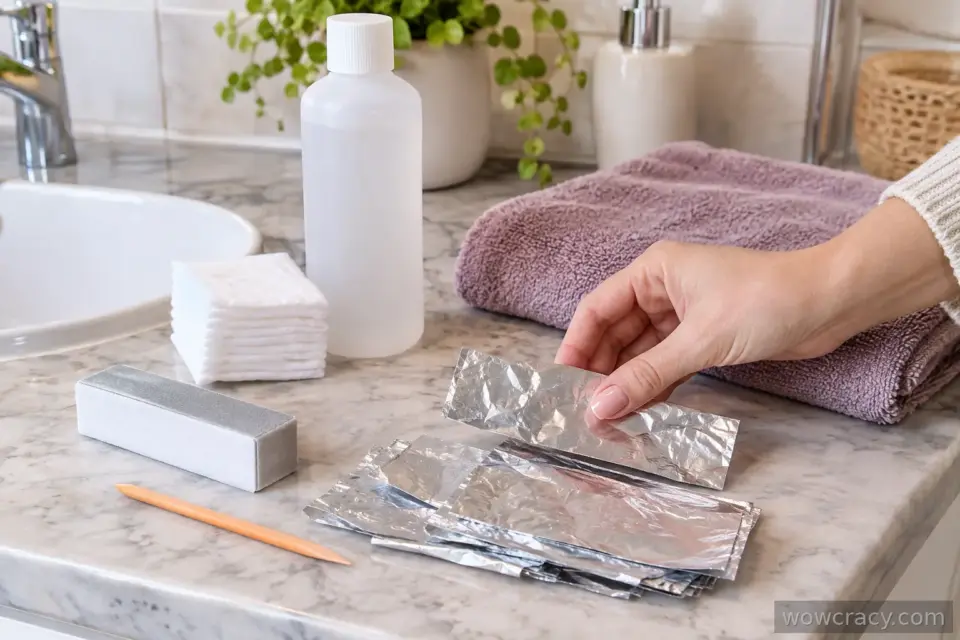
- Food foil cut into strips approximately 10×10 cm — one for each nail.
- A file for the top coat only if directions require it, never for filing away natural nail.
- Soft cloth for residue; no scraping sticks or spatulas.
- Petroleum jelly for surrounding skin and a tolerated fragrance-free moisturizer afterwards.
- Timer, towel and protection for the work surface against acetone.
Do not use metal files, scissors or a blade to pick at the coating. Sharp objects scratch the nail plate even with a careful movement.
Step-by-step instructions: how to remove gel polish without tearing it off
Work in a ventilated area away from flames, smoking and hot surfaces. Acetone is flammable: do not heat it or warm wraps with a hairdryer. Protect the work surface, keep remover away from children and work on one hand at a time.
Step 1. Prepare your nails
Wash and dry your hands and inspect the skin and nails. Apply a thin layer of petroleum jelly around each nail, not on the coating. If the maker requires breaking the top coat’s seal, work only on the coating without reaching the natural nail; ask a technician if you cannot judge the layers.
Step 2. Apply cotton pads with liquid
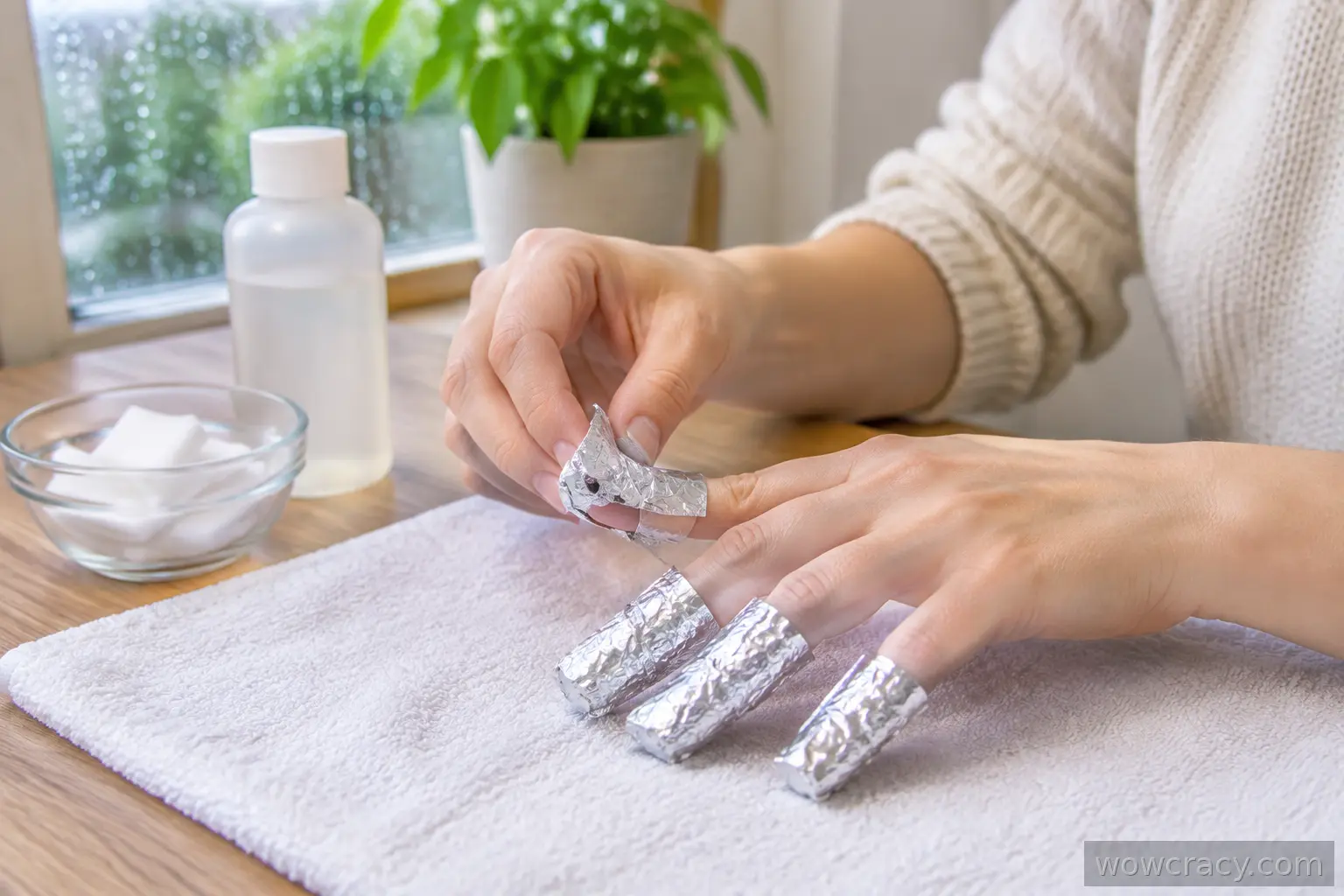
Cut cotton to fit the nail, saturate it with the recommended remover and place it on the coating. Avoid soaking the surrounding finger and do not mix solvents.
Step 3. Wrap in foil
Secure the cotton with the wrap specified in the directions, such as foil or a purpose-made wrap. Keep it in place without constricting the finger. Do not use heating to speed removal.
Step 4. Wait the required time
Set the timer for your specific system. If burning, pain or marked irritation occurs, remove the wrap and wash off the product rather than waiting for the timer.
Step 5. Remove the foil and check the result
Remove one wrap and check whether the coating has softened and releases easily. A short additional soak is appropriate only if the product directions allow it and there is no irritation. Ask a technician if it remains hard.
Step 6. Remove the remnants
Wipe away only softened residue that comes off easily with cotton or a soft damp cloth. Do not scrape with a stick, spatula or metal tool, or lift an edge. Leave resistant areas to a technician; wash hands with gentle soap and water afterwards.
Why you must not tear off or scrape off the coating
Gel polish holds on the nail thanks to adhesion to the upper layer of keratin. When you tear off the plate by force, part of the keratin scales comes away with it. The nail becomes thinner, more sensitive, and sometimes a burning sensation or pain appears on contact with water. In the long term, this leads to peeling and slow recovery.
Scraping with a metal tool causes similar harm, even if you act carefully. Scratches on the surface of the nail are not always visible immediately, but they worsen the adhesion of the next coating and make the nail vulnerable to moisture and detergents.
A technician should choose the appropriate removal method for an unknown or non-soluble system. An e-file is not the only method for every material, nor a guarantee of safety by itself. Do not file down to the natural nail at home.
When to stop and consult a specialist
Sometimes even the correct procedure does not give a result. Here are the signs that mean you should not continue on your own:
- The coating stays hard after the directed exposure and any permitted repeat.
- The material is unknown or is not designed to soak off.
- The nail under the coating is painful, reddened or has cracks.
- You have already had a case of tearing off gel polish, and the nail has become thin and sensitive.
- The coating was built on forms or has a complex design with three-dimensional elements.
For resistant polish without pain, contact a nail technician. Pain, inflammation, a wound, unusual discoloration or separation of the nail itself needs medical assessment; a new manicure is not a substitute.
Nail care after removal
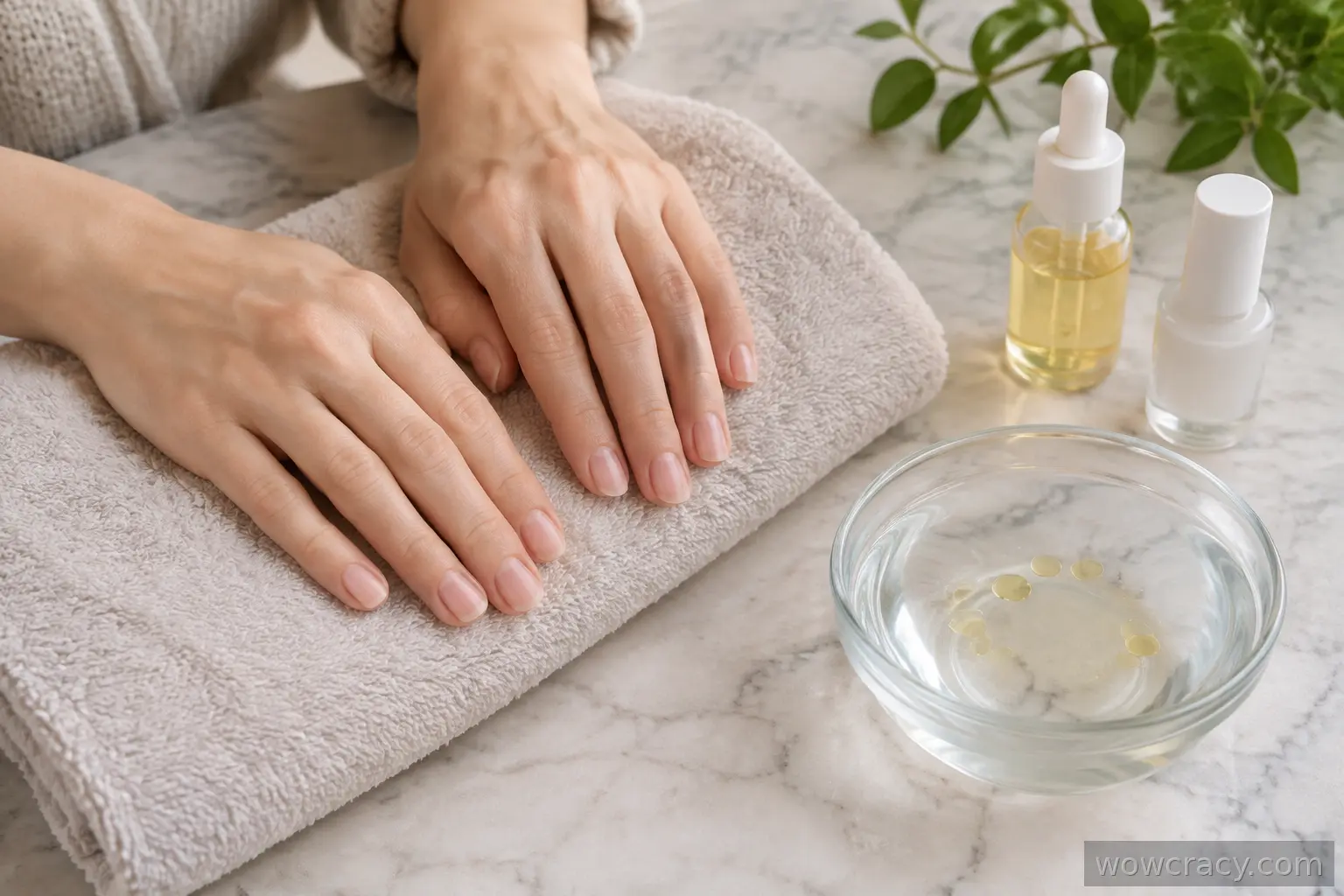
Even after careful soaking, the nails need recovery. Acetone dries out the plate and the skin around it, so immediately after the procedure you should apply a nourishing cream or cuticle oil. Over the next few days, avoid aggressive detergents without gloves.
Do not buff a dull or peeling nail smooth or assume a course of hardener will repair it. Moisturize the surrounding skin and protect hands from prolonged water and detergent exposure. Persistent changes need a dermatologist.
If nails are thin or painful, pause further gel applications. Damaged nail must grow out; two to four weeks does not guarantee full recovery. Establish the cause of pain or peeling before another coating.
Frequently asked questions
Can gel polish be removed with an acetone-free liquid?
Ordinary acetone-free nail-polish remover is not a universal substitute for a soak-off remover. Use the coating maker’s specified method. If the system is unknown, identify it before experimenting with solvents.
How many times can soaking be repeated?
There is no universal safe number of repeats. Do not keep repeating long soaks by guesswork: follow directions and stop for irritation. If a manufacturer-permitted repeat does not work, ask a technician.
Is it safe to remove gel polish if there is a crack on the nail?
Do not use acetone wraps at home on an open wound, inflammation, a painful split or a lifting nail. Seek medical advice first to assess the injury and decide what to do next.
What to do if the nail burns after removal?
Remove the wraps immediately and wash the product off thoroughly with water and gentle soap. Avoid new active products on the irritated area. Seek medical help for severe or persistent pain, swelling, blisters or spreading redness.
A short algorithm for safe removal
Let us summarize the practical sequence of actions that will help avoid mistakes:
- Identify the system and whether it is soak-off.
- Prepare remover, cotton, wraps and a timer; ventilate and remove heat and ignition sources.
- Protect surrounding skin. Prepare the top coat only as directed without filing the natural nail.
- Apply saturated cotton, secure without constriction and follow the system’s timing.
- Wipe off only softened residue that releases easily, without a stick or scraping.
- Ask a technician about resistant polish; seek a clinician for pain, wounds or inflammation.
- After the procedure, apply cream or oil and give your nails a rest.
Follow the specific system’s directions, avoid peeling and do not force resistant residue off. Stop if the material is unknown or the procedure causes discomfort.