A ring that spins or pinches may have the wrong size, band width or shape. An adjustable model offers room to adapt, but does not solve every fit problem. Check both its range and adjustment method before buying.
Below is a calm comparison without the slogan “adjustable is always better” or the reverse. Both types have their own logic, and the choice depends on how exactly you will wear the piece, what metal it is made of, and how stable your size is throughout the year.
- How the construction affects the fit
- Where exactly the mechanism gets in the way
- When adjustability really saves the day
- Limitations rarely mentioned in descriptions
- Why frequent bending is undesirable
- Can an open ring catch on clothing
- Impact on durability and repairability
- Comparison by key criteria
- How to determine the size correctly if you do choose an exact model
- What to choose for a gift
- Everyday wear: what to pay attention to
- Metal and skin sensitivity
- Weight and thickness
- Care
- Situations where it is better to take it off
- A practical selection algorithm
- Frequently asked questions
- Can an adjustable ring be worn constantly without taking it off?
- Is an adjustable ring suitable for an engagement or a wedding?
- Does adjustability change the size by several positions?
- What to do if an exact-size ring still pinches?
- A brief conclusion for the purchase
How the construction affects the fit
A fixed-size ring has specified internal dimensions. Fit also depends on band width and profile and the shape of your finger. The size marking helps selection, but try the ring on to check comfort.
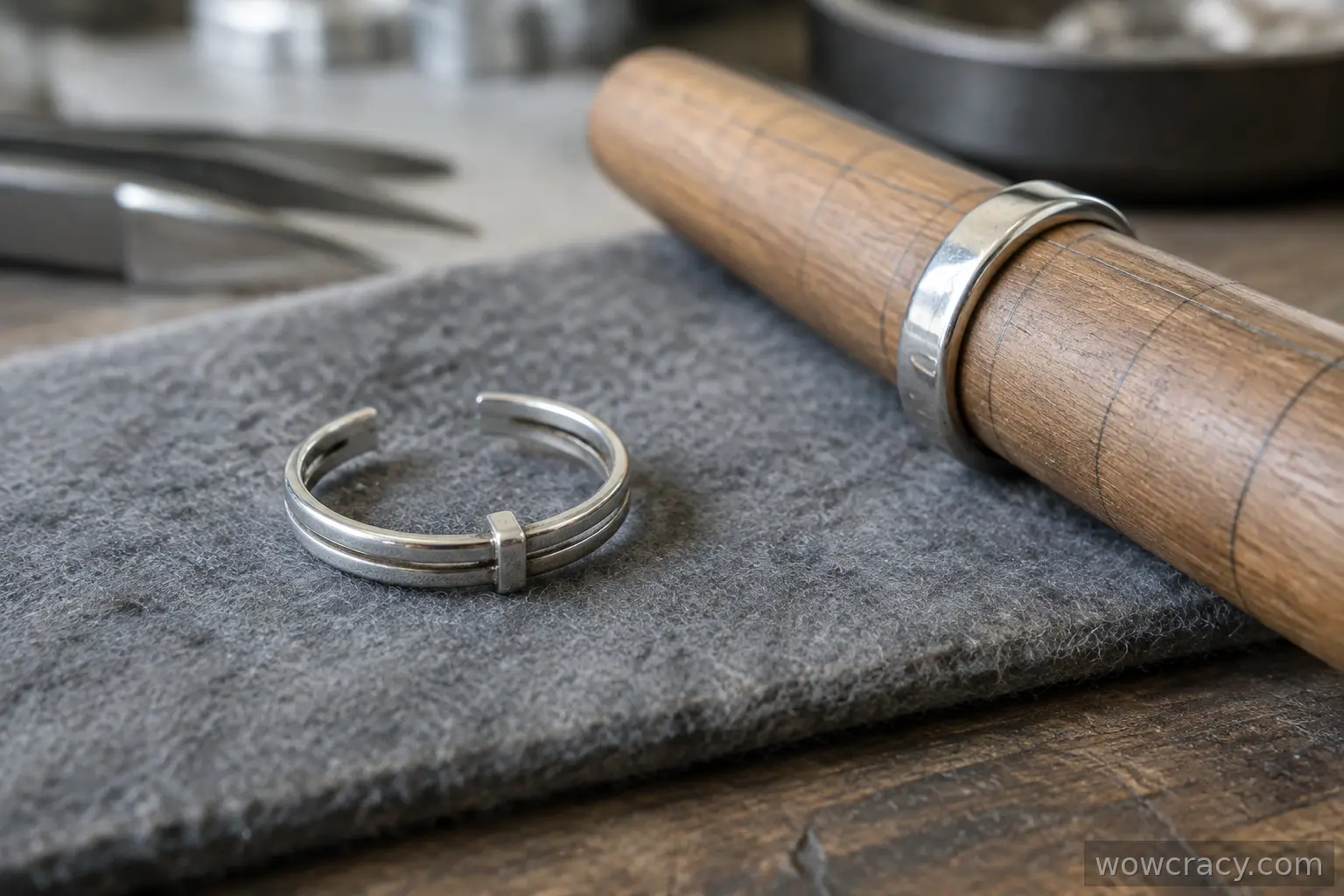
Adjustment may use an open band, sliding or spring construction, or a chain clasp. An open ring is not necessarily adjustable: a decorative gap does not mean the metal may be bent. Check the maker’s description.
A projection, join or change in thickness can affect comfort in either design. Check the inner surface, rounded edges and contact with neighbouring fingers. Discomfort is not inevitable in an adjustable model.
Where exactly the mechanism gets in the way
Test the actual ring during familiar movements: close your hand and hold a pen or phone. Check whether ends or a clasp press or catch on fabric. Mechanism placement alone does not determine comfort.
When adjustability really saves the day
There are situations in which an adjustable ring is not a compromise but a sensible solution. They are worth knowing so as not to give up convenience where it is appropriate.
- Finger circumference varies under normal conditions; permitted adjustment may help, but should not mask pain or swelling.
- The ring is bought as a gift without an exact size — for example, when there is no way to find out the circumference discreetly.
- The piece is intended for several fingers or for wearing on different hands depending on your mood.
- A person loses or gains weight, and the finger size gradually changes.
- It is a child’s or teenager’s piece, where the size is not yet stable.
In each of these cases, the value lies not in “universality” as a marketing word but in a specific freedom: not having to have the ring altered at a workshop and not having to buy a new one six months later.
Limitations rarely mentioned in descriptions
The drawbacks of adjustable rings are usually related not to design but to the physics of metal and mechanics. Understanding them is important so as not to be disappointed later.
Why frequent bending is undesirable
Repeatedly bending an open band can deform it, crack the metal or damage plating. This differs from operating a purpose-designed spring mechanism. Follow the maker’s adjustment limits and method for each design.
Once an open band fits, avoid bending it for every removal unless the design requires this. Slip it off normally. Closed bands can also deform under load; a fixed size does not make them damage-proof.
Can an open ring catch on clothing
Projecting ends, clasps and decorative details can catch knitwear, hair or gloves. Fixed-size rings with high settings or sharp details can do this too.
The risk depends on the construction: a smooth sliding mechanism behaves more calmly than an open clasp or decorative elements. If you wear sweaters with chunky knits or often work with your hands, it is worth choosing models with a maximally concealed and rounded mechanism.
Impact on durability and repairability
Strength depends on alloy, thickness, manufacture and design. A thin area may bend regardless of price; paying more does not guarantee resistance to frequent adjustment. Check the warranty and care guidance.
Repair also has a nuance: if the mechanism breaks, it cannot always be replaced — sometimes a jeweler suggests simply soldering the ring into a fixed size. This is worth finding out in advance, especially if the piece is expensive or sentimental.
Comparison by key criteria
So that the decision does not depend on emotions at the moment of purchase, it is convenient to bring the difference together in one table. It does not give a final answer but helps you see which criterion is more important to you.
| Criterion | Adjustable ring | Exact-size ring |
|---|---|---|
| Fit accuracy | Depends on mechanism and range | Exact, if the size is measured correctly |
| Margin for a change in circumference | Yes | No |
| Risk of catching on clothing | Depends on edges and details | Depends on setting and decoration |
| Wear from bending | Possible with repeated bending | Not designed for bend adjustment; other loads can still cause damage |
| Convenience for a gift without a size | High | Low without precise data |
| Aesthetics of a classic band | Depends on design and taste | Depends on design and taste |
| Care and cleaning | More difficult due to the mechanism | Simpler |
The table shows possible differences, not a ranking of every model. Compare the actual rings for fit, permitted adjustment and care.
How to determine the size correctly if you do choose an exact model
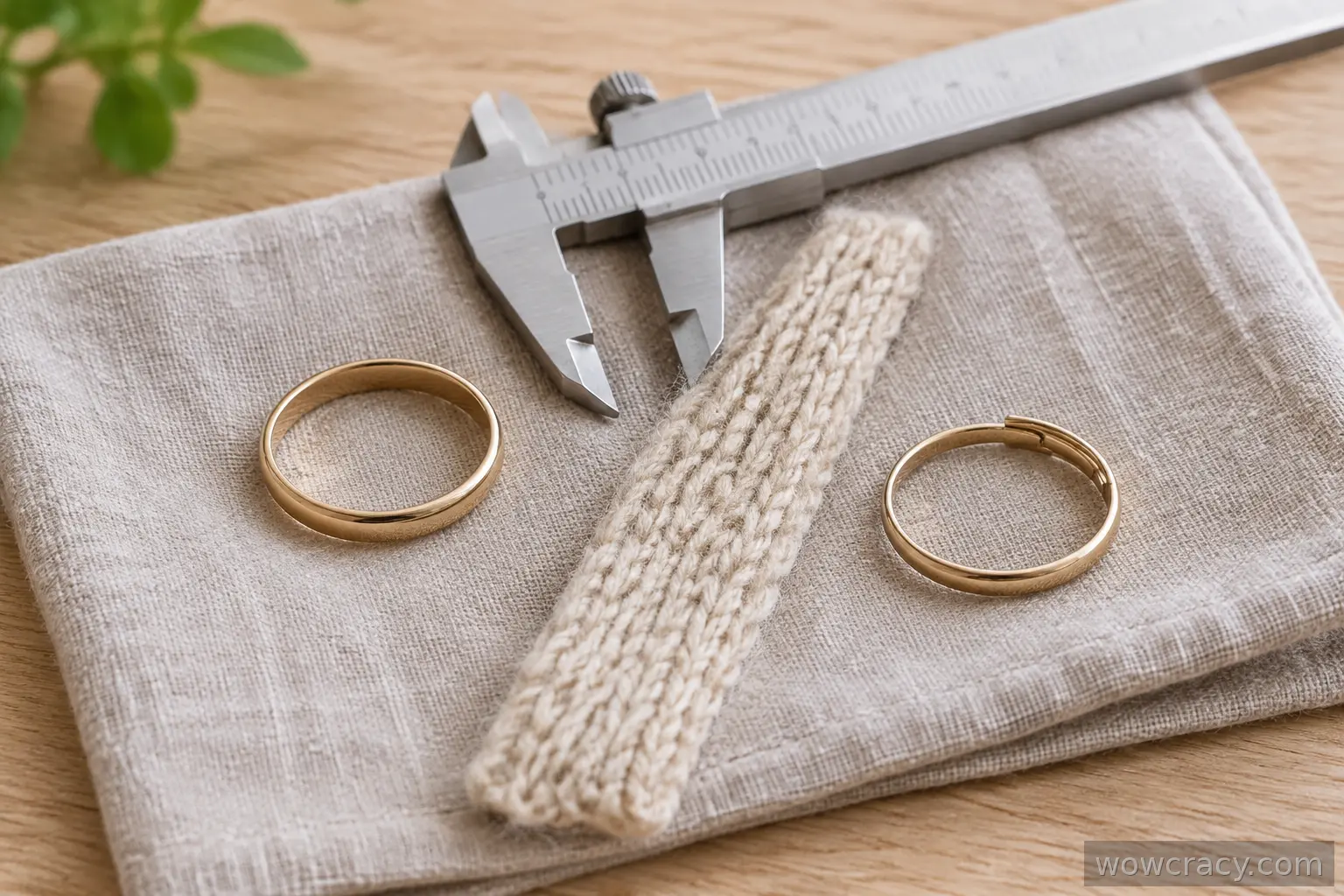
Careful measuring helps reduce the risk of a poor fit. It does not replace trying on the ring, especially with a wide band or prominent knuckle.
- Measure your finger circumference at the end of the day, when the hand is in its natural state — not after the cold and not after a hot bath.
- Compare measurements at different times and on different days, then check comfort; an average alone does not guarantee fit.
- Take the width of the shank into account: a wide ring on the same finger fits more snugly than a thin one, so sometimes a larger size is needed.
- Check the sizing system: it may use internal diameter, circumference or a scale number. Matching numbers from different systems are not equivalent.
- Between sizes, try both in the intended band width. Do not automatically choose the smaller size just because the band is thin.
Evening time and heat deserve a separate mention: if you buy a ring in the morning in winter, there is a chance that in summer it will become tight. This is exactly where an adjustable model wins — but at the cost of the compromises described above.
What to choose for a gift
A gift is a situation where an adjustable ring is often justified. You do not always know the exact size, and sometimes you have no way to find it out without giving away the surprise. In that case, a model with a delicate concealed mechanism looks like a practical solution: the person adjusts the fit to their own finger themselves.
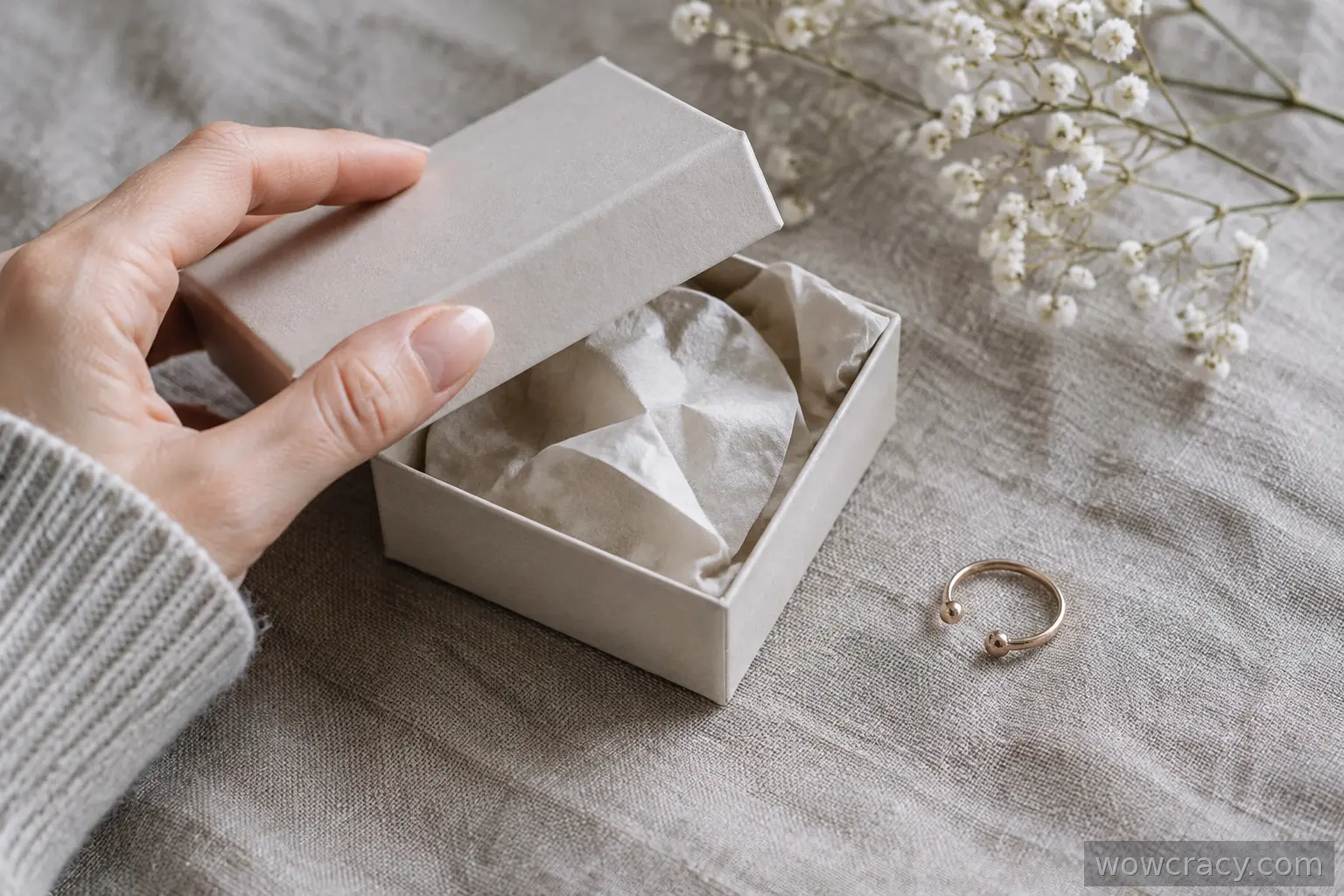
Choose the appearance to suit the recipient and the mechanism for comfort and reliability. Check edges, moving parts and exchange options. A concealed mechanism is a design choice, not a requirement for a proper gift.
Knowing the size opens up more fixed-size options. Neither design makes a gift inherently more personal; the recipient’s taste and comfortable fit matter.
Everyday wear: what to pay attention to
For constant wear, not only the size and the mechanism matter but also how the ring interacts with your life. Here are a few practical points worth checking before buying.
Metal and skin sensitivity
Check alloy and plating for either ring type. Irritation may relate to the material, moisture or product residue beneath the band. Remove the ring if itching or a rash develops, and discuss a persistent reaction with a dermatologist.
Weight and thickness
Judge weight and thickness on your finger, not just in a photo. A bulky ring of either design can get in the way. Comfort during a fitting does not mean it should stay on for sleep or tool work.
Care
Dust, hand cream, and detergents accumulate in the mechanism. Cleaning it is more difficult than a smooth band, and sometimes a soft brush and careful drying are needed. For an exact-size model, ordinary metal care is enough.
Situations where it is better to take it off
Remove any ring before sport, tool work or tasks where it could catch or trap a finger. Remove jewellery before swimming too, to reduce loss and material damage.
A practical selection algorithm
To make the decision an informed one, it is enough to go through a few short steps. They do not require special knowledge, only honest answers to questions about yourself.
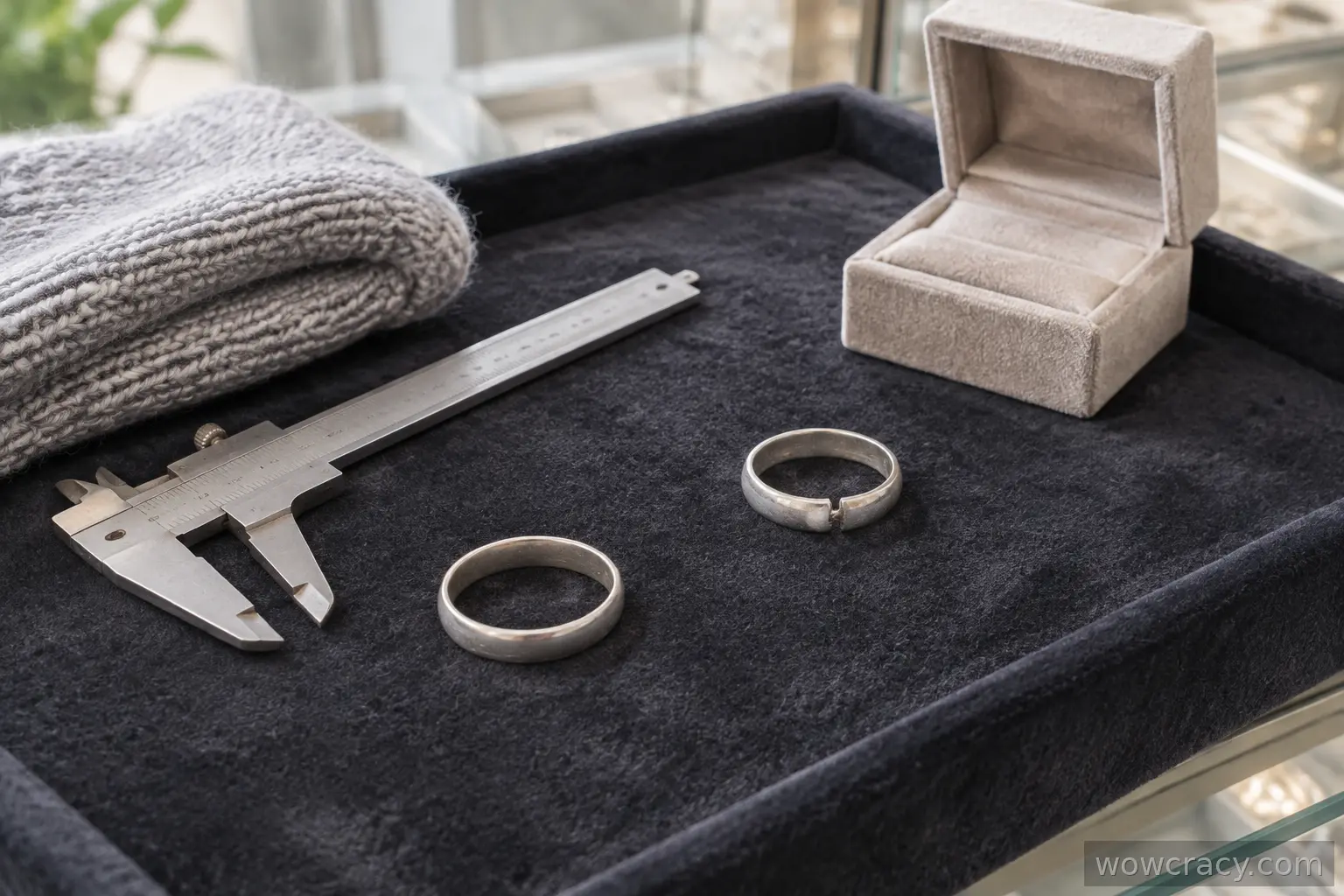
- Determine whether your size is stable. If you have been wearing the same ring for several years without discomfort, an exact size is entirely realistic.
- Check whether the model permits repeated adjustment or only an initial fitting.
- Assess your wardrobe and habits. Lots of knitwear, gloves, active work with your hands — an argument in favor of a concealed and smooth mechanism or an exact model.
- Check material, thickness, joins and care instructions; price alone is not a strength test.
- For a gift without a size, choose an adjustable model with a delicate mechanism; for a gift with a known size — an exact one.
And most importantly: do not hesitate to ask the seller about the possibility of exchange or adjustment. Even the best-thought-out decision sometimes needs correction after the first week of wear.
Frequently asked questions
Can an adjustable ring be worn constantly without taking it off?
Wearing it continuously without removal is not a universal recommendation. Remove it for risky activities and check the skin and mechanism. Adjust only within its permitted range; pinching or catching calls for a different fit.
Is an adjustable ring suitable for an engagement or a wedding?
Yes, if the recipient likes the design and it suits the intended use. Appearance and symbolism are personal choices. For a lasting keepsake, check construction, warranty and repair options.
Does adjustability change the size by several positions?
The range is model-specific. Check the listing or ask the seller; missing information is not a promise that it fits every finger. Do not bend the metal beyond the stated range.
What to do if an exact-size ring still pinches?
If a ring pinches, remove it and ask a jeweller to check the size. Do not wear it through pain or bend a fixed band yourself. Seek urgent help if the finger swells, becomes numb or changes colour and the ring cannot be removed.
A brief conclusion for the purchase
An adjustable model works when its range, material and method suit your needs. A fixed size works when you have found a comfortable fit without adjustment. Judge durability and appearance by the actual ring rather than the design label.
Check size and comfort first, followed by adjustment, care and exchange terms. Ask about missing details before buying; purchasing a cheap trial ring is not an essential step.