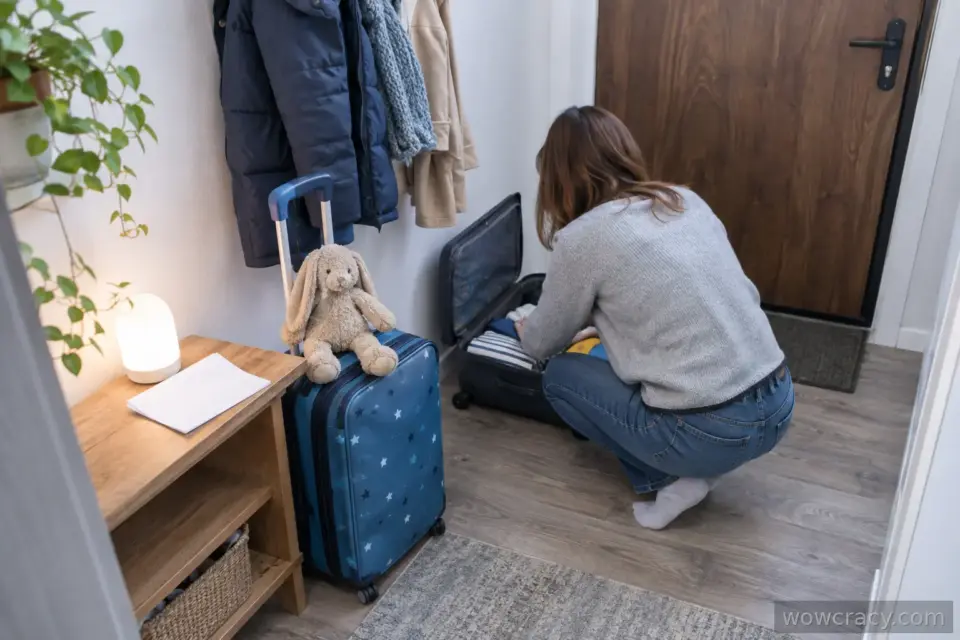
The first night away from home is not just a change of bed. For a child it is an experience of independence, and for parents it is a test of their own anxieties. Some children fall asleep calmly at grandma’s at three years old, while others at seven still need support. There is no universal age of readiness: it is more important to observe behaviour, agree on the details and have a plan in case the child misses home.
Below is a practical checklist that will help prepare both the child and the adults. It does not guarantee a flawless night, but it reduces the number of surprises and gives everyone involved a sense of control.
- How to understand the child’s wishes and readiness
- Try a shorter evening visit first
- What to discuss with the adults the child will stay with
- Staying with grandparents
- What things and contacts to prepare
- How to prepare the child emotionally
- If your child feels homesick
- How to act if the child asks to go home
- When it is worth postponing the first overnight stay
How to understand the child’s wishes and readiness
First, it is worth separating two different questions: whether the child wants to stay overnight and whether they can handle it emotionally. The wish may be situational — influenced by an older friend or the promise of an interesting game. Readiness shows in everyday behaviour, not in a single excited “yes”.
Readiness depends on the child and their familiarity with the place and carers. Calm, short separations can be useful experience, but falling asleep independently is not a requirement: agree on the bedtime support they need. Make sure they can communicate needs through words, gestures or their usual method, and know whom to approach. The Sydney Children’s Hospitals Network explains that there is no fixed age for readiness.
Consider the child’s current condition and needs. An optional sleepover can wait during illness, significant stress or a difficult adjustment. If an overnight stay is necessary because of work or family circumstances, focus on a familiar carer, a usual bedtime routine and reliable contact.
Discuss what might help if your child feels homesick. Suggest a call, a favourite toy or a familiar adult staying nearby. This is preparation, not a test with a right answer. Uncertainty does not automatically mean the child is unready.
Try a shorter evening visit first
Try a shorter visit with dinner and a familiar evening routine, returning home before sleep. Agree on a finishing time and the option to change the plan. There is no need to wake the child late at night just to test readiness.
What to discuss with the adults the child will stay with
Different expectations among adults can make the evening harder. Establish who will be in the home, who is responsible for supervision and how bedtime will work. The child should know they can ask to contact their parents at any time, including during the night.

Here is what to agree on specifically:
- Sleep. Usual timing, bedtime routine, sleeping arrangements and support during night wakings.
- Food and allergies. Suitable foods, known reactions and any individual action plan prescribed by the child’s clinician.
- Contact. Numbers are accessible, and the child can ask to call at any time without waiting for a permitted interval.
- Collection. Who will bring the child home if they want to leave, and who can act as backup.
- Supervision and safety. Who will be present, who is responsible, where the child will sleep, and how medicines and other hazards are kept inaccessible.
Exchange phone numbers, the address and details of a backup responsible adult. Check who can collect the child if the main contact is unavailable. If the carer has not managed this child’s night wakings before, discuss what help is needed and whether they can provide it.
Staying with grandparents
Grandma and grandpa often have their own ideas about routine and discipline. Instead of giving a lecture, offer a simple written plan: “At 20:30 — bath, at 21:00 — story, lights out at 21:15. If they can’t sleep, a night light can be left on.” Such a plan relieves tension and gives the older adults a clear instruction rather than a feeling that they are being controlled.
Confirm that grandparents can and should call if the child asks or there is concern about their condition. You can agree on a brief bedtime call, but that does not limit contact later.
What things and contacts to prepare
When packing things for the first overnight stay, it is worth thinking not about a full wardrobe, but about familiar objects that create a sense of home. Favourite pyjamas, a soft toy, a storybook, their own pillow or even an ordinary towel — all of these work as little anchors of safety.
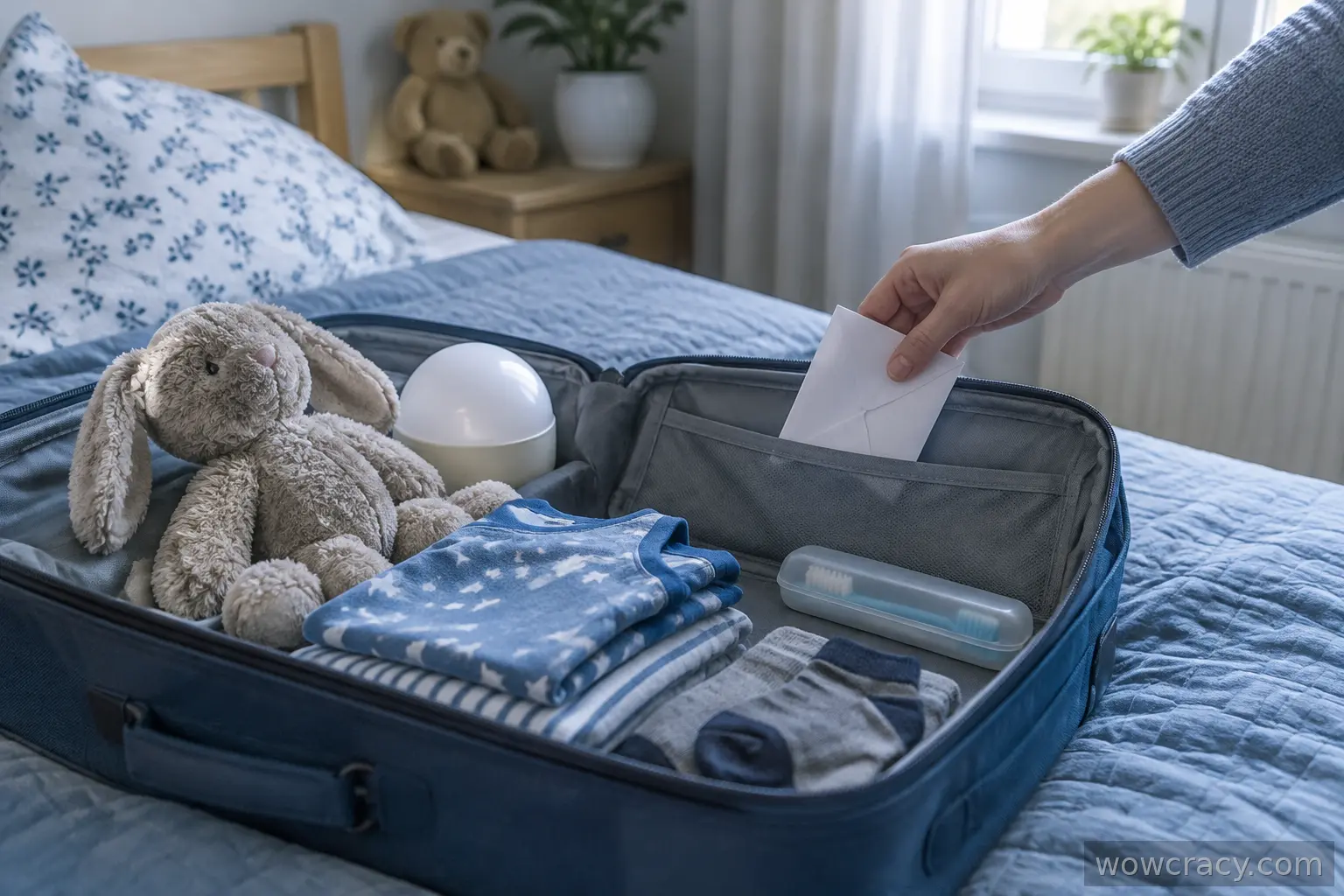
Here is an approximate list:
- Pyjamas, socks, a change of clothes for the morning.
- A toothbrush, toothpaste, soap or shower gel that the child is used to using.
- A favourite toy or an object connected with home.
- Any needed medicines in their original labelled packaging: hand them to the adult with written instructions for the prescribed dose, timing and method; explain any emergency action plan separately.
- A night light, if the child is afraid of the dark.
- A snack, in case the child gets hungry in the evening.
- A note with the contacts of the parents, the paediatrician and other close ones in case the phone runs out of battery.
Valuables and large numbers of toys are unnecessary. Hand medicines and the first-aid kit to the responsible adult and store them out of children’s reach. Show the child where to find water, the toilet and the adult they can approach at night.
Think separately about communication. If the child has their own phone, check that it is charged and that your number is saved. If not — make sure that the adult the child is staying with has your number and knows how to quickly reach the other parent.
How to prepare the child emotionally
Preparation begins a few days in advance, not an hour before leaving. Tell them how everything will happen: who will meet them, where they will sleep, what will be for dinner. Avoid promises like “it will be so much fun” — the child may be disappointed if the evening turns out to be ordinary. It is better to speak truthfully: “It may feel a little unusual, but grandma is nearby, and you can always tell her if you miss me.”

Give the child the right to take part in the packing. Let them choose a toy or pyjamas themselves. This increases the sense of control. You can draw a simple plan for the evening together or make a “calm card” with drawings of a hug, a glass of water and a favourite story.
You can acknowledge your own nerves without making the child responsible for them. Instead of “You won’t cry, will you?”, try: “It’s OK to miss me and say so. If you need help, ask Grandma or call me.” Invite them to share concerns and plan a response together.
If your child feels homesick
Missing parents is a natural reaction, not a sign that you prepared badly. The worst thing at this moment is to shame the child or convince them that they should not miss you. It is better to acknowledge the feeling: “I understand that you miss me. That’s normal. Let’s think about what will help you right now.”
Agree on contact when needed, without a compulsory 30–40-minute wait. If the child asks to call, help them do so. Listen calmly to what happened and work with the carer to decide what support is needed and whether to end the stay.
A request to come home is not a failure. Use the agreed collection plan and discuss the experience later without reproach. You can adapt or postpone another attempt; there is no fixed number of months to wait.
How to act if the child asks to go home
Take the request seriously and ask what happened: the child may be homesick, unwell, frightened or uncomfortable with someone present. Do not make them prove a reason or shame them. They can ask to contact their parents or end the sleepover at any point.
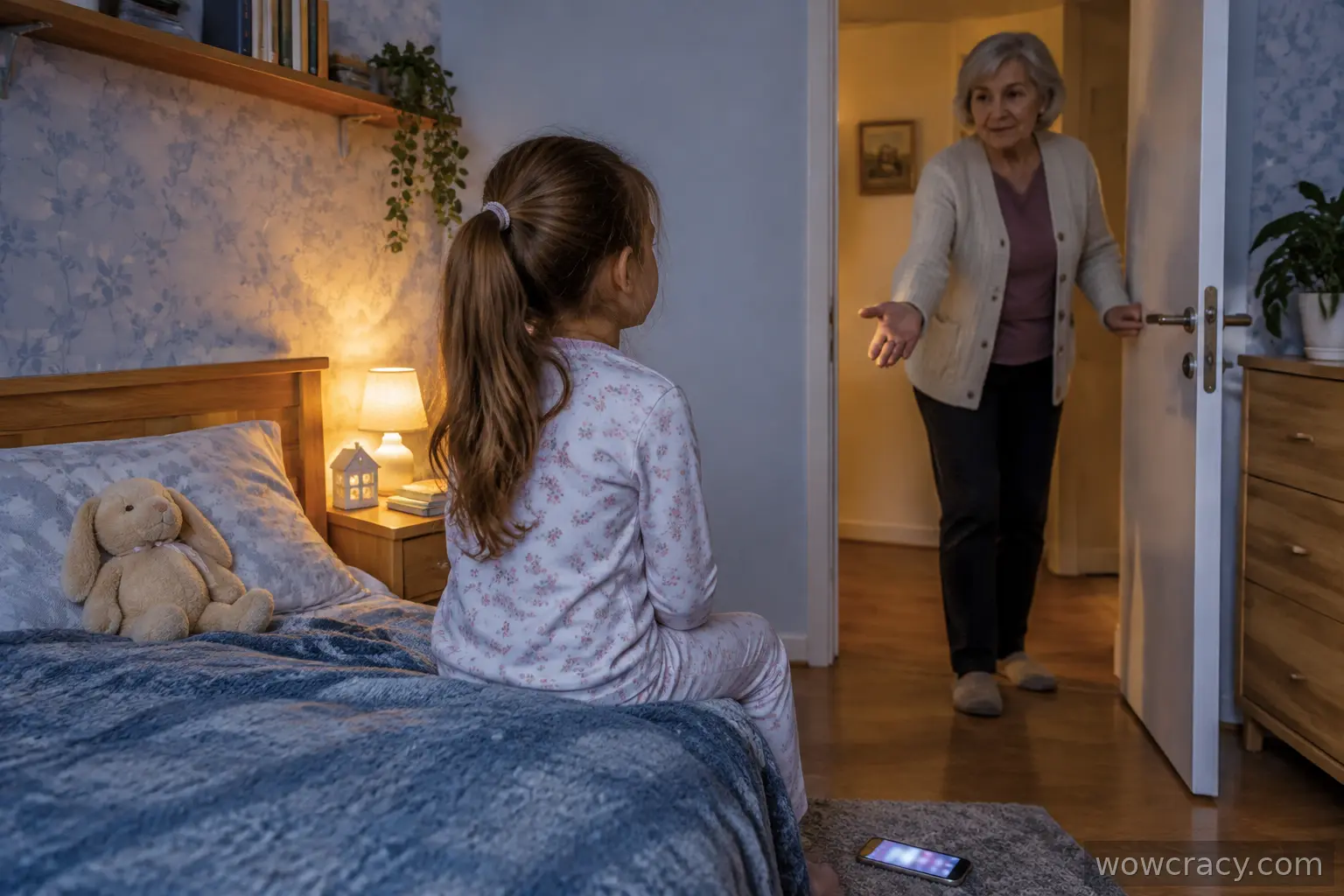
Agree on a simple support and collection plan:
- The carer stays nearby, listens and offers support; hugs are optional.
- Help the child contact their parents as soon as they ask. For sudden illness or immediate danger, act promptly rather than waiting for a conversation to finish.
- Parents calmly establish what happened and explain a realistic support plan without making promises they cannot keep.
- If the stay is ending, a parent or agreed responsible adult collects the child, who remains supervised until handover.
By mutual agreement, a parent could stay overnight too. This is one option if it suits everyone and the child wants to remain; going home is also a valid choice.
It is important not to show the child your own disappointment. Phrases like “Well, there you go, you couldn’t do it again” or “We prepared for nothing” cause more harm than the failure itself. It is better to sum up: “Today was hard. Let’s think about what can be changed next time.”
When it is worth postponing the first overnight stay
If the stay is optional, postpone it when the child does not want to stay, is unwell or needs extra support after stress. Resolve any uncertainty about supervision or the home’s safety first. For an unavoidable short-notice stay, choose a familiar, reliable adult and give them a clear care plan.
Pay special attention to signs of separation anxiety that do not pass. If the child panics every time even during a short separation, refuses to stay with anyone other than the parents, or has strong night fears, it is worth consulting a child psychologist or paediatrician. This does not mean that something is wrong with the child — they simply need additional support.
The first overnight stay away from home is not an exam of parental capability. It is an experience that can be repeated, adjusted or postponed. The main thing is for the child to know: their feelings matter, and the adults are nearby, even if physically far away.