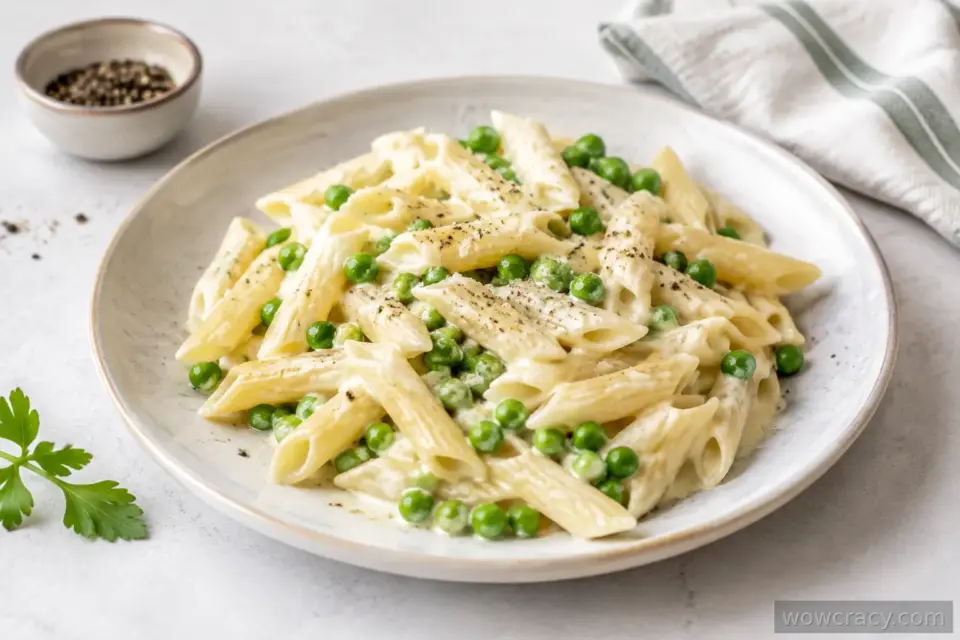
Pasta with frozen peas and cottage cheese without cream — a dinner for two portions with a smooth sauce that is prepared without boiling.
This pasta relies on a single technical trick: the cottage cheese turns into a smooth sauce not on the stove, but in a bowl, with hot cooking water. The cheese is not boiled — otherwise it curdles into lumps. Instead of cream, the consistency comes from the starchy water in which the pasta was cooked, plus a little olive oil.
Frozen peas are added in the last minute of cooking the pasta, so they retain their bright color and sweetness. The sauce turns out delicate, with a light cottage-cheese flavor; it must be mixed with the pasta off the heat. Below are the exact proportions for two portions and an explanation of how to adjust the thickness.
- Estimated nutrition
- Ingredients
- For the pasta
- For the sauce
- Step-by-step photos
- Put the water on
- Prepare the garlic
- Whisk the cheese sauce
- Thin the sauce with water
- Cook the pasta
- Add the peas
- Reserve the cooking water
- Drain the pasta and peas
- Combine the pasta with the sauce
- Adjust the consistency
- Serve
- Tips
- Ingredient substitutions
- Storage
- Which cottage cheese will work
- How not to overheat the sauce
- What to do if the sauce is too thick
Estimated nutrition
| Per serving | |||
|---|---|---|---|
| Calories | Protein | Fat | Carbohydrates |
| 520 kcal | 23 g | 16 g | 72 g |
| Per 100 g | |||
| Calories | Protein | Fat | Carbohydrates |
| 142 kcal | 6.3 g | 4.4 g | 19.7 g |
Ingredients
For the pasta
- Pasta (penne or fusilli) — 200 g
- Frozen green peas — 150 g
- Water for boiling — 2 l
- Salt for the water — 15 g
For the sauce
- Cottage cheese 5–9% — 200 g
- Hot pasta cooking water — 80 ml
- Olive oil — 20 ml
- Garlic — 1 clove
- Salt — 1 pinch
- Freshly ground black pepper — 1 pinch
Step-by-step photos
-
Put the water on
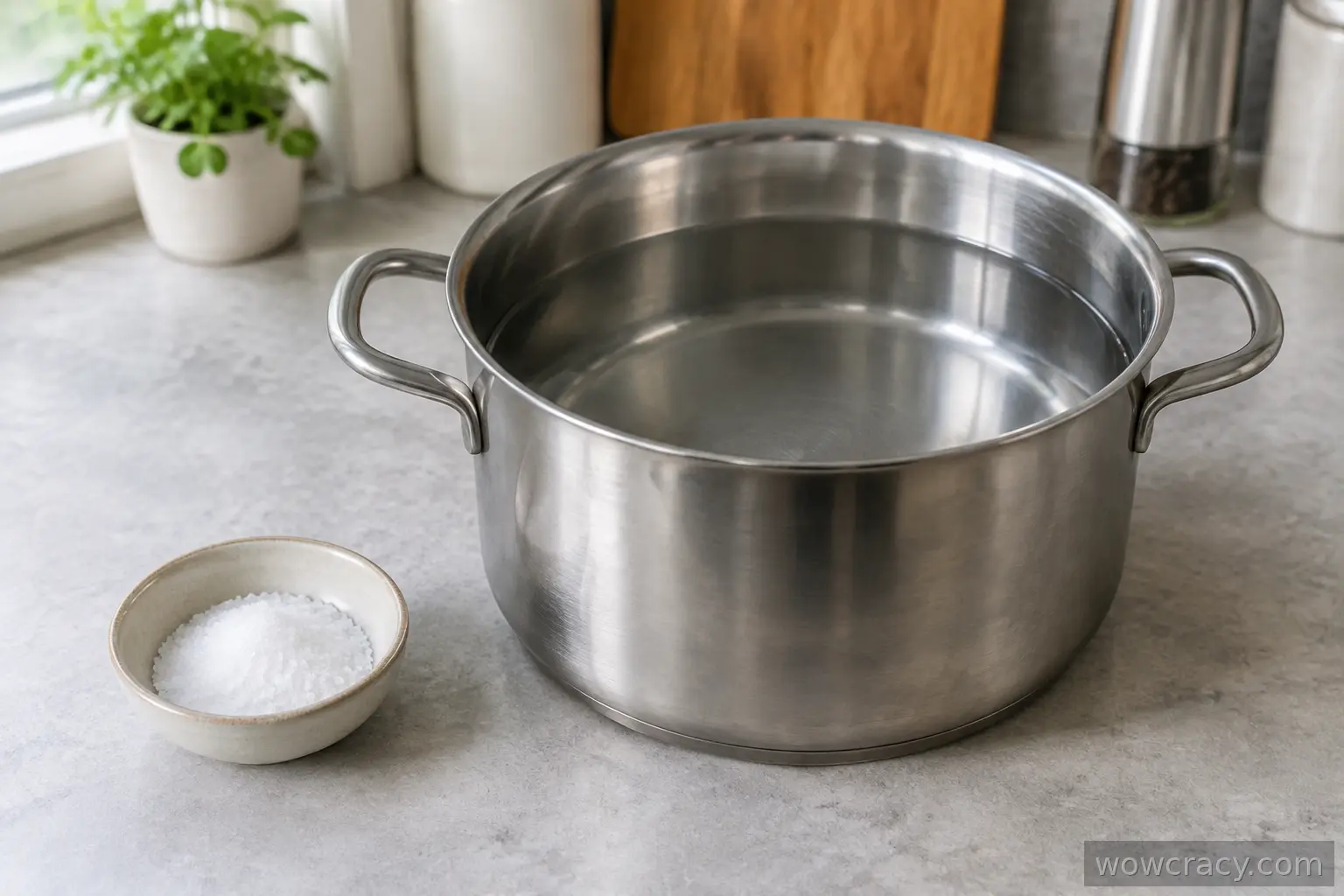
Fill a large pot with 2 l of water, add 15 g of salt and set over high heat. Cover with a lid so the water boils faster.
Step 1. Put the water on -
Prepare the garlic
Peel one clove of garlic and chop it finely with a knife. Do not use a press — in the sauce the pieces of garlic should feel soft, without a sharp taste.
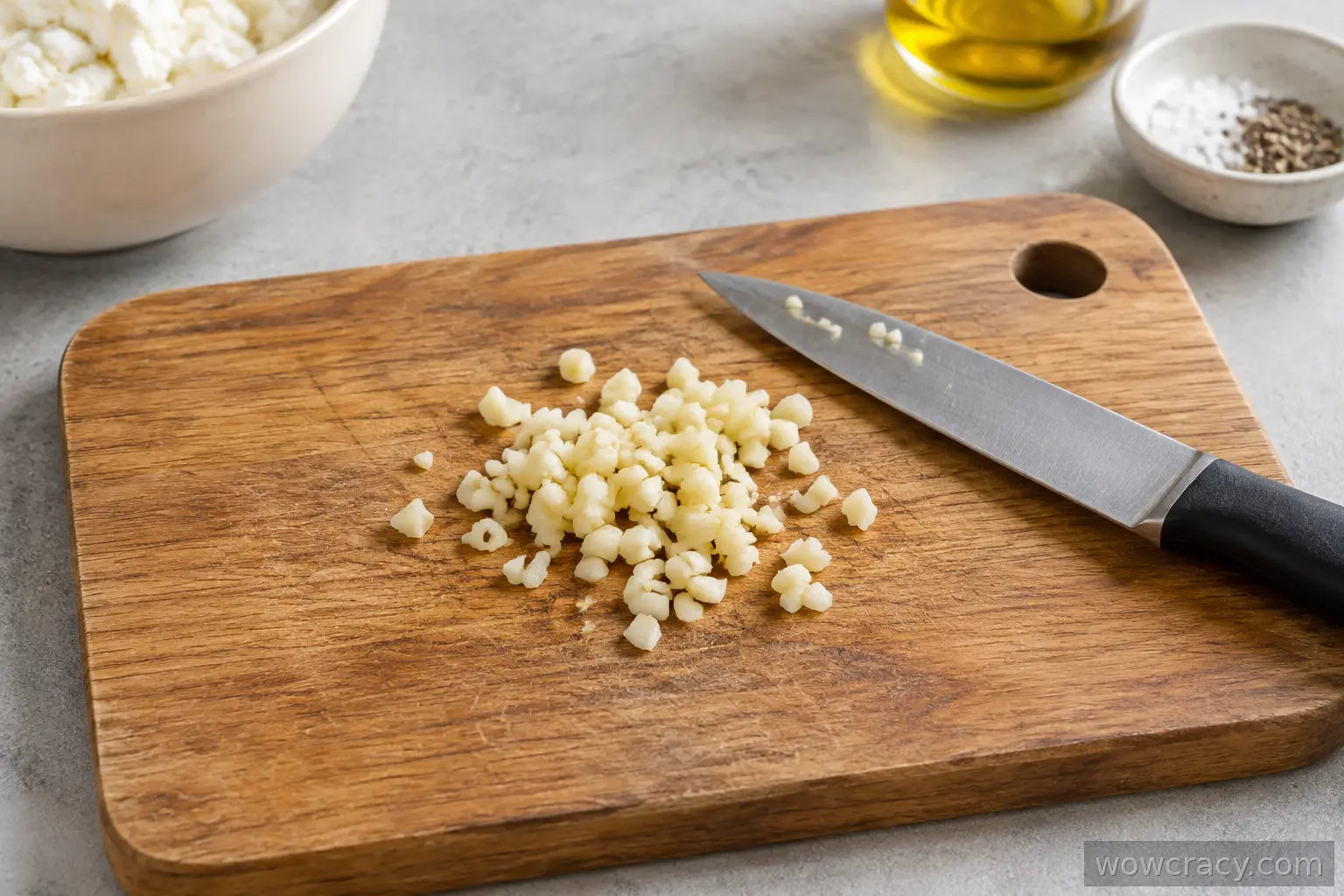
Step 2. Prepare the garlic -
Whisk the cheese sauce
In a deep bowl, combine 200 g of cottage cheese, 20 ml of olive oil, the chopped garlic, a pinch of salt and a pinch of pepper. Whisk with a fork or whisk until smooth — the mixture should become smooth, without noticeable lumps.
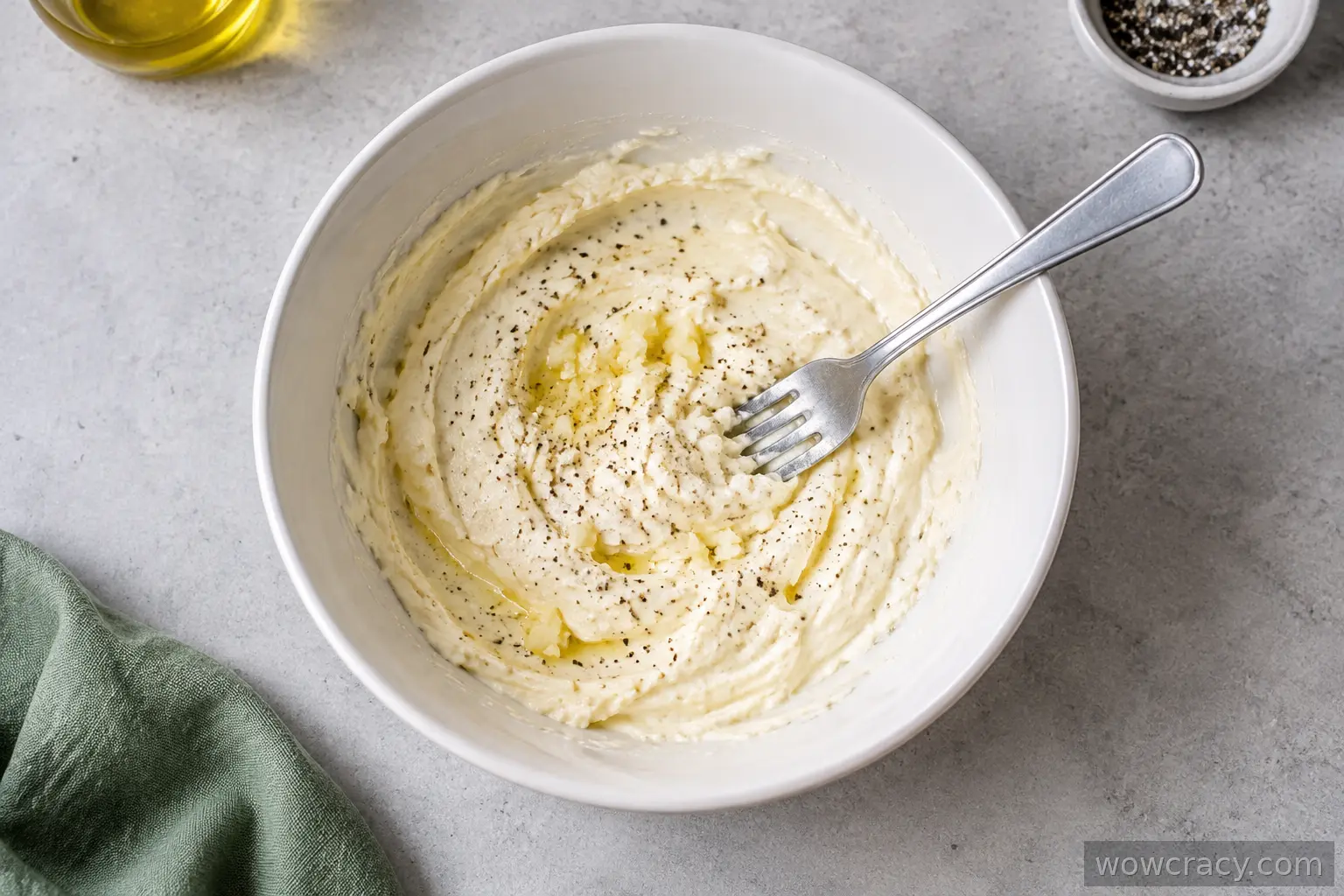
Step 3. Whisk the cheese sauce -
Thin the sauce with water
Gradually pour in 80 ml of hot pasta cooking water (scoop it with a ladle once the pasta is already cooking), whisking constantly. The sauce will become runny, like thin cream. Set the bowl aside.
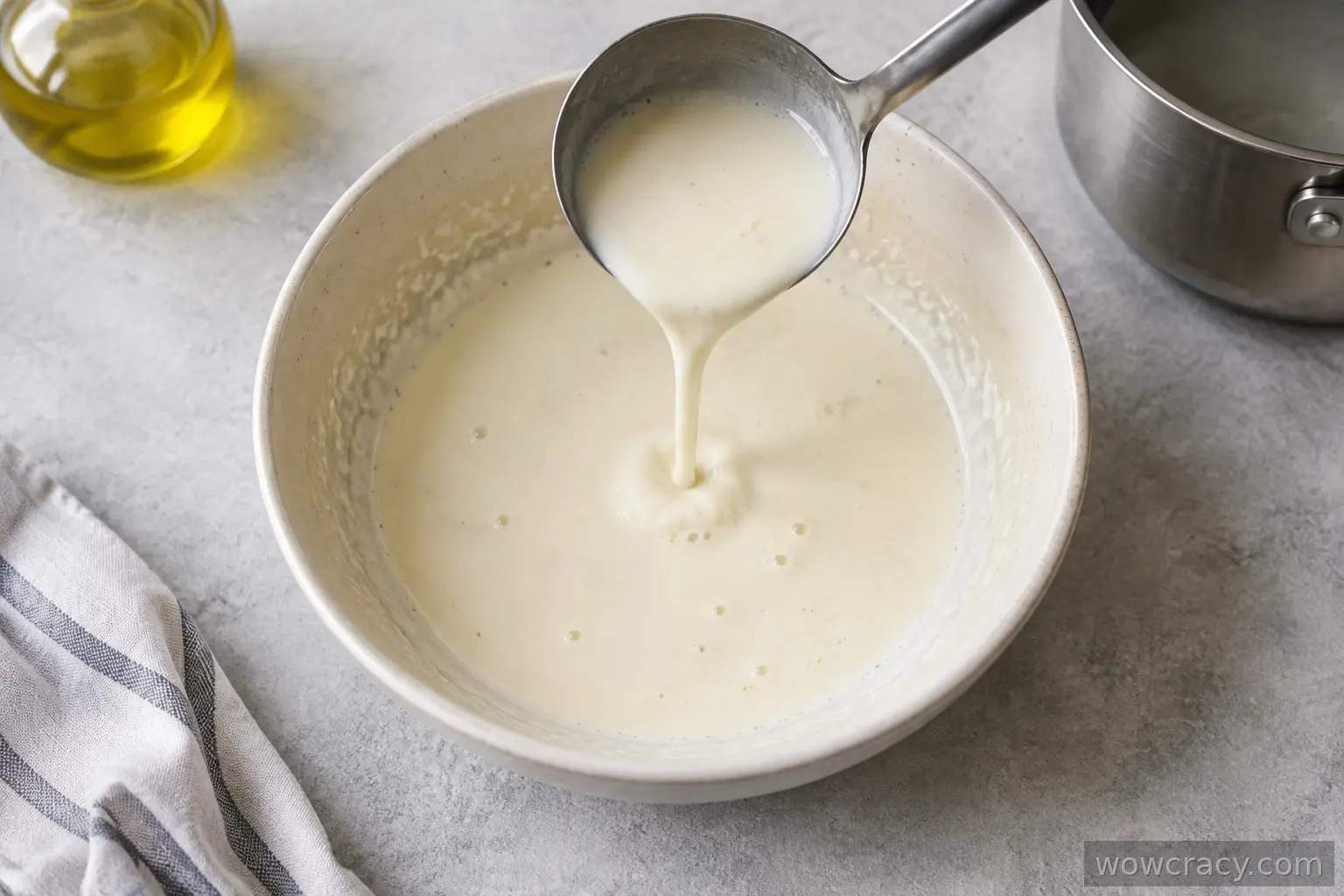
Step 4. Thin the sauce with water -
Cook the pasta
When the water boils, add 200 g of pasta and cook for 2 minutes less than stated on the package. Stir occasionally so the pasta does not stick together.
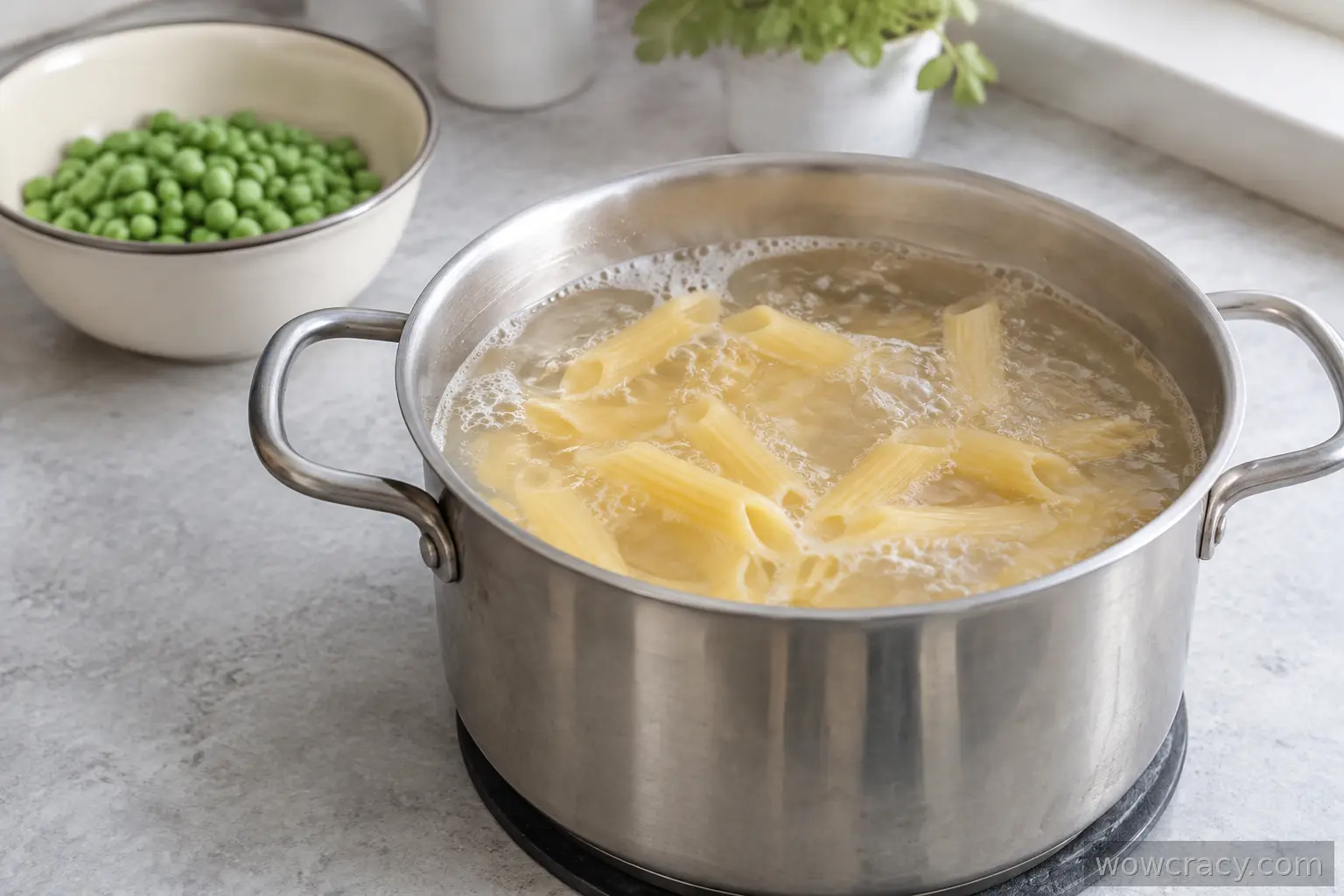
Step 5. Cook the pasta -
Add the peas
2 minutes before the pasta is done, add 150 g of frozen peas directly to the pot. Continue cooking until the peas are bright green and tender but still firm.
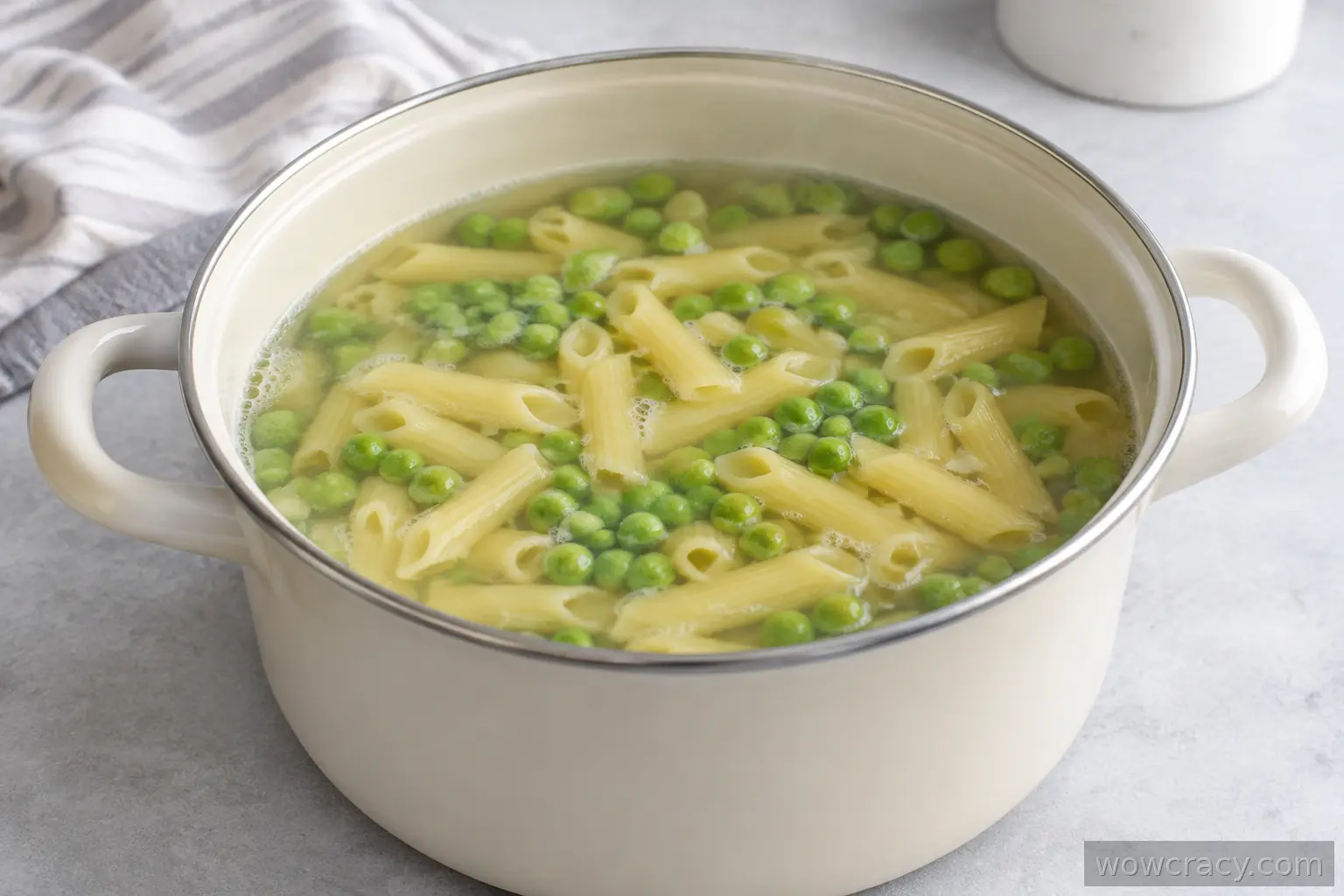
Step 6. Add the peas -
Reserve the cooking water
Before draining, scoop another 100 ml of the hot cooking water into a separate cup — you will need it if the sauce turns out too thick. This water is starchy and will help the sauce bind with the pasta.
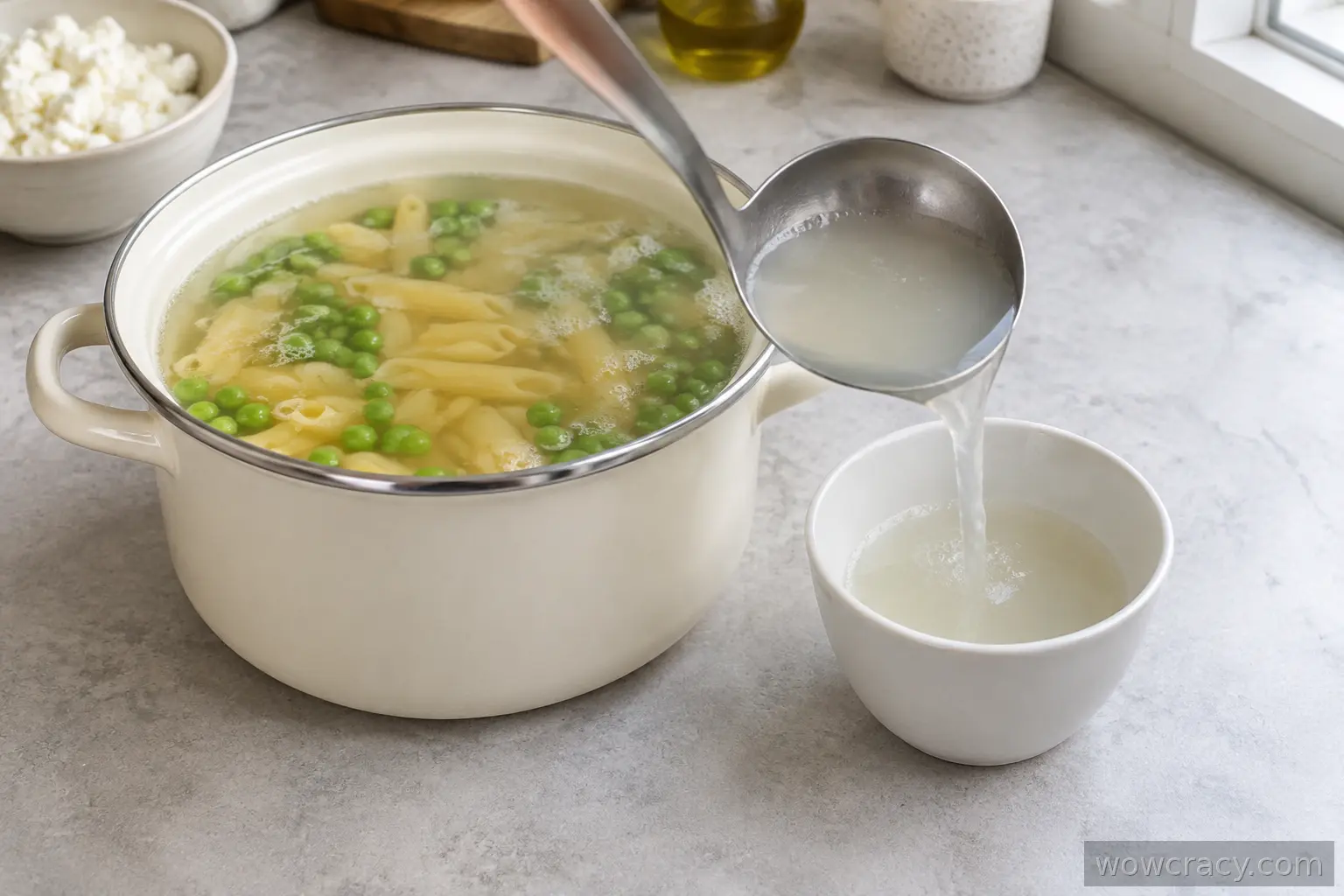
Step 7. Reserve the cooking water -
Drain the pasta and peas
Pour the pasta with peas into a colander and let the water drain. Do not rinse with cold water: the hot surface of the pasta will help the sauce coat it evenly.
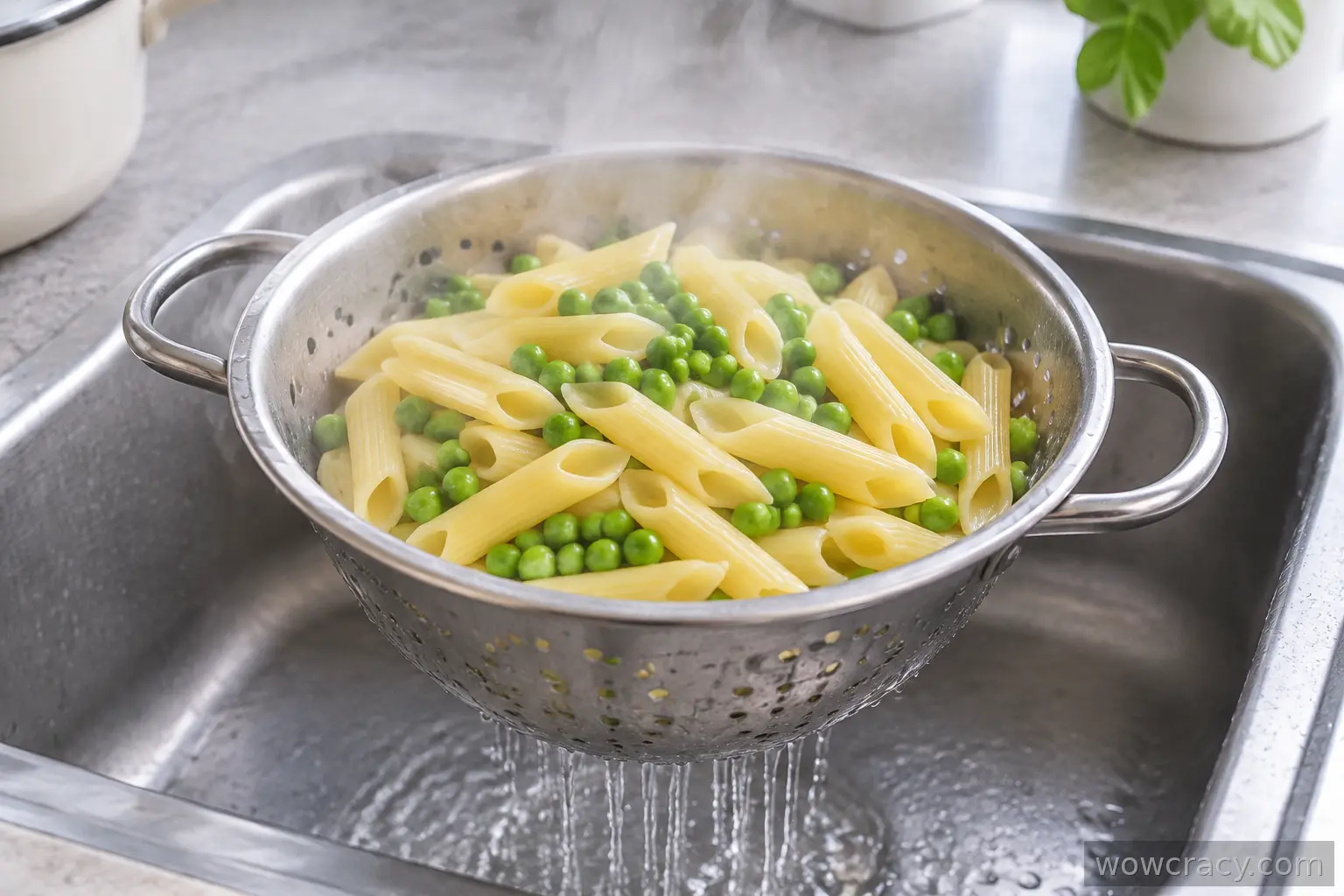
Step 8. Drain the pasta and peas -
Combine the pasta with the sauce
Transfer the pasta with peas to a wide frying pan or bowl, and remove it from the heat if it was on the stove. Add the cheese sauce and quickly stir with a spatula or tongs while the pasta is hot. The sauce should coat every strand of pasta with a thin layer.
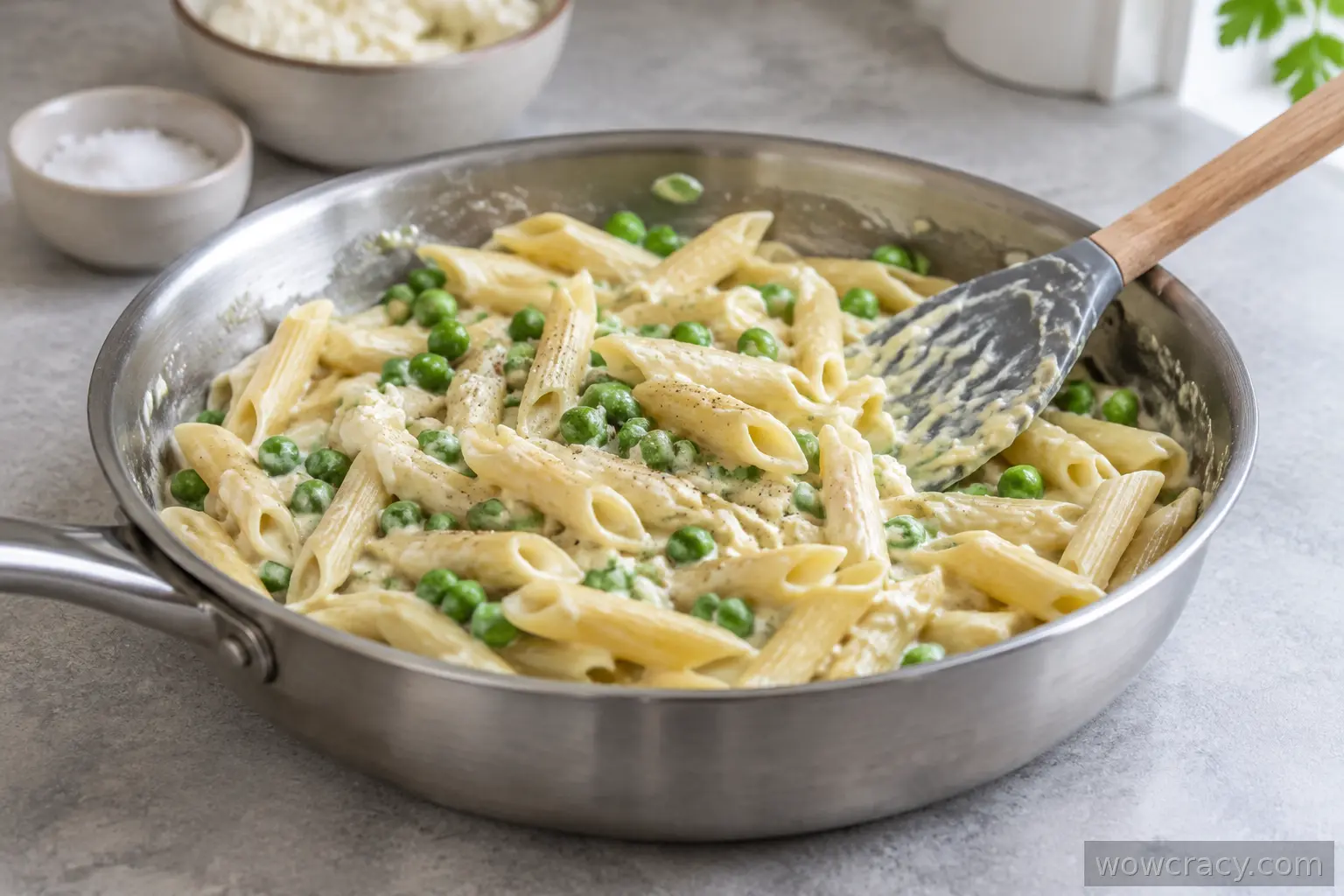
Step 9. Combine the pasta with the sauce -
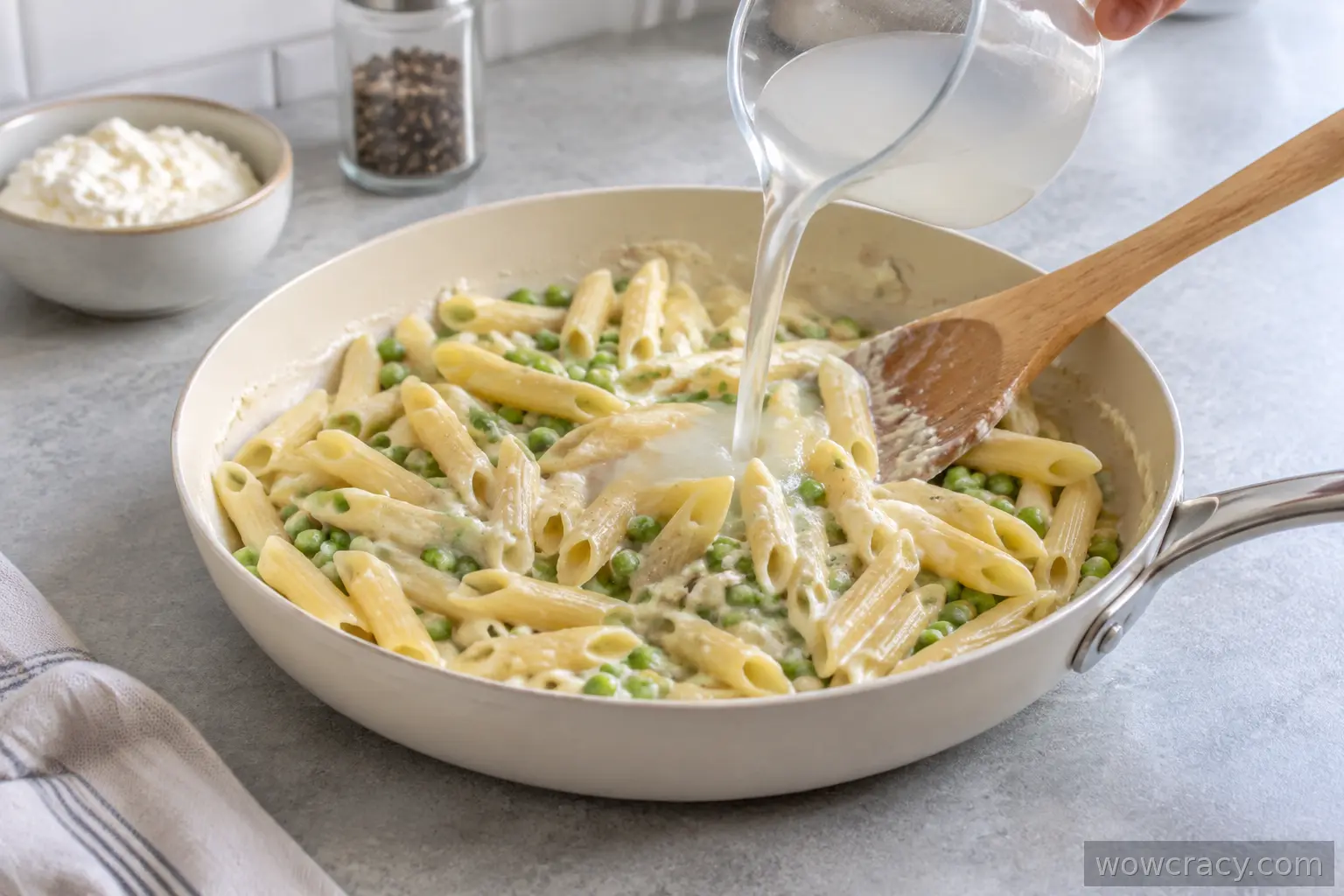
Adjust the consistency
If the sauce is too thick and does not spread, add 1–2 tablespoons of the reserved hot water and stir. If the sauce is runny, let the dish stand for 1–2 minutes — it will thicken slightly.
Step 10. Adjust the consistency -
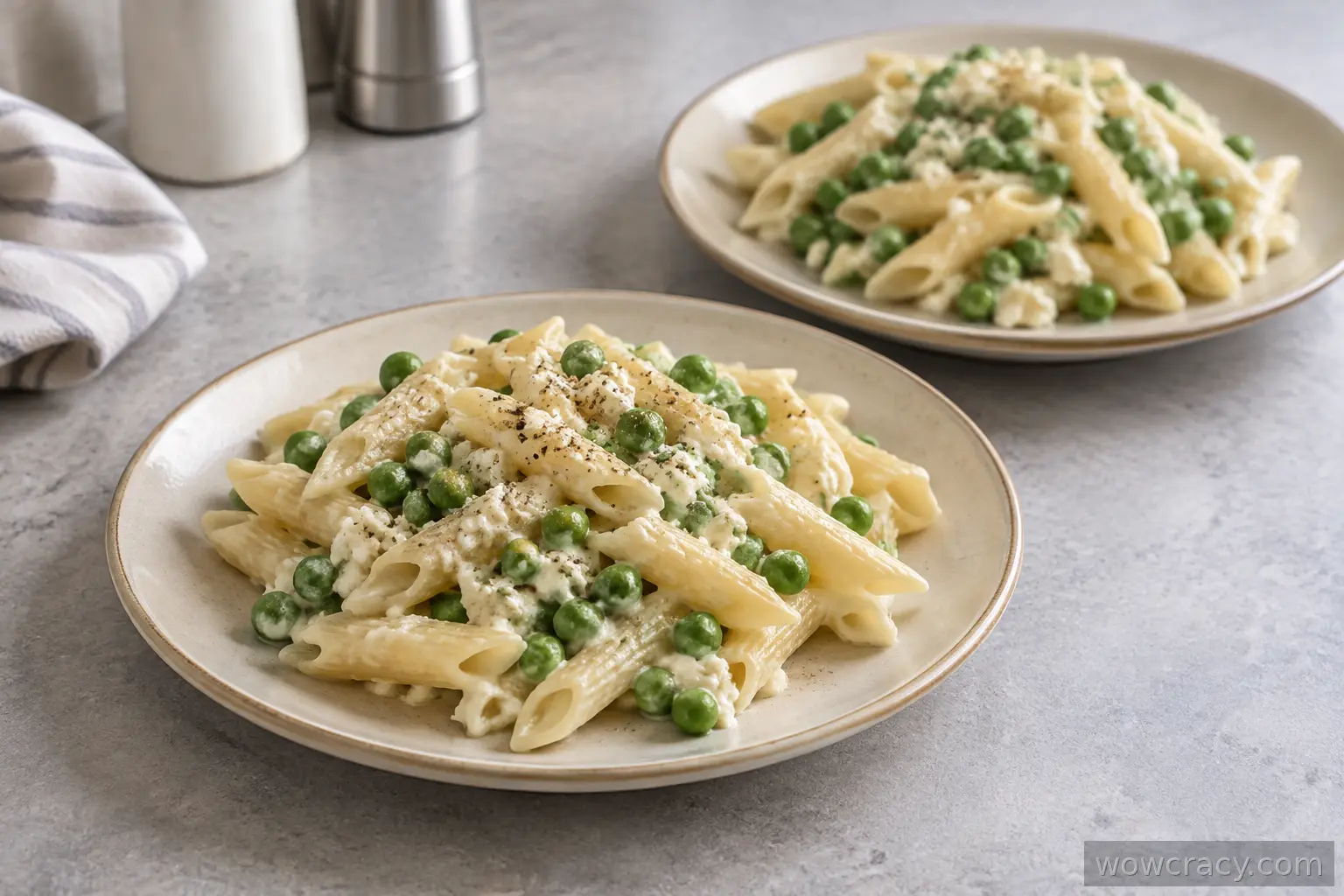
Serve
Divide the pasta between two warmed plates, season with freshly ground pepper if desired, and serve immediately while the sauce is warm and creamy.
Step 11. Serve
Tips
- Choose a moist and homogeneous cheese for the sauce: a dry one will have to be diluted with more water, and the taste will become watery.
- Do not boil the sauce with cheese — at high temperature it curdles into lumps.
- If you have no time to cool it, combine the sauce with the pasta in a frying pan removed from the heat and serve immediately.
Ingredient substitutions
- Instead of penne or fusilli, spaghetti, rigatoni or farfalle will work — adjust the cooking time according to the package.
- Cottage cheese can be replaced with thick Greek yogurt without additives, but the sauce will be thinner — reduce the water to 60 ml.
- Add fresh green peas (150 g) 1 minute before the end of cooking the pasta.
Storage
- Store the finished pasta in a closed container in the refrigerator for no longer than 2 days.
- Reheat over low heat with the addition of 1–2 tablespoons of water, without bringing to a boil.
Which cottage cheese will work
For the sauce, it is best to take moist, homogeneous cottage cheese with a fat content of 5–9% without lumps. Dry cheese will give a thick mass that will have to be diluted with more water — the taste will become watery. If the cheese is grainy, rub it through a sieve or blend it before whisking with the water.
How not to overheat the sauce
Cottage cheese curdles at a temperature of about 80 °C. That is why the sauce is whisked separately in a bowl and combined with the pasta when the pan has already been removed from the heat. If the dish has cooled, reheat it over low heat, stirring constantly, and do not bring it to a boil.
What to do if the sauce is too thick
Add hot pasta cooking water one tablespoon at a time, stirring quickly. The sauce should run off the spoon in a slow ribbon. If it is, on the contrary, runny, let the pasta stand for 1–2 minutes: the starch from the water will thicken slightly.