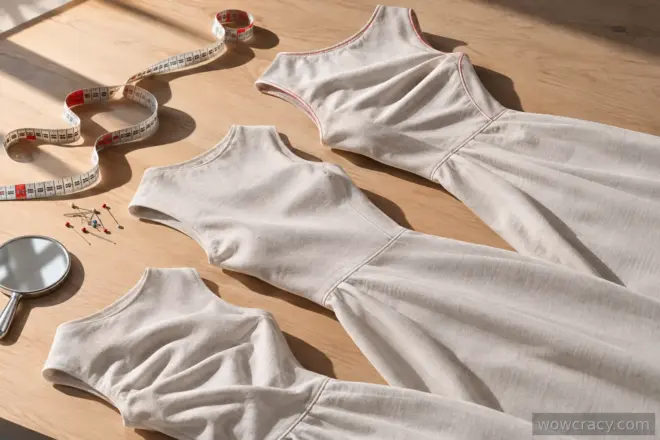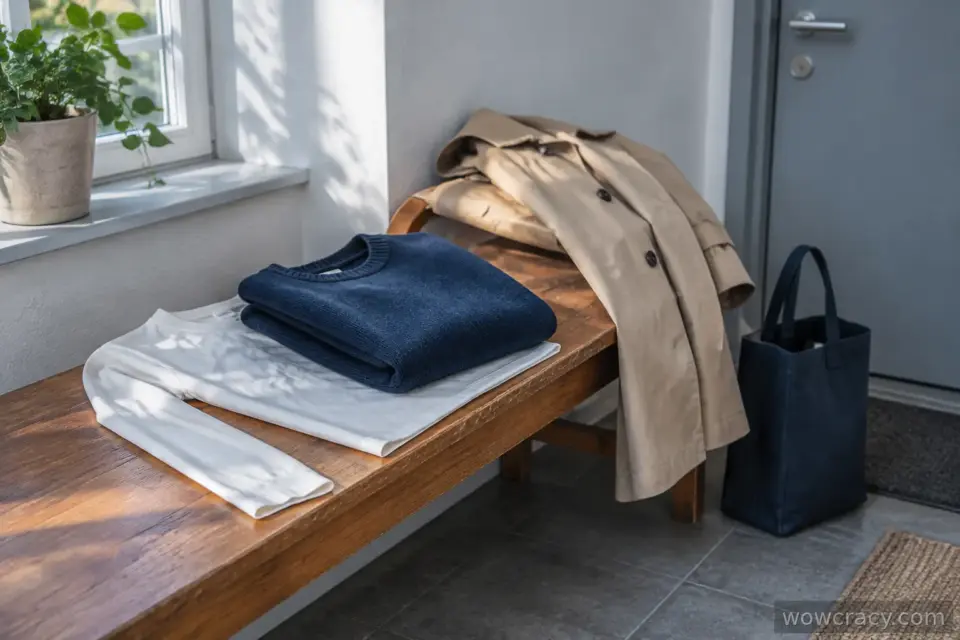
In the morning the thermometer reads +4 °C, during the day +16 °C is forecast, and the office air conditioner is running. On days like these, one sweater or one jacket doesn’t save you: it’s hot on public transport, cool outside, and warm again indoors. The solution is not a thick item but several thin layers that can be taken off or put on depending on the situation. Let’s figure out how to put together one outfit that will withstand the temperature swing and won’t make you carry a heavy bag around.
- First — the route and the weather, not the wardrobe
- Three layers and the job of each
- Base layer: the one that touches the skin
- Insulating layer: keeps in warmth but comes off easily
- Outer layer: protection from wind, rain and morning chill
- How to combine length and volume
- Examples of outfits for different situations
- Office with air conditioning
- Public transport and transfers
- Walk with children
- What to do with a removed layer so it doesn’t get in the way
- Mistakes that make layering inconvenient
- A short getting-ready algorithm
- Frequently asked questions
- Can you get by with two layers instead of three?
- How do you know the base layer isn’t right?
- Is layering suitable for people who feel cold more than others?
First — the route and the weather, not the wardrobe
Before opening the closet, it’s worth looking not only at the forecast but also at your own day. One thing is a metro ride with a transfer and a warm office, another is a walk with a child in the park or working in a room without air conditioning. This determines how many layers you actually need and which of them should be removable.
Pay attention to a few details of the forecast:
- the difference between the morning and daytime temperature;
- wind — it often makes +10 °C feel noticeably colder than +10 °C on a windless day;
- humidity and the chance of rain;
- the time you will spend outdoors and indoors.
If it’s cold in the morning and warm during the day, use midday as your “working” temperature, and treat the morning as a temporary condition that can be covered by a removable layer. That is why layering in clothing is not about thickness but about flexibility.
It helps to mentally divide the day into segments: the commute to work, a few hours indoors, a lunchtime walk, the return home in the evening when it gets cooler again. For each segment it’s important to know which layer will be on you at that moment. If you can’t picture it, chances are you will either overheat on public transport or freeze at the bus stop.
It’s also worth taking into account the difference between the actual temperature and how it feels. A damp wind at +8 °C can feel like +3 °C, while a sunny, windless day at the same +8 °C seems quite tolerable. That is why a light windproof jacket with a thin insulator underneath is often more useful than one thick sweater.
Three layers and the job of each
The classic formula is a base, an insulating and an outer layer. In the transitional season it works not as a rigid scheme but as a construction kit: sometimes two layers are enough, sometimes three, but each one plays its role.
Base layer: the one that touches the skin
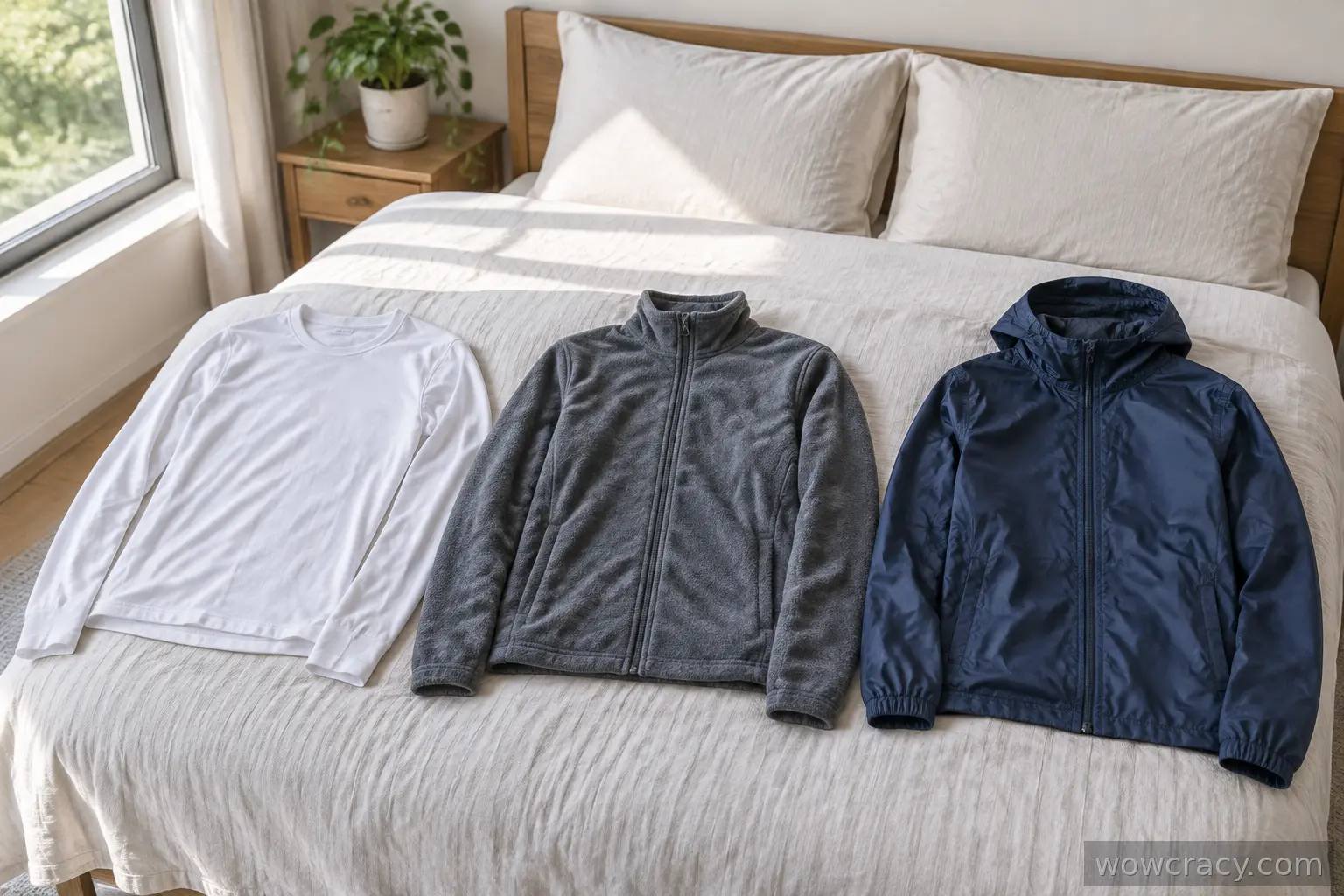
Its job is to wick away moisture and not create a damp feeling when you’ve sweated on public transport or are walking fast. Cotton with a small addition of elastane, thin merino knit or modern moisture-wicking synthetics work best. Pure cotton breathes well but dries slowly, so it isn’t ideal for an active day. Untreated synthetics can smell unpleasant — that’s worth keeping in mind.
What should you wear under a jacket on a cool morning? A thin T-shirt or a long-sleeve top, not a thick sweater. A sweater is already an insulating layer, and it’s better to make it removable.
The length of the base layer also matters. If it’s longer than the insulating layer, a strip of fabric will look sloppy peeking out from under the sweater; if it’s shorter, your lower back will be exposed when you bend over. It’s optimal when the base layer ends roughly at the waistline or slightly below, but doesn’t show from under the top layer by a few centimeters.
Insulating layer: keeps in warmth but comes off easily
This is a sweater, cardigan, fleece or light vest. The main thing is that it isn’t too bulky and pairs well with the other items. Thin cashmere, a merino top or a zip-up fleece keep you warm without turning you into a “cabbage”. A vest is especially convenient when your hands need to be free but your body needs warmth.
The insulating layer is worth choosing in a color and cut that lets you wear it on its own if it gets warm during the day and you end up in a café or at a meeting.
The material of this layer affects how easy it is to wear all day. Fleece dries quickly and holds its shape well but can be too warm indoors. Thin wool or cotton knit breathes better but absorbs moisture faster. A synthetic insulator in the form of a light liner jacket is a compromise for those who walk a lot.
Outer layer: protection from wind, rain and morning chill
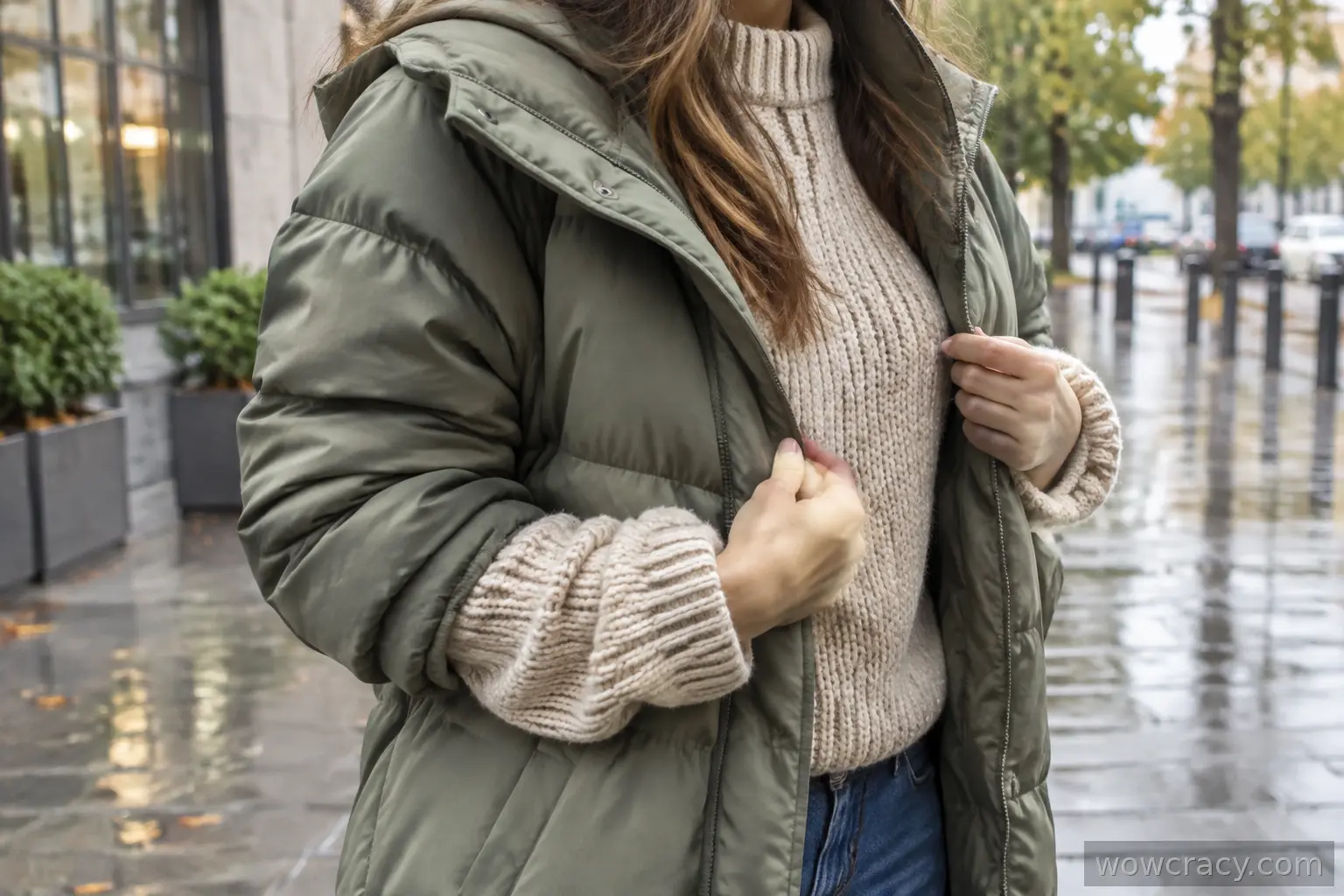
In the transitional season this can be a light trench coat, a windbreaker, a parka without an insulator or a thin puffer jacket. The outer layer doesn’t have to be warm — it’s enough that it protects from wind and moisture and comes off easily. If it’s warm during the day, the jacket can be taken off and hung on the back of a chair or folded into a bag.
It’s important that the outer layer be loose enough to fit the insulating layer underneath, but not too wide, otherwise it won’t keep you warm enough.
It’s easy to check: put the jacket on over the sweater and try crossing your arms in front of your chest. If you feel tightness in the shoulders or the sleeves ride up — the item is too small for layering. If the fabric hangs in loose folds at the back, on a warm day without the sweater the jacket will look shapeless.
How to combine length and volume
A layered outfit looks neat when the layers don’t compete for attention. Here are a few guidelines:
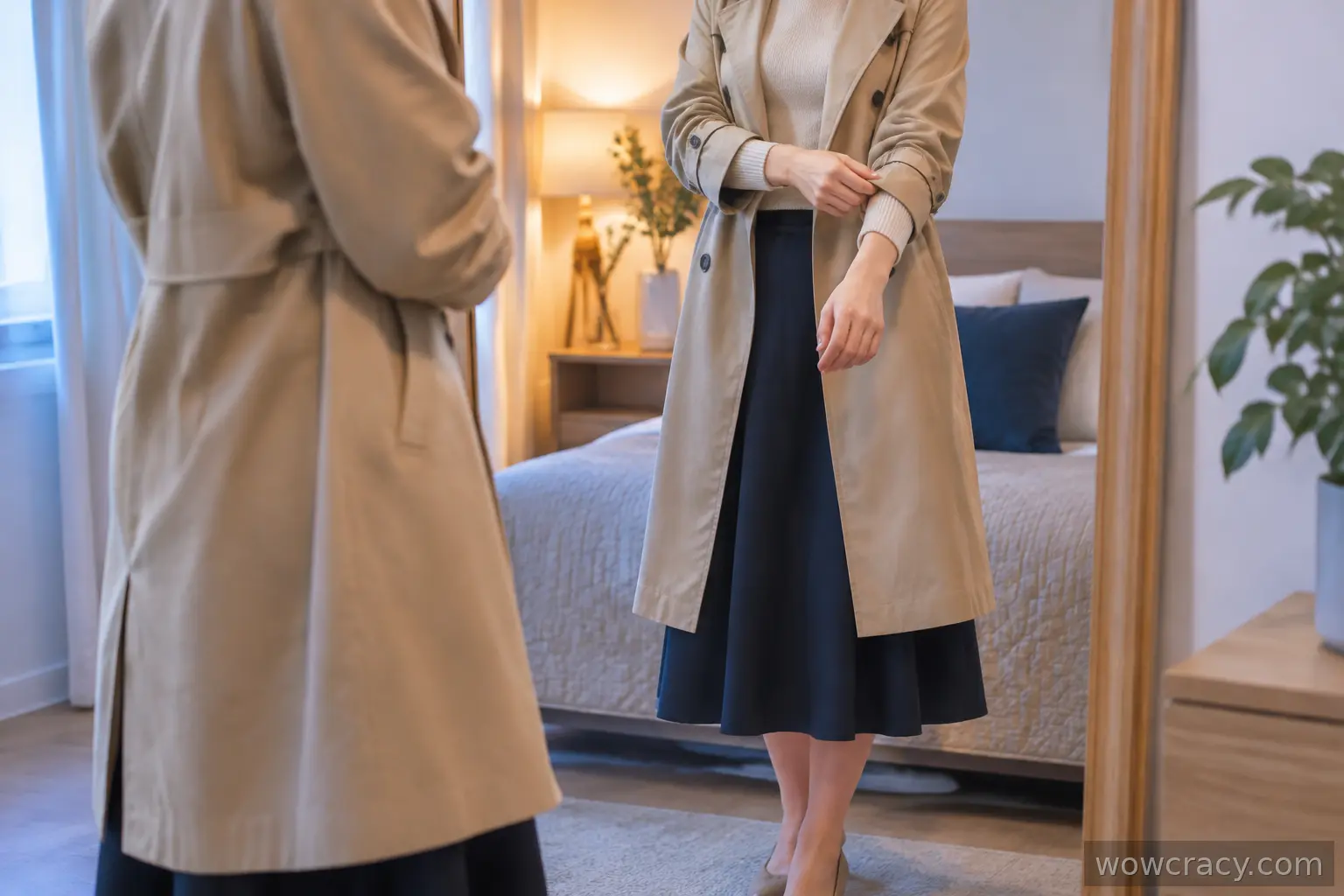
- The longest layer is the base or insulating one, if it shows from under the jacket. The outer layer can be shorter or the same length.
- Avoid three bulky items at once: for example, a loose sweater under a bulky puffer jacket will create extra volume.
- A thin top and a loose bottom or vice versa — this balance works better than several dense items.
- The sweater sleeves should be narrow enough not to bunch up under the jacket sleeves.
If you like dresses and skirts, the insulating layer can be a thin sweater or cardigan, and the base layer — thick tights. In this case it’s better to choose an outer layer longer than the skirt so as not to break the proportions.
Separately about shoes, because they are also part of the outfit. Closed sneakers or boots without fur are suitable for most transitional-season days, but socks should be chosen by the same principle as clothing: thin cotton or wool ones that are easy to take off and replace if your feet get sweaty. Heavy insulated footwear for the whole day is a common cause of discomfort by lunchtime.
Another technique is playing with accessories. A scarf that can be loosened or removed, and thin gloves that are easy to put in a pocket, let you regulate warmth without changing the whole outfit. This is especially convenient when you don’t want to carry an extra bag.
Examples of outfits for different situations

Office with air conditioning
Base layer — a thin cotton shirt or long-sleeve top. Insulating — a light cardigan or vest that can be taken off at your desk. Outer — a trench coat or windbreaker. In your bag — a foldable scarf that will keep you warm on the way and won’t get in the way indoors. Shoes — closed but without fur, so your feet don’t get sweaty by lunchtime.
If the office has a strict dress code, it’s better to replace the cardigan with a thin jacket made of wool or a wool blend. It looks formal but is easy to take off at the same time. A jacket over a shirt is often warmer than it seems because it fits closely to the body and doesn’t let drafts through.
Public transport and transfers
The metro can be stuffy, so the base layer should wick moisture well. It’s better to choose an insulating layer with a zipper — it’s easy to take off on the escalator. Outer — a compact jacket that can be folded into a backpack. Avoid sweaters that are hard to pull over your head if you’re on public transport with a bag.
For long transfers it’s convenient to have a small backpack or a shoulder bag that fits the removed layer. If you’re traveling with a laptop, check whether there’s enough room in the bag for the sweater — otherwise you’ll have to carry it in your hands, which is inconvenient during rush hour.
Walk with children
Children move more, adults less, so an adult needs a layer that can be taken off quickly. A light vest or zip-up fleece under a jacket is a convenient option. For a child the principle is the same: several thin layers instead of one thick sweater. It’s important that the child can unzip the jacket on their own when they get warm.
At a children’s playground, an adult often stands still while the child runs around, so they need more warmth. In this case a vest helps, warming the torso but not restricting movement when you need to pick up the child or help them on a slide.
What to do with a removed layer so it doesn’t get in the way
One of the main reasons layering becomes inconvenient is having nowhere to put the removed clothing. Here are a few practical solutions:
- Choose a sweater or cardigan that can be folded and put in a bag or backpack.
- Carry a light foldable bag with you — it takes up little space but holds the removed layer.
- At the office you can leave the removed sweater on the back of a chair or in a drawer.
- It’s better to choose an outer layer that can be rolled up compactly.
If you don’t want to carry extra things with you, limit yourself to two layers: a base and an outer one, and replace the insulating layer with a light scarf or a vest that can be tied to your bag.
It’s also worth thinking about where the removed layer will be on public transport. A sweater on your lap gets in the way and falls, so it’s better to keep it in a bag or on your shoulder if it’s a light item. In a café or restaurant, a removed jacket can be hung on the back of a chair, and a sweater can be placed next to you on the seat.
Mistakes that make layering inconvenient
Even with the right items you can end up uncomfortable if you make a few typical mistakes.
- A base layer that is too dense: it doesn’t let the skin breathe and creates a damp feeling.
- All layers the same length: a sweater that shows from under the jacket by a few centimeters can break the proportions.
- No removable gloves and hat: in the transitional season you need them in the morning but they’re extra during the day.
- Heavy shoes for the whole day: your feet will get sweaty, and no layer of clothing can compensate for that.
- Ignoring the wind: a light jacket without wind protection won’t save you even with a warm sweater.
Another mistake is choosing an insulating layer that is too bulky “just in case”. In the transitional season it’s better to have two thin layers than one thick one: they’re easier to combine and take off.
There’s also the opposite problem: all the items are thin, but all are made of synthetic fabric that doesn’t let air through. As a result, within an hour it becomes stuffy indoors, even though it was cool outside. That’s why it’s worth checking the fabric composition in advance rather than relying only on thickness.
A short getting-ready algorithm
Here is a sequence that will help you quickly put together an outfit for the day:
- Check the forecast for morning, day and evening, take wind and rain into account.
- Determine how much time you’ll spend outdoors and indoors.
- Choose the base layer according to the weather and your activity.
- Add an insulating layer that’s easy to take off.
- Pick an outer layer with protection from wind and moisture.
- Check whether the removed items can be folded into a bag.
- Don’t forget gloves, a hat or a scarf that can be taken off.
If in doubt, choose thinner layers: they’re easier to regulate throughout the day than one thick one. And remember: comfort in the transitional season depends not on the number of items but on how well they work together.
Frequently asked questions
Can you get by with two layers instead of three?
Yes, if the temperature difference is small or you’ll spend almost the whole day indoors. In that case a base layer and a light jacket are enough, and replace the insulating layer with a scarf or a vest that’s easy to take off.
How do you know the base layer isn’t right?
If after 20–30 minutes in a warm room you feel stickiness on your skin or cold dampness under your clothes, the fabric wicks moisture poorly. It’s worth replacing it with a thinner wool knit or moisture-wicking synthetics.
Is layering suitable for people who feel cold more than others?
Yes, but the emphasis should be on an insulating layer that can be taken off, not on a thick jacket. A vest or fleece under a jacket will keep you warmer than one dense sweater, and it’s easy to remove when it gets warm.