An unsuccessful attempt can be part of learning. But remarks such as “How could you?” or “Why can’t you be like other children?” shift attention from a specific action to a judgement of the child. Repeated harsh judgements can increase fear of mistakes. It is more useful to explore what happened, what help is needed and what to try next.
To help a child not be afraid to try again, it’s important to change not so much the words as the angle of view: a mistake is information about what can be improved, not a cause for shame. This article offers specific phrases, examples of conversations, and explanations of why some reactions work and others harm.
- What actually frightens a child about a mistake
- Discuss what happened without labelling the child
- What to say instead of immediate criticism
- Plan the next step together
- Recognise effort, strategies and progress
- How an adult can acknowledge their own mistakes
- When to seek help
- Frequently asked questions
- How to react if a child cries over a mistake?
- Can you praise a child for not making a mistake at all?
- What to do if a child blames themselves for a mistake?
What actually frightens a child about a mistake
A child may fear disappointing someone, being laughed at or facing an unfamiliar task. Causes vary, so first ask what worries them. Harsh criticism can make another attempt harder, but one reaction cannot establish the cause of a fear or predict future behaviour.
Your tone and expression can affect the conversation too. If you feel irritated, take a short pause and return to the specific event. You can be upset about spilled water without questioning your child’s worth or your affection for them.
It’s also worth remembering age. Preschoolers take praise literally and emotionally, so warmth and specificity matter to them: “You buttoned the buttons yourself — I can see how hard you tried”. Younger schoolchildren are already able to analyze causes, so the question works with them: “What could be done differently next time?”. Teenagers value respect for their independence most of all, so instead of lectures it’s better to offer: “Want me to tell you how I got out of a similar situation?”.
Discuss what happened without labelling the child
The most common trap is generalization. Instead of “you ruined everything again”, it’s worth naming the specific action: “You overfilled the glass with water, and it spilled on the table”. This sounds less offensive because it concerns an event, not character. The child hears: “You’re not bad, it’s just that this action led to this result”.
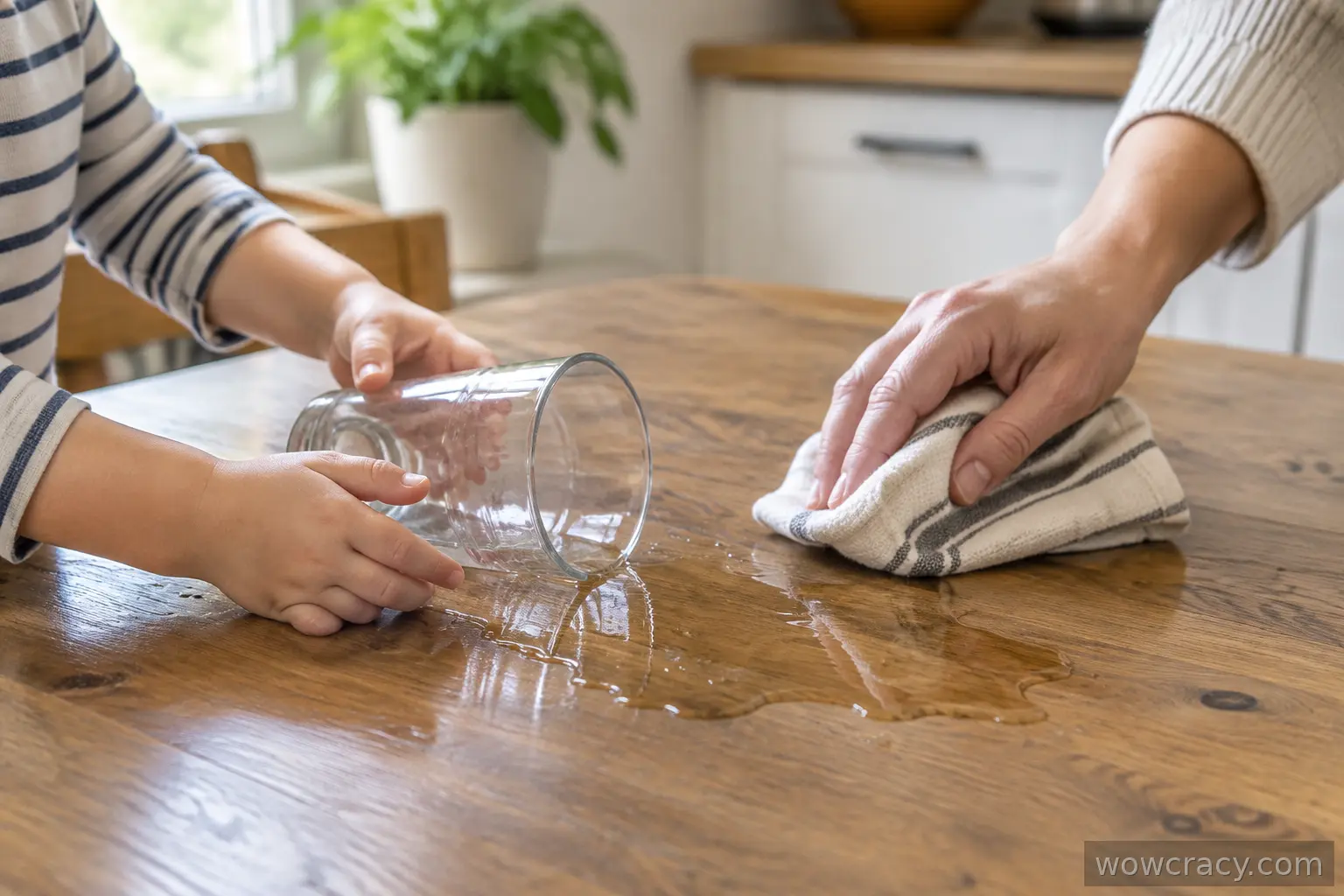
Separate observations from assumptions: “Water spilled on the table” is a fact; “you rushed” is one possible explanation. Ask “What happened?” or “What was difficult?” This makes it easier to identify useful support without assuming carelessness.
Avoid labels such as “lazy”, “messy” or “a failure”: they judge the person rather than the action and can be hurtful. Describe the consequence and the next step: “There are toys on the floor that someone could trip over. Let’s clear the walkway.” Respect is compatible with clear boundaries.
What to say instead of immediate criticism
When something goes wrong, check safety first. If a cup breaks, keep the child away from the pieces and clear them up yourself. Once both of you can listen, try: “Tell me what happened.” This opens a discussion without an immediate accusation.

Another useful move is to acknowledge the feeling: “You’re upset that you didn’t finish in time”. Empathy doesn’t mean agreeing with bad behavior, it merely releases tension. After that it’s easier to get to the point: “What can be done to finish in time next time?”. If the child doesn’t offer options, the adult can suggest one or two but leave the choice to them.
Here are a few replacement phrases worth having at hand:
- Instead of “You made a mistake again” — “This attempt didn’t work. What shall we try differently?”
- Instead of “How many times can I repeat this?” — “I see that it’s hard for you. Let’s go through it step by step”.
- Instead of “You’re all thumbs” — “This takes skill. Want me to show you how to hold it more comfortably?”.
- Instead of “I don’t want to hear excuses” — “It’s important for me to understand what happened. Tell me in your own words”.
These phrasings aren’t ideal for every situation, but they preserve the main thing: the child feels heard, not attacked.
Plan the next step together
When the child is ready, suggest finding one next step: “What could we change?” or “Where would help be useful?” Let them influence the decision without requiring them to invent the whole plan. An adult can demonstrate a method, offer two options or break the task down.
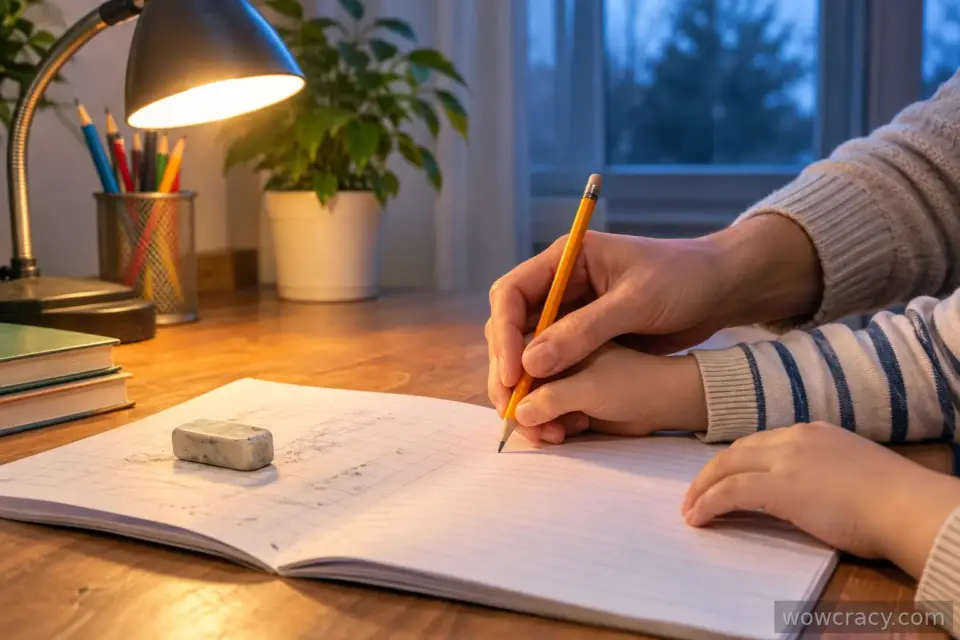
If maths is difficult, check together whether the rule is clear, whether time was sufficient and whether another explanation would help. Notice useful actions: “You checked the answer and found where you went wrong.” Support does not mean insisting on endless effort: a break, a different approach or a teacher’s help may be needed.
It’s also worth letting the child fix the consequences on their own where it’s safe. Spilled water — wipe it up together. Forgot the notebook — help put together a plan for reminding yourself next time. Such experience forms the feeling: “I can cope with the consequences, not just with the guilt”.
Recognise effort, strategies and progress
In experiments by Claudia Mueller and Carol Dweck (1998), fifth-graders praised for intelligence showed less persistence after failure than those praised for effort. This was not a comparison of every kind of outcome praise with every kind of process praise. In practice, recognise effort, effective strategies, help-seeking and progress without making the child’s worth depend on success.
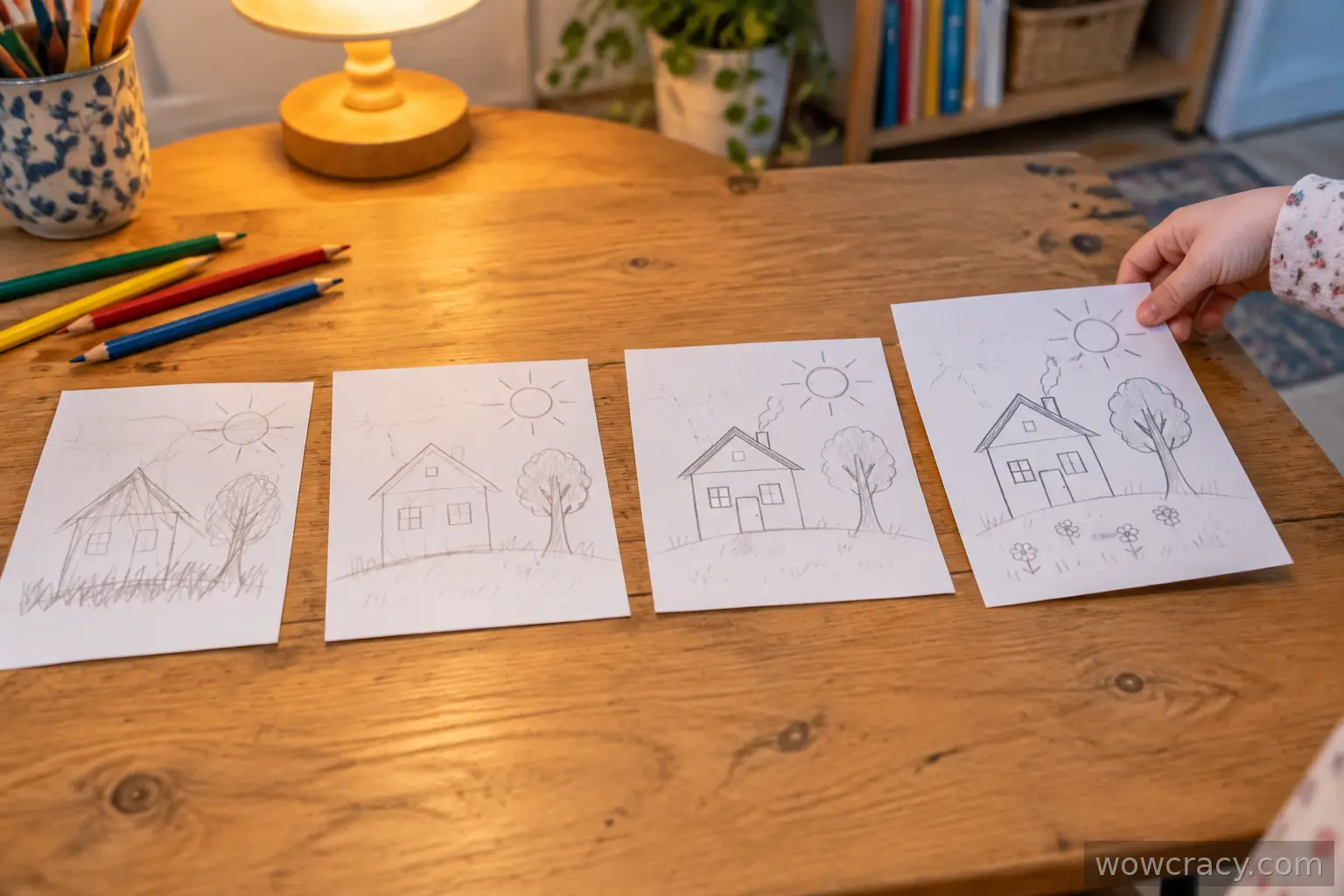
Compare “You’re a genius” with “You tried another method and found the answer.” The second identifies an action that helped. A single remark does not determine future self-esteem, and warm support matters regardless of the result.
Make praise sincere and specific when there is something to recognise. You can add detail to “well done”: “You spotted the mistake and corrected it yourself.” There is no need to invent effort or describe every unsuccessful attempt as a success.
How an adult can acknowledge their own mistakes
Children learn from both what adults say and what they do. If you shouted, acknowledge it without blaming the child: “I raised my voice. That was unfair, and I’m sorry. Next time I’ll pause.” Follow-up actions matter alongside the apology.
It’s also worth showing how you yourself cope with failure. You can say out loud: “My pie didn’t turn out. It’s a bit upsetting. But I’ll try again, maybe with a different temperature”. This isn’t an ideal demonstration but a living example of the fact that a mistake is part of the process. Children read sincerity well and draw conclusions.
Sometimes an adult should ask directly: “How do you feel when I react to your mistakes?”. The answer may be unexpected. But the readiness to hear it is already support for the child, teaching that relationships matter more than flawlessness.
When to seek help
If the fear of making a mistake becomes so strong that the child refuses any new activity, avoids school, constantly cries over minor failures, or begins to speak of themselves with contempt, that’s a reason to consult a child psychologist. It’s also worth consulting if parents’ attempts at support don’t bring relief over a long period. A specialist will help understand the causes and suggest individual strategies.

Frequently asked questions
How to react if a child cries over a mistake?
First — acknowledge the feeling: “It hurts that it didn’t work out”. Don’t rush to fix the situation or soothe with an empty “it’s nothing scary”. Give time, then ask: “Want me to stay nearby while you calm down?”. When the emotions subside, you can think about the next step together.
Can you praise a child for not making a mistake at all?
Yes, it is fine to celebrate a correct result or an achievement. Add detail about what went well, which approach helped or what the child learned. Do not make error-free work a condition of affection or demand perfection next time. Choosing an easier task does not, by itself, prove fear.
What to do if a child blames themselves for a mistake?
Don’t deny it sharply (“What are you making up!”) but join the feelings: “You really are upset”. Then help them see the difference between “I made a mistake” and “I’m bad”. Offer to find evidence together that they coped with other things, and remind them that mistakes happen to everyone, including adults.