The cat disappears under the sofa the moment you take the carrier out of the cupboard. A familiar picture: the animal learned to recognize this object long before you had a chance to say anything. The problem isn’t the carrier itself, but the fact that it only appears when something unpleasant lies ahead — a trip, the clinic, a move.
That’s why what works is not a trick for the day of departure, but a calm introduction on ordinary days. The carrier should become part of the apartment, not a signal of alarm. Below is a plan that can be spread over several weeks, with conditions for moving between stages, so as not to rush and not to break the cat’s trust.
- Why a cat panics over a carrier
- Where to place the carrier for the first introduction
- How to encourage the cat to go inside voluntarily
- Which treats will work
- When to try closing the door
- How to move on to lifting and carrying
- What to take with you on a short trip
- What to do if the cat hides or refuses to go in
- When veterinary advice is needed before a trip
- A short plan for the first weeks
Why a cat panics over a carrier
Cats are animals of habit and territory. A carrier disrupts both supports at once: it smells foreign (of the clinic, transport, other animals), restricts movement, and is usually accompanied by the cat being picked up against its will. For the animal, this is not a “box” but a harbinger of unpleasant events.
Add to this the natural reaction to an unfamiliar enclosed space with a single exit — and it becomes clear why a cat is afraid of a carrier even when you have done nothing wrong. The animal reacts to context, not to your intentions.
Hence the main principle: what needs to change is not the cat, but its experience associated with this object. If the carrier stands in the room every day, smells of home, and nothing happens with it, it gradually loses its status as a threat.
Where to place the carrier for the first introduction
Placement decides more than it seems. A carrier that is immediately put in a dark corner or on a mezzanine remains a foreign thing. A carrier in the middle of a room where people constantly walk is also not the best option — the cat won’t have peace to explore it at its own pace.
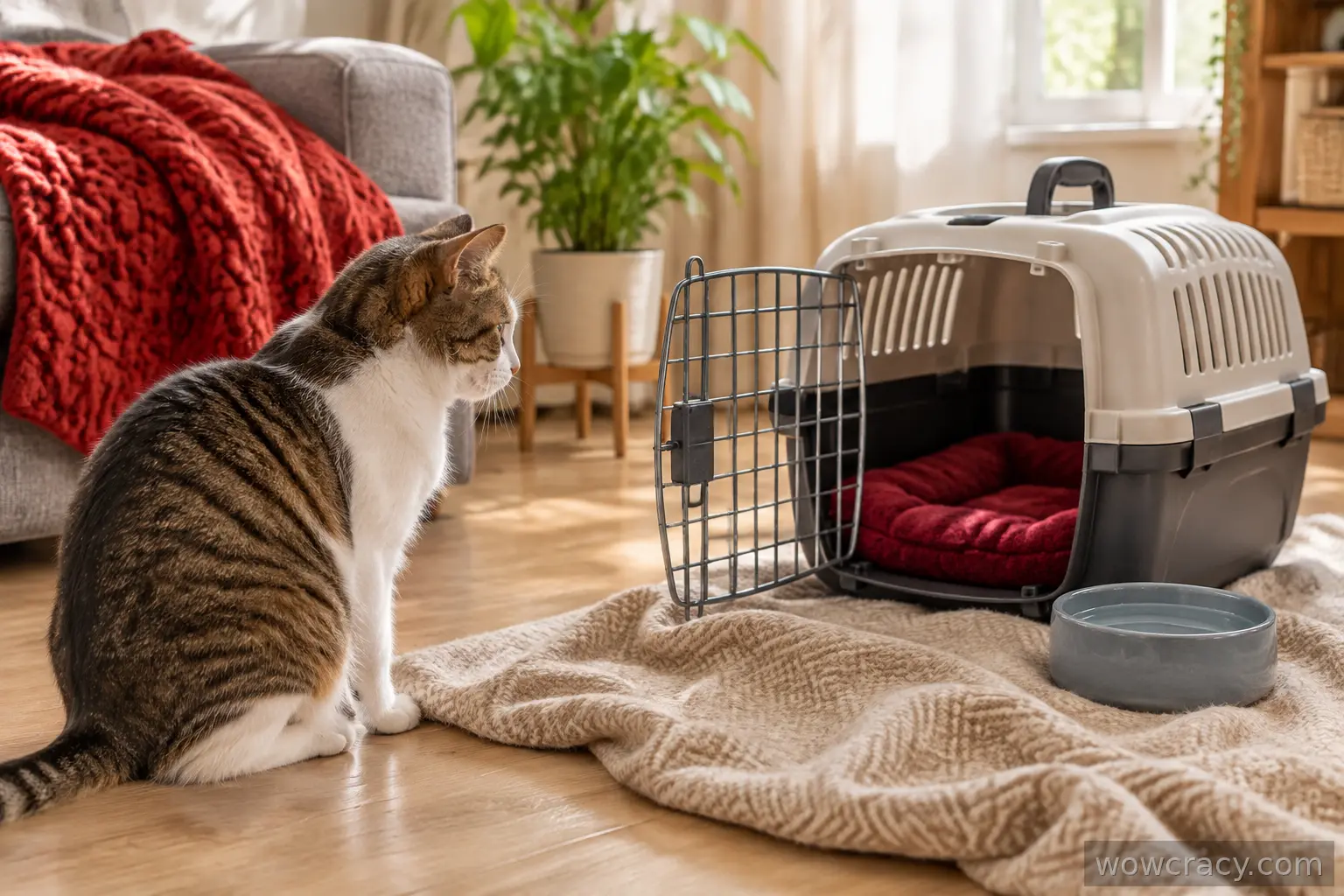
Choose a quiet place in an area where the cat already spends time: near its favorite bed, under the window, in a corner of the living room where doors don’t slam. It’s important that the animal can approach, sniff, and walk away without obstacles.
- Remove the door or fix it in the open position — an open entrance reduces the feeling of a trap.
- Place a familiar bedding or an item with the scent of home inside.
- Don’t wash the carrier aggressively before the introduction: a sharp smell of detergent scares more than a familiar home aroma.
- Leave a bowl of water nearby so that the space around is not associated only with an “event”.
For the first days, do nothing. Don’t push, don’t pick up the cat, don’t point a finger. It’s enough for the carrier to simply stand there. Many cats approach it on their own — first to sniff, then to look inside, and later to go in.
How to encourage the cat to go inside voluntarily
When the cat has stopped tensing up at the presence of the carrier, start working with food and play. This is not training, but a way to associate the object with something pleasant.
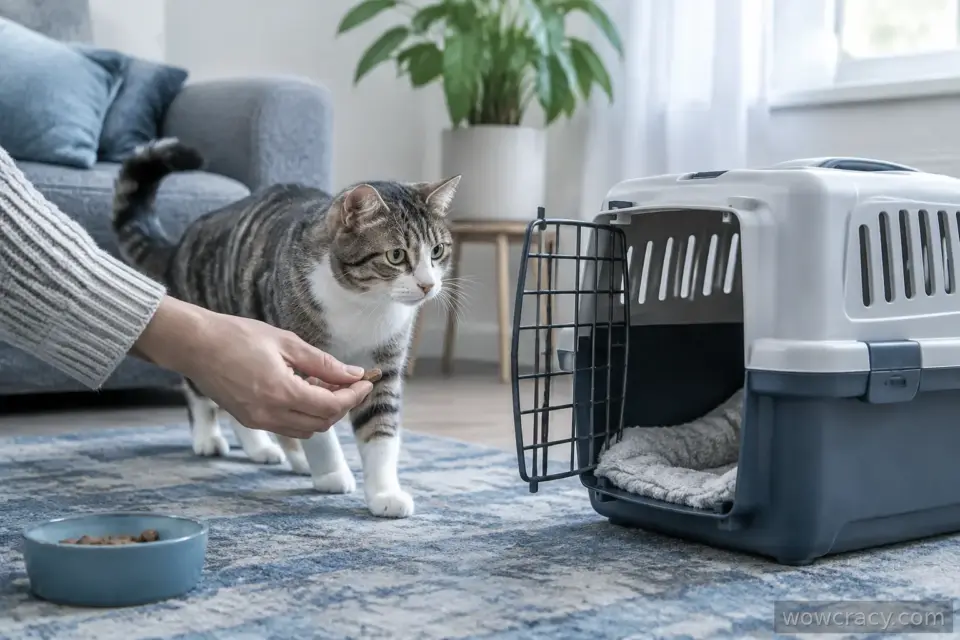
A practical technique: feed the cat next to the carrier, gradually moving the bowl closer to the entrance. Then place a few pieces of treats on the floor near the entrance, then on the threshold, and only then inside. Repeat each step for several days until the cat feels confident.
A toy on a string also works well: move it near the entrance, let the cat “catch” the prey on the floor of the carrier. Movement and hunting reduce tension better than attempts to calm with words.
Which treats will work
Choose what the cat truly loves and receives rarely: small pieces of boiled meat, special soft treats, a little moisture from its usual food. The size — one bite, so that the animal doesn’t stay inside longer than it is comfortable.
Don’t use treats as “bait into a trap”. If the cat goes in to eat and you close the door in the meantime, next time it won’t trust either the food or you. Everything that happens at this stage must end with the cat coming out on its own.
When to try closing the door
The condition for moving on is simple: the cat goes inside voluntarily, eats there, and doesn’t run out immediately. If it only goes as far as the threshold or comes out as soon as you approach, the stage has not yet been passed.
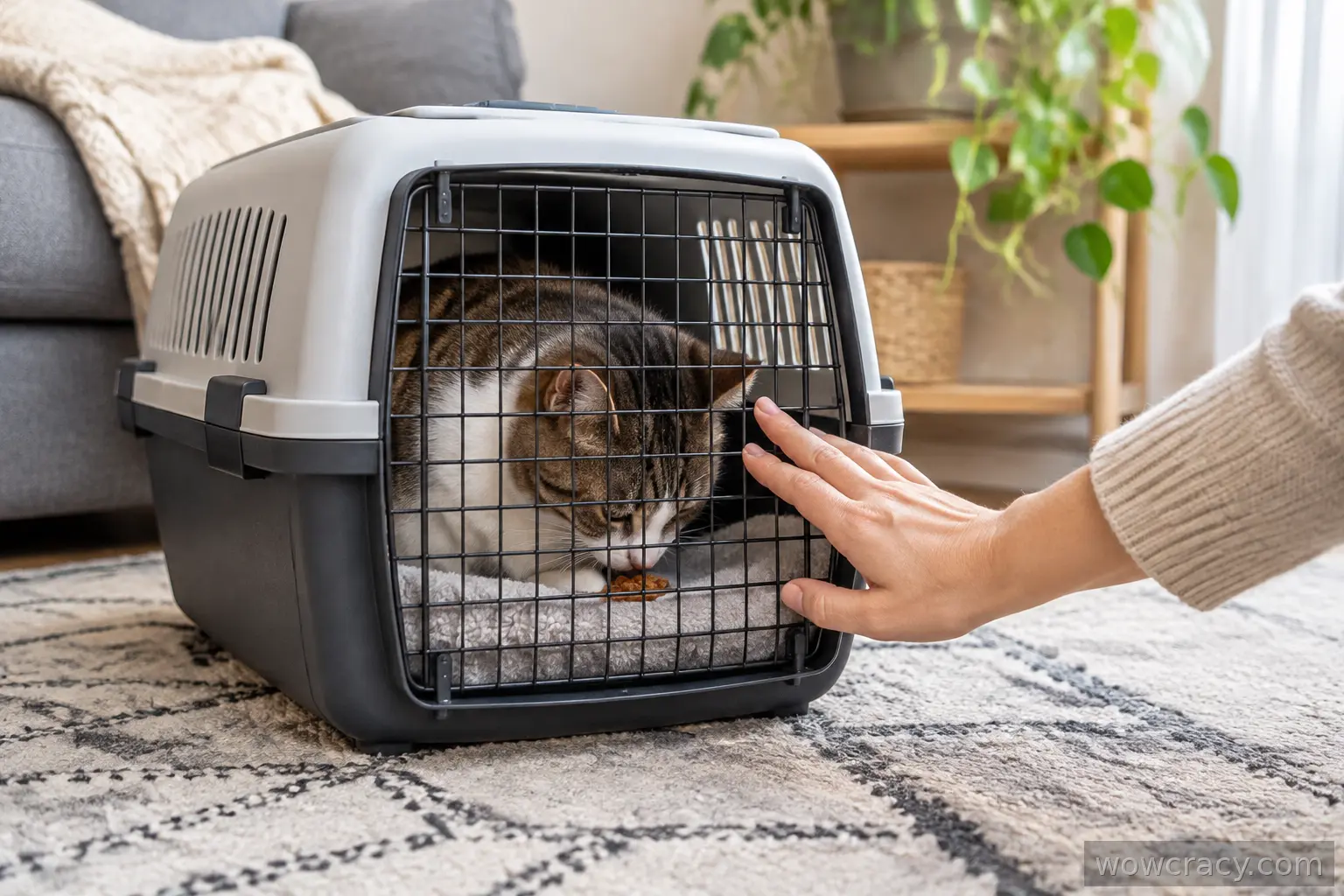
Then proceed in short steps:
- First just touch the door without closing it. Give a treat, let go.
- Then close the door for 2–3 seconds while the cat eats, and immediately open it.
- Gradually increase the time to 10–20 seconds, always opening before the cat starts to get nervous.
- Add a short lifting of the carrier in place — without carrying it across the room.
The key rule: open the door before the animal starts scratching or meowing. If the cat has never once reached panic, it gradually stops expecting it.
Hold the carrier with both hands, smoothly, without sudden movements. Carry it close to the body — this way it sways less, and the cat feels fewer jolts.
How to move on to lifting and carrying
Lifting is a separate skill, and it’s worth practicing at home, not on the day of the trip. First lift the carrier with the cat 10–15 centimeters and put it back. Repeat several times over a week, each time with treats.
Then carry the carrier to the next room and bring it back. Next — take it out into the hallway, then to the front door. Each new step is a new experience, and it’s better to do it separately, not all in one day.
The next stage is short trips. Start by bringing the cat in the carrier to the car, sitting there for a few minutes with the engine off, and returning home. Then — a trip of 5–10 minutes along quiet streets. The goal is not to “get there”, but to get used to movement, sounds, and the very fact of traveling.
What to take with you on a short trip
- A favorite bedding or an item with a home scent.
- A small amount of water and a bowl if the trip is longer than half an hour.
- A napkin in case the cat is sick.
- Treats to reward after returning home.
It’s better to place the carrier on the floor or a passenger seat so that it doesn’t slide. Sudden braking or shaking scares the cat more than the road itself.
What to do if the cat hides or refuses to go in
Refusal is not a reason to push. If the cat hides when it sees the carrier, go back a step: remove the door, move the carrier further from the walkway, reduce the number of attempts to one or two per day.
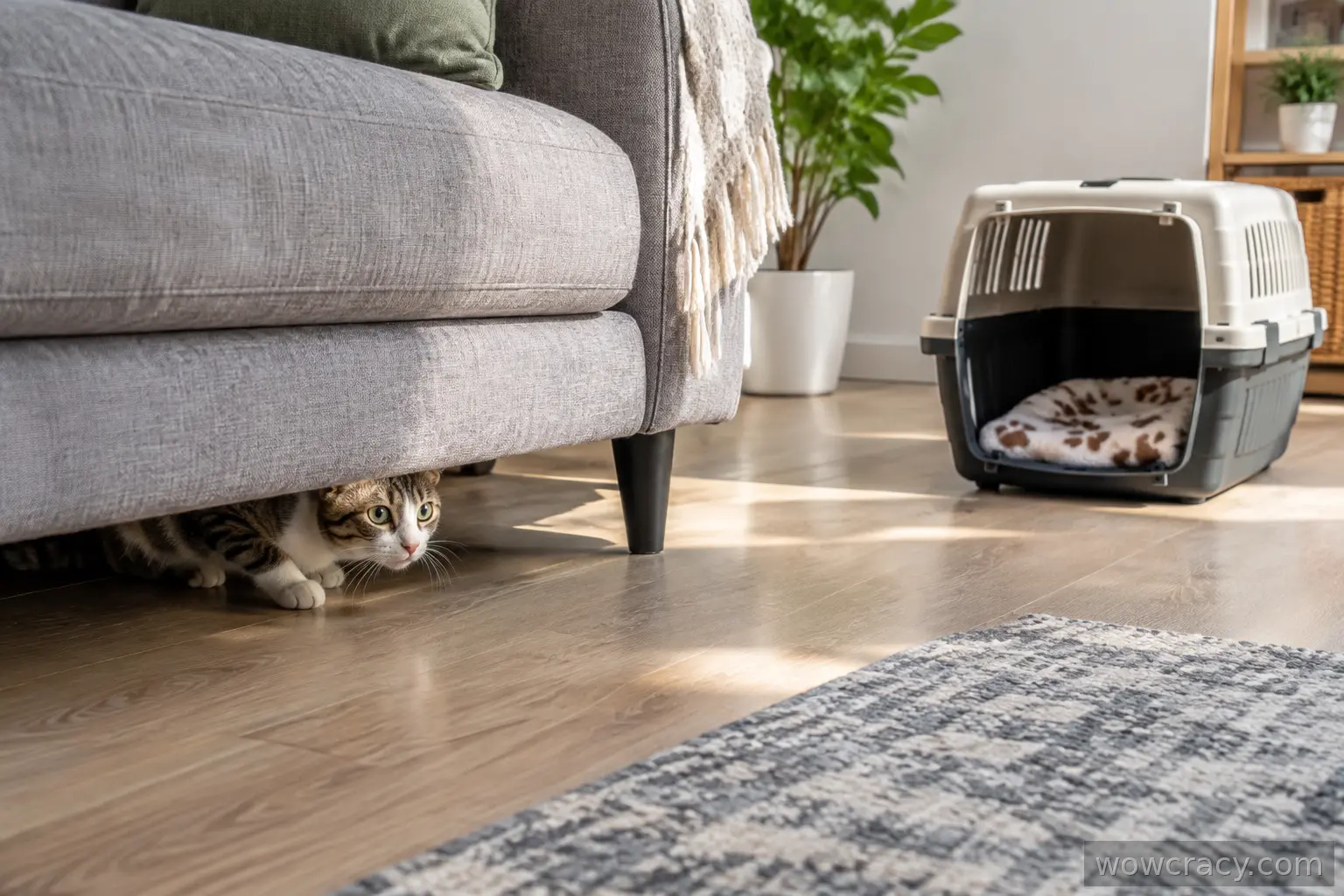
Sometimes the reason is the carrier itself: a musty smell, a tight size, remnants of disinfectant. Check whether the cat can freely stand and turn around inside. If the carrier is small, replace it with a larger one — this often solves the problem faster than weeks of persuasion.
Calming products for the environment can also help, for example synthetic pheromone analogues that are sprayed in the carrier in advance. Their effect is individual, so treat them as an auxiliary, not the main tool.
If the cat doesn’t just avoid the carrier but is frightened by any changes, new objects, or unfamiliar people, it’s worth discussing this with a veterinarian. Sometimes behind fear there is pain, chronic stress, or health problems that require separate attention.
When veterinary advice is needed before a trip
General advice does not replace a consultation with a specialist. Consult a veterinarian in advance if:
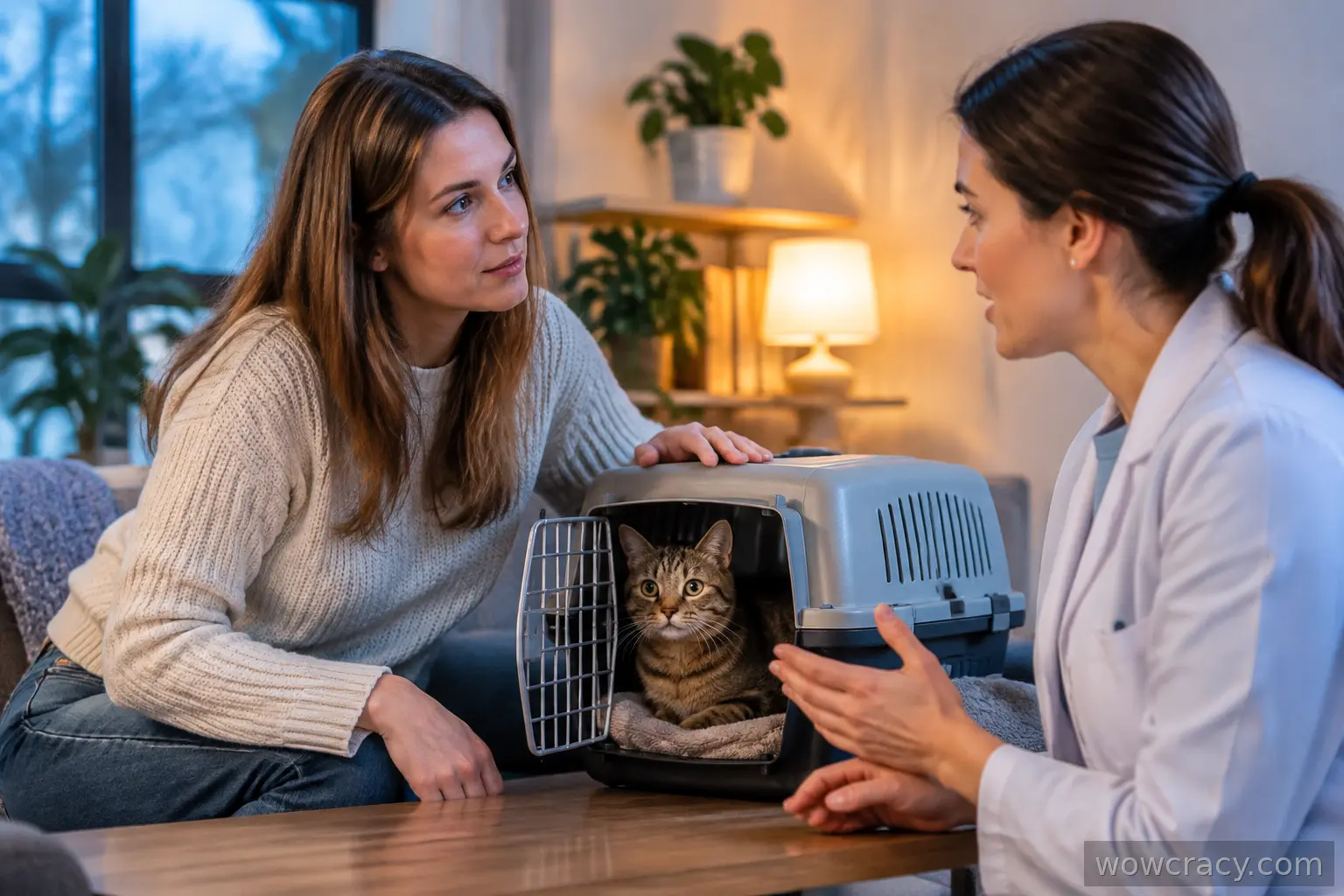
- the cat is very nervous even after weeks of gradual habituation;
- during trips it develops shortness of breath, drooling, vomiting, or severe anxiety;
- a long journey or flight lies ahead, and you want to discuss safe options;
- the animal has chronic diseases, and the trip may affect its condition.
Don’t give the cat sedatives or any medications on your own, even if you have heard about them from acquaintances. The dosage and appropriateness are determined by the doctor taking into account the animal’s age, weight, and condition.
A short plan for the first weeks
Here is a guide that can be adapted to your cat. The pace depends on the animal’s character, and that’s normal — some cats need more time.
| Period | What we do | Sign that you can move on |
|---|---|---|
| 1–3 days | The carrier stands in a quiet place with the door open | The cat approaches, sniffs, doesn’t run away |
| 4–10 days | Treats near the entrance, then on the threshold, then inside | The cat goes in on its own and eats inside |
| 2–3 weeks | Brief closing of the door for a few seconds, lifting in place | The cat doesn’t panic, the door is opened without resistance |
| 3–4 weeks | Carrying around the apartment, going out into the hallway, a short trip | The cat calmly tolerates movement and returns home without panic |
The main thing is not to skip stages. Reinforce each small success with several repetitions, and if something went wrong, go back a step without blaming yourself. The cat is not “stubborn” — it is simply cautious, and it is this caution that helps it survive.
When the carrier stands at home permanently, rather than appearing only before going out, you will notice the difference: instead of a chase around the apartment, there will be a cat that goes inside on its own and waits for treats. This is the result worth striving for.