In winter, droplets form on the room side of glass when its surface is below the dew point of the air beside it. Humidity, heating, glazing and air movement all matter. This checklist focuses on winter conditions around the window: curtains, furniture, radiators and the intended air supply.
- Where exactly the moisture appears and what it means
- How to monitor humidity in the apartment
- What can obstruct the movement of warm air near the window
- Furniture and curtains
- Radiator and windowsill
- When ventilation needs to be checked
- How to check extraction without instruments
- Air supply: windows, doors, valves
- The condition of the glazing unit and the space between the panes
- Practical checklist: what to check first
- Frequently asked questions
- Can condensation be eliminated with a dehumidifier alone?
- Why do the windows fog up in one room but not in another?
- Does constant trickle ventilation help?
- When should a ventilation technician be called?
- Brief summary of actions
Where exactly the moisture appears and what it means
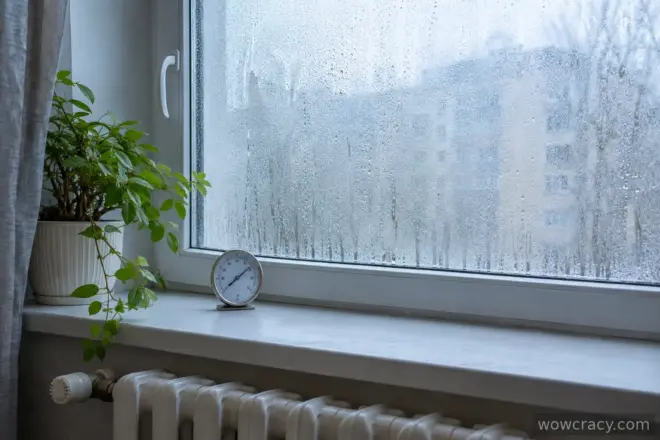
First locate the moisture: indoors, outdoors or between the panes of a sealed unit. Exterior dew can occur on sound energy-efficient glass. A wet lower indoor edge does not prove inadequate air supply: edges are often colder and water runs down. Location is a clue, not a diagnosis.
It is important to distinguish short-term fogging from persistent condensation. The first happens, for example, after cooking or a hot shower, when humidity rises sharply and then levels off. The second is when the glass is damp every day, especially in freezing weather, and the droplets do not have time to evaporate. Persistent condensation is harmful not only to the glass: moisture seeps into the seals, window reveals and plaster, creating a favourable environment for mould.
Moisture on reveals or a sill may be condensation or a leak through the installation joint, wall or another source. Note any link with rain and wet wall patches for the technician. A stain alone cannot determine whether insulation or replacement is needed.
How to monitor humidity in the apartment
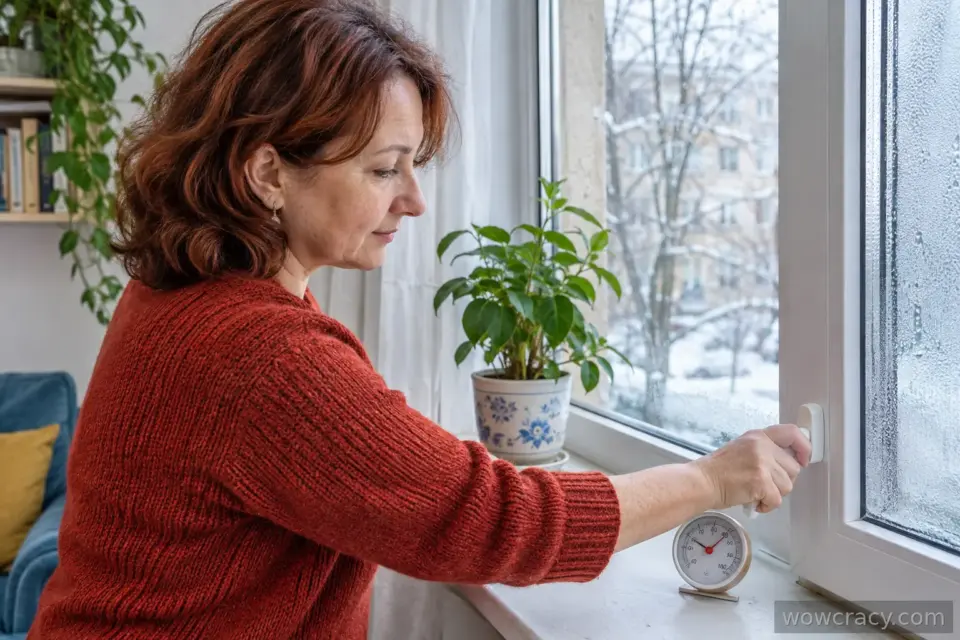
Record room temperature and relative humidity for several days, including morning, evening and after steam-producing activities. Position a thermo-hygrometer as directed, away from cold glass, radiators, direct sun and steam; let readings settle after moving it.
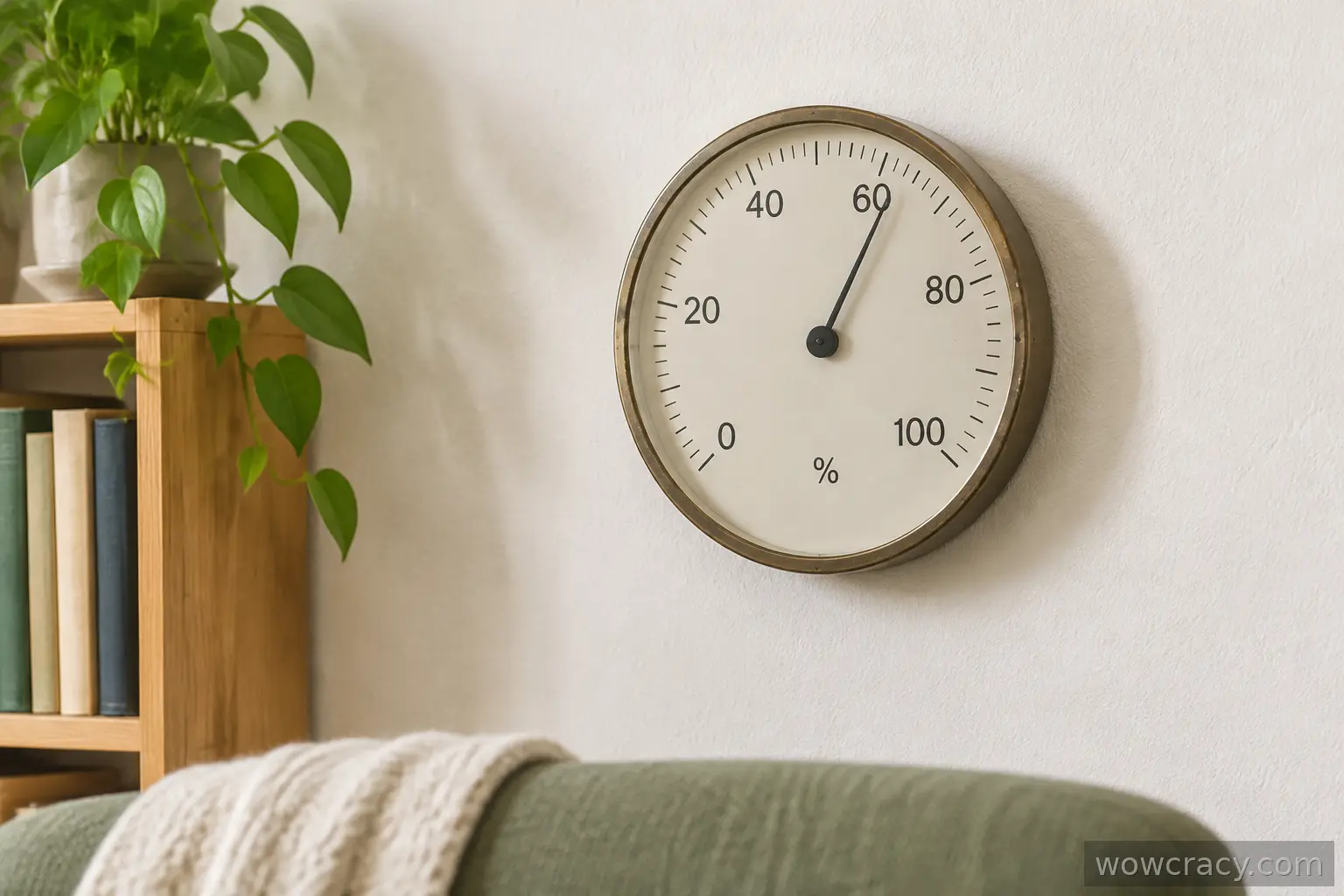
For mould control, the EPA advises relative humidity below 60%, ideally 30–50%. This does not guarantee dry glass: a very cold surface can condense moisture at lower room humidity. Do not wait for 65–70% if water is already collecting.
Slow-drying towels, musty odours and damp patches help identify areas to check; they do not measure humidity. Breathing difficulty is not a household dampness test and needs separate assessment.
It is also worth bearing in mind that humidity in an apartment depends on habits: drying laundry in a room, frequent cooking without an extractor hood, a large number of houseplants, an aquarium — all of these add moisture to the air. Sometimes it is enough to change everyday habits for the condensation to disappear.
What can obstruct the movement of warm air near the window
Obstructions near a window can cool the local area or trap moist air. Check the radiator’s convection path and whether curtains press against the glass. This is one possible factor, not a universal explanation for condensation.
Furniture and curtains
Heavy curtains, especially long ones, can block the flow of warm air to the glass. If the curtains hang right up against the windowsill or cover the radiator, convection is disrupted. Try raising the curtains during frosts or using lighter fabrics. Also check whether the windowsill is in the way: sometimes a wide windowsill board blocks the air flow from the radiator.
Keep sofas, cupboards and fabric clear of radiators. Required clearance depends on the heater and its instructions; 5–10 cm is not a universal safe gap, particularly for electric heaters. If possible, move large furniture and compare results in similar weather.
Radiator and windowsill
If the radiator is barely warm or clogged, it does not heat the air enough for it to rise to the glass. Check whether the radiator heats up evenly: cold sections may indicate the need for flushing or bleeding air. Also make sure the radiator is not covered by a decorative screen without convection openings.
A wide sill can redirect radiator airflow. First remove movable obstructions and check heating. Ask a specialist before altering the sill or cover or fitting a deflector; do not drill the structure by guesswork.
When ventilation needs to be checked
Even if the furniture is arranged correctly and the humidity is normal, condensation may persist due to ventilation problems. Natural extraction works on the principle of pressure difference: stale humid air must leave through the ventilation ducts, while fresh air must come in through the windows or special supply valves. If one of these flows is disrupted, moisture accumulates.
How to check extraction without instruments
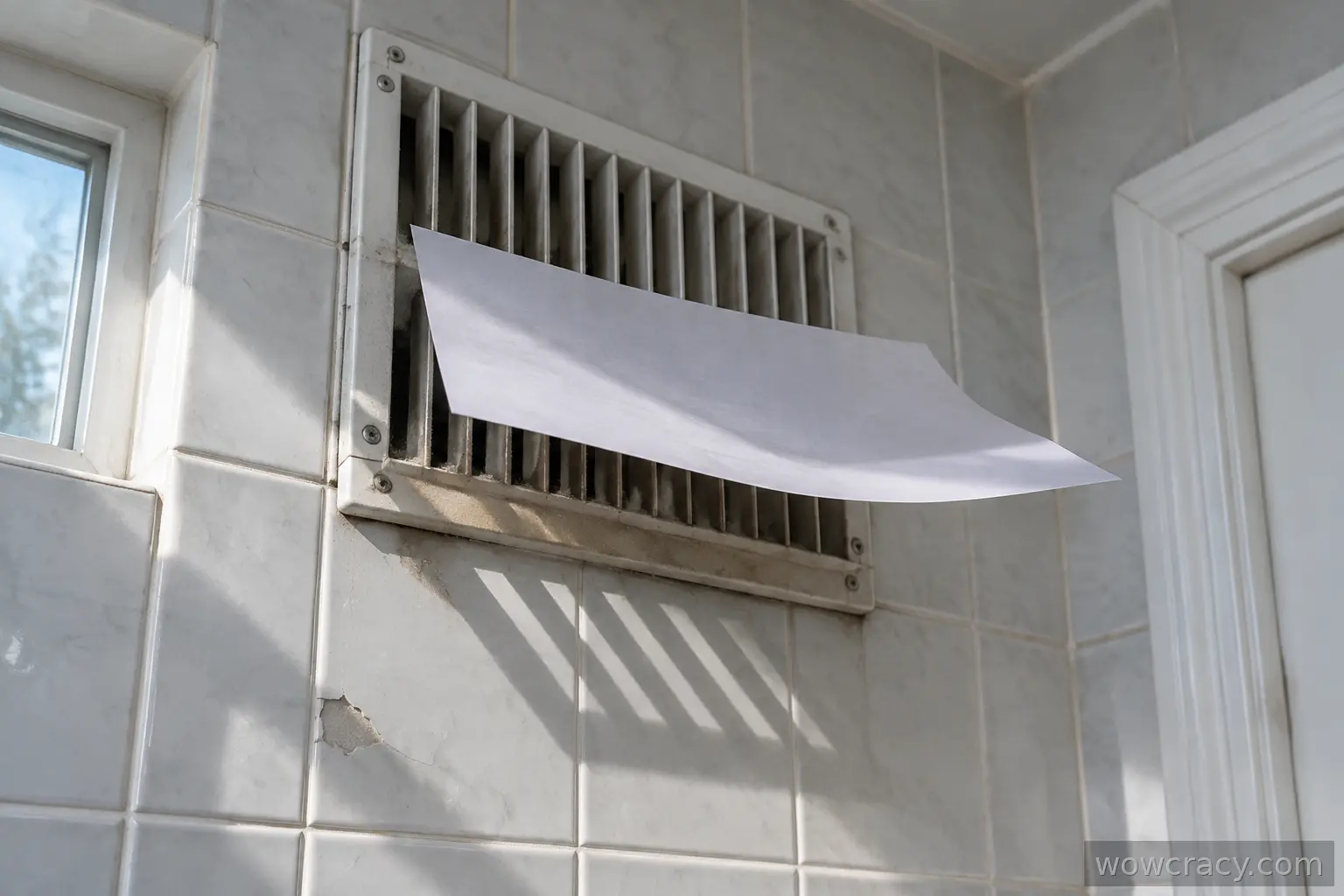
A strip of paper near an extract grille can roughly show airflow direction. It does not measure ventilation: sticking does not prove sufficient flow, and falling does not confirm a blockage. System type, weather and air supply matter. Never test with a flame.
It is also worth paying attention to the ventilation grilles: they should be cleaned of dust regularly. Sometimes residents seal up the ducts themselves or install dense filters without realising that this impairs extraction. If you live in a multi-storey building, the problem may be common to the whole stack — in that case you cannot do without a specialist.
Air supply: windows, doors, valves
Check intended vents, air inlets and mechanical ventilation. Airtight windows are only one part of the system; supply air may arrive by several routes. Keep designed inlets clear and do not replace background ventilation with occasional window opening.
Keep designed transfer-air paths clear. Do not trim doors or add grilles without checking the design, especially fire doors. During cooking and showering, extract steam outdoors and close those rooms’ doors without blocking intended air supply.
The condition of the glazing unit and the space between the panes
Misting between a sealed unit’s panes that cannot be wiped from either accessible side usually indicates seal failure. Arrange an inspection; the unit can often be replaced without replacing the frame. Moisture between separate secondary-glazing frames may have other causes.
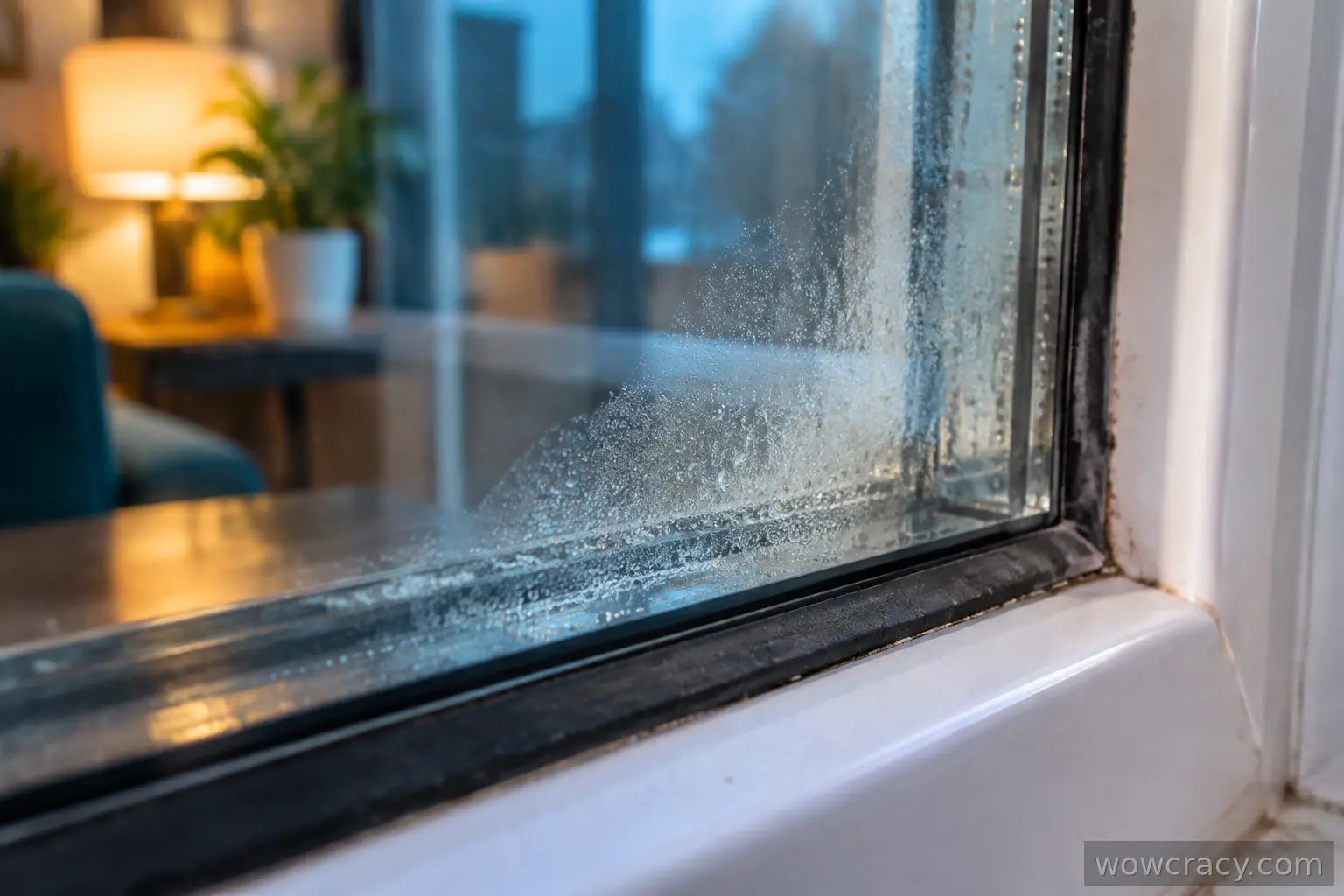
Also check the seals: over time they wear out, crack or peel away. Through gaps in the seals, cold air gets to the glass, cooling it. Replacing the seals is a relatively inexpensive way to improve the situation. Sometimes the cause lies in incorrect window installation: if the frame is installed with misalignments or without proper insulation, thermal bridges form.
Pane count alone does not determine performance: glass and frame heat transfer, coatings, spacers and installation matter. Choose any replacement after inspection and ventilation checks, not simply by choosing more panes.
Practical checklist: what to check first
So as not to waste time and money at random, go through the points in the suggested order. This will help identify the most likely cause and avoid unnecessary expenses.
- Locate the moisture. Indoors, outdoors or between panes? Arrange inspection for misting inside a sealed unit.
- Record temperature and humidity. Wipe up water and address its source without waiting for a universal threshold.
- Assess the air supply. Whether the supply valves are open, whether there is a gap under the door, whether heavy curtains and furniture are in the way.
- Assess ventilation. Paper indicates approximate flow direction only. Clean the accessible grille as directed; leave duct and flow-rate checks to a specialist.
- Inspect the radiator and windowsill. Whether the radiator heats up evenly, whether the windowsill blocks the air flow, whether there is a decorative screen without convection openings.
- Check the seals and installation. Whether there are cracks, gaps or signs of freezing on the window reveals.
If condensation persists after all the checks, it is worth calling in a ventilation specialist or a representative of the company that installed the windows. Sometimes the problem is complex: insufficient air supply, elevated humidity and a cold glass surface act together.
Frequently asked questions

Can condensation be eliminated with a dehumidifier alone?
A dehumidifier removes water vapour and lowers the dew point, so it can help at cold glass. It does not repair leaks or supply fresh air. Consider moisture sources, ventilation and the device’s operating conditions together.
Why do the windows fog up in one room but not in another?
The difference may be due to a different glass surface temperature (for example, a window on the north side is colder), different air supply or local sources of moisture. Check each room separately.
Does constant trickle ventilation help?
Yes, if it provides sufficient air exchange. However, in severe frosts a window left open for a long time can lead to the room becoming too cold. It is better to ventilate briefly but intensively, several times a day.
When should a ventilation technician be called?
Persistent dampness, musty smells, reverse flow or doubts about extraction call for professional checks. The paper test alone cannot establish a fault. Do not clear or alter shared ducts yourself.
Brief summary of actions
Wipe up water, record temperature and humidity, clear the heat path near the glass and check intended ventilation openings. Compare changes in similar weather. Leaks, wet walls, mould or misting between panes need separate inspection; do not postpone it to finish the checklist.