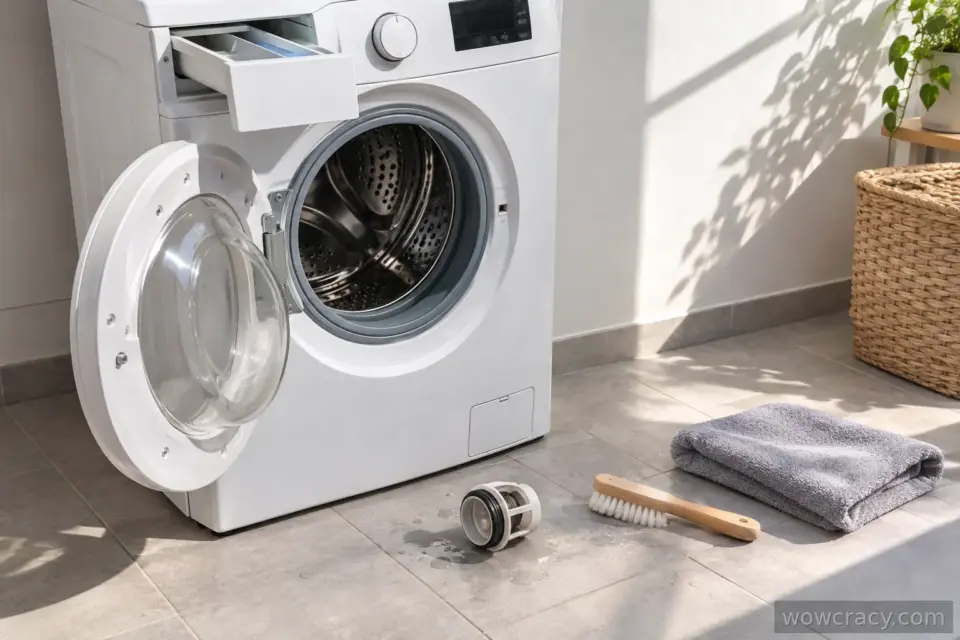
Musty odours can come from damp detergent residue, lint and buildup in accessible parts, or from drainage problems. Check them in order without dismantling the housing. A burning smell, smoke or overheating calls for stopping use, disconnecting power safely and contacting service.
The steps below cover routine care. Before manual cleaning, switch off and unplug the machine and check your model’s manual for accessible parts and permitted products. Do not remove the tub or work on electrical components.
- How to distinguish a musty smell from a sewage smell
- Where to look for the source of the smell: the sequence of checks
- Detergent drawer and its recess
- How to remove and rinse the drawer
- What you shouldn’t do with the drawer
- Smell from the seal: the rubber door gasket
- How to clean the seal without damage
- The drum and the holes in its walls
- How to safely check the drain filter
- When it’s better not to touch the filter yourself
- When the cause may be in the connection to the sewer
- Typical mistakes that make the smell return
- A short algorithm of actions
- Frequently asked questions
- Can vinegar be used to clean the machine?
- Why does the smell appear only during the spin?
- Is one cleaning cycle enough?
- When is a technician needed rather than self-cleaning?
How to distinguish a musty smell from a sewage smell
The character and timing of an odour can suggest where to check, but do not establish the cause. Do not lean in to inhale a strong odour closely.
A stale, “basement-like”, sometimes fungal smell is usually associated with biofilm — a thin layer of microorganisms that settles on damp surfaces. Most often it lives on the rubber door seal, in the powder drawer and in the recess where that drawer is inserted. This smell intensifies when the machine stays closed for a long time and the door isn’t aired out after washing.
A rotten or sharp smell, similar to sewage, more often indicates stagnant water in the drain hose, the trap, or problems with the connection. Sometimes it appears only during the spin or drain cycle — this is an important clue.
The third option is a smell reminiscent of stagnant water with an admixture of chemicals. It may be the result of an excess of fabric softener or gel that isn’t fully rinsed out and accumulates in the hoses.
Where to look for the source of the smell: the sequence of checks
Move from the most accessible to the most complex. If at some stage the smell disappears or weakens significantly, the remaining points can be postponed.
- Inspect the drawer and recess without inhaling a strong odour closely.
- Check the rubber door seal all the way around, especially the lower fold.
- Look inside the drum and at the holes in its walls.
- Check the filter only as directed, after disconnecting power, cooling and controlled draining.
- Listen to whether the smell appears during the draining of water.
Next, inspect the accessible parts. Your model’s manual sets the limits; stop if a part does not release easily or the housing must be dismantled.
Detergent drawer and its recess
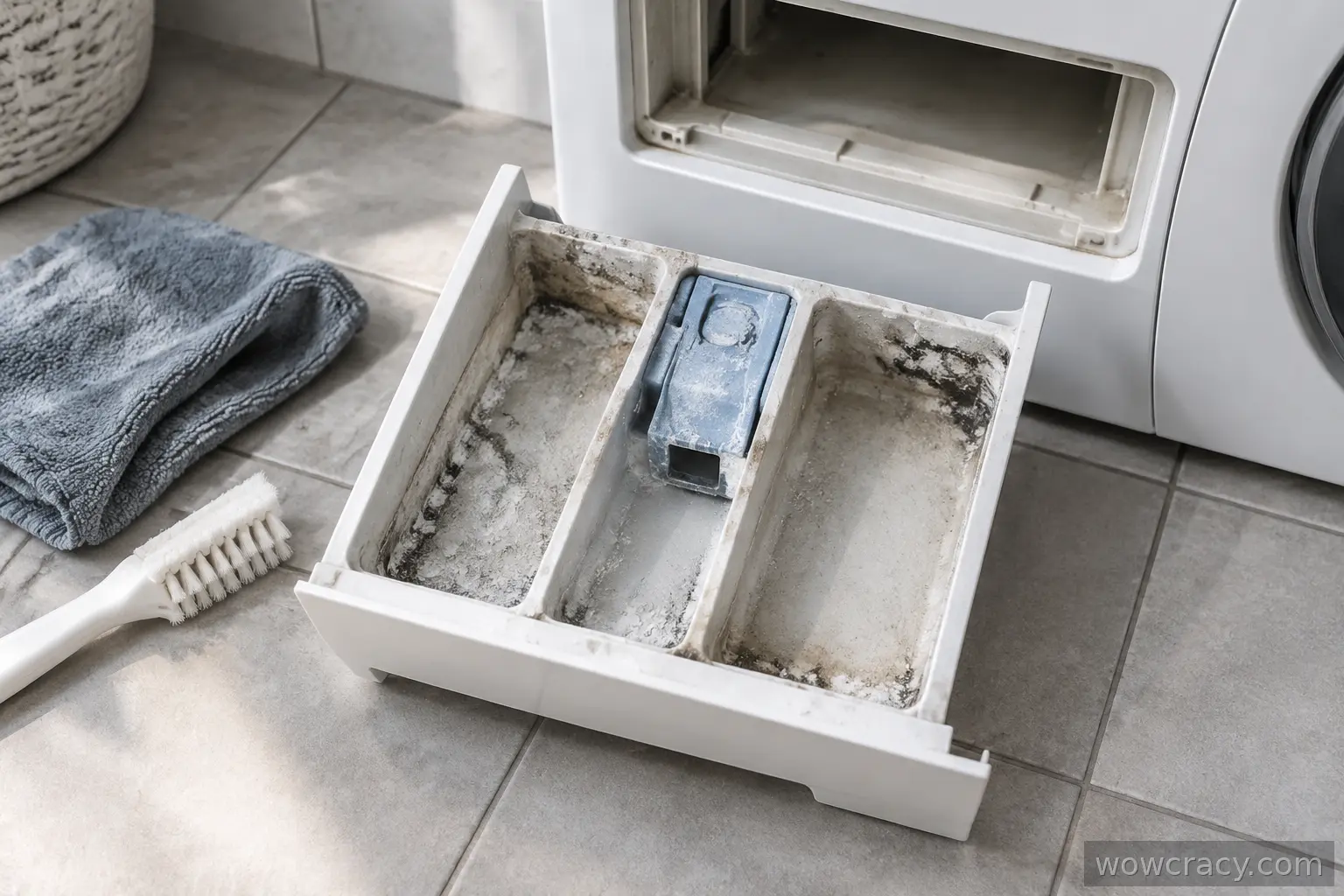
The drawer receives powder, gel and fabric softener, but the water doesn’t wash them out completely. In the corners and on the dividers, a paste remains that darkens over time and starts to smell. Often the problem is hidden not in the drawer itself but in the recess where it is inserted: buildup settles there too.
How to remove and rinse the drawer
Most front-loading models allow you to pull the drawer out as far as it goes and press the catch — usually a small plastic button in the fabric softener area. It’s better to check the exact sequence for your model in the manufacturer’s instructions: in some machines the drawer is removed differently.
Rinse the removed drawer with warm water and a mild detergent, using a soft-bristled brush or an old toothbrush for hard-to-reach corners. Do not use metal sponges or aggressive solvents — they scratch the plastic, and scratches become a new place for dirt.
Wipe the recess under the drawer with a damp cloth, and if necessary with a brush and soapy solution. After wet cleaning, wipe it dry: the remaining moisture again promotes the growth of microorganisms.
What you shouldn’t do with the drawer
Do not add vinegar, bleach or another cleaner by guesswork: check the permitted product, compartment and dose in the machine’s instructions. Never mix cleaners, especially bleach with acids or ammonia.
Smell from the seal: the rubber door gasket
Water, lint, hair and detergent residue can collect in the lower seal fold. Check it alongside other accessible areas rather than assuming it is the only odour source.
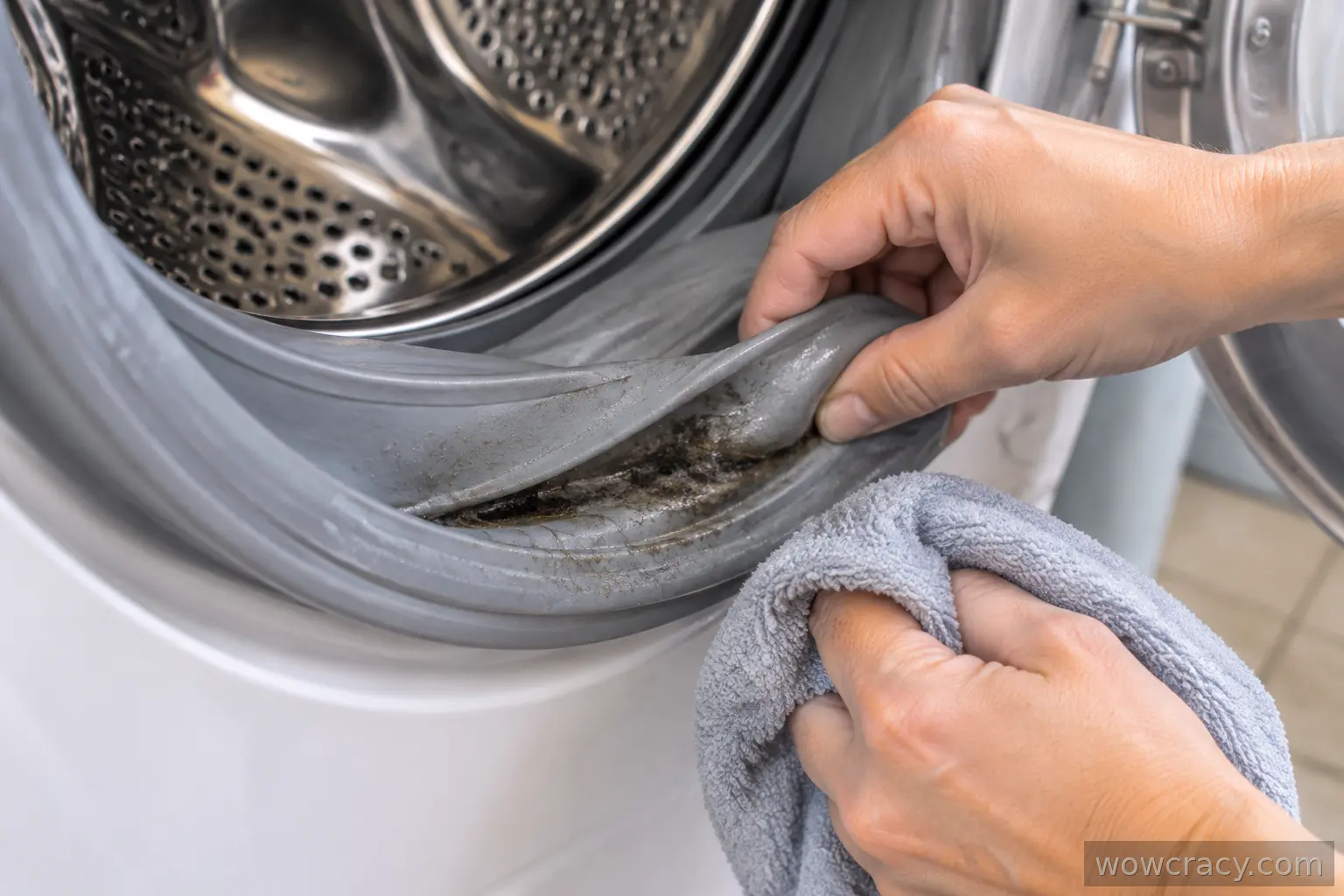
Gently pull back the accessible fold without removing clamps or the seal. Remove visible debris and residue using the permitted method. A dark stain alone does not prove it causes the smell.
How to clean the seal without damage
- Disconnect the machine from the power supply before any cleaning inside the door.
- Wipe the seal with a damp cloth and a mild detergent.
- For persistent buildup, use a soft-bristled brush, moving along the fold rather than across it.
- After cleaning, wipe it dry and leave the door open until the moisture evaporates.
Cracks, detached rubber or leaks need service assessment. Discoloration alone does not establish that the seal must be replaced. Do not run a leaking machine until the cause is resolved.
Vinegar or a soda solution is sometimes mentioned as a home remedy, but rubber should be treated with care: concentrated acids and abrasives accelerate the aging of the material. It is safer to use products intended for washing machine care and not leave them on the rubber longer than necessary.
The drum and the holes in its walls
Sometimes the source of the smell is neither the rubber nor the drawer but the drum itself. Between the outer and inner parts of the tank, buildup from excess powder can accumulate, and fibers get stuck in the holes in the walls.
Inspect the drum with a torch and remove accessible lint with a soft cloth or brush without pushing tools through holes. Use the maker’s maintenance programme or permitted empty cycle with the specified product and dose. Some programmes require no added cleaner.
It’s important to understand the limit: if the smell comes from under the tank or appears only at certain stages of the cycle, cleaning the accessible surfaces yourself may not help. Then a specialist’s diagnosis is needed.
How to safely check the drain filter
Many front-loading machines have a small hatch at the bottom of the housing, behind which the pump filter is hidden. This is where coins, pins, lint and detergent residue settle. Stagnant water in this unit often smells the strongest.
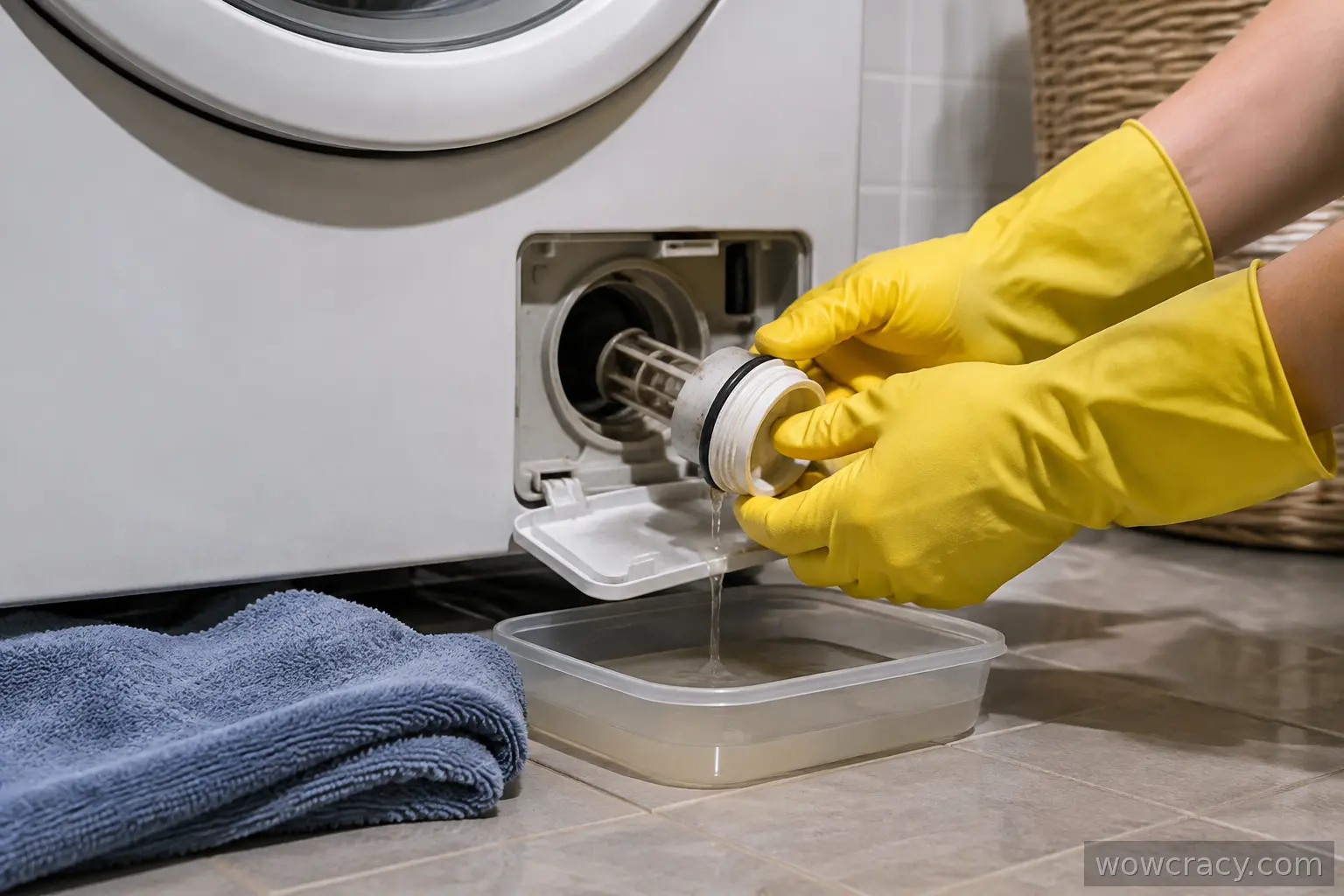
Switch off, unplug with dry hands and close the water tap. After a hot cycle, let the water cool fully. Prepare towels and shallow containers; a substantial amount may remain. Drain through the emergency hose if fitted, or as the manual directs. Do not immediately unscrew the filter fully.
After draining, remove the accessible filter as directed and clean it with water and a soft brush. Inspect the opening, but do not probe the pump with tweezers or long tools or force the impeller. Contact service for a jammed or inaccessible object.
Refit the filter and emergency-hose cap as directed without excessive force. Reconnect and check for leaks using the manufacturer’s method. Do not use the machine if it leaks or the thread is damaged.
When it’s better not to touch the filter yourself
If the filter hatch is inconveniently located, the cover is stuck, or the instructions explicitly state that maintenance is performed by a service center, don’t apply force. A stripped cover or a damaged pump will cost more than calling a technician.
When the cause may be in the connection to the sewer
If the drawer, seal and filter are clean, but the smell returns — especially a sharp, sewage-like one — it’s worth looking at the drain. Here are a few signs pointing specifically in this direction:
- the smell appears during the draining of water or immediately after it;
- water remains in the drum after washing;
- gurgling or slow water drainage is heard;
- the smell is present even in a machine that hasn’t been used for a long time;
- a similar smell is felt near other plumbing fixtures.
The causes vary: an incorrectly connected drain hose without a proper bend, a missing or faulty trap, a blockage in the main sewer pipe, the water seal in the trap drying out. Sometimes the hose is connected to the sewer in such a way that wastewater can be drawn back.
Visually check for kinks and leaks. Compare hose height, insertion depth and connection method with your own model’s installation instructions; a visible bend alone is not enough. Ask a plumber or service technician if the installation is uncertain.
Typical mistakes that make the smell return
The most common mistake is cleaning one visible part and considering the matter closed. If the source was in several places at once, the smell will return after a few washes.
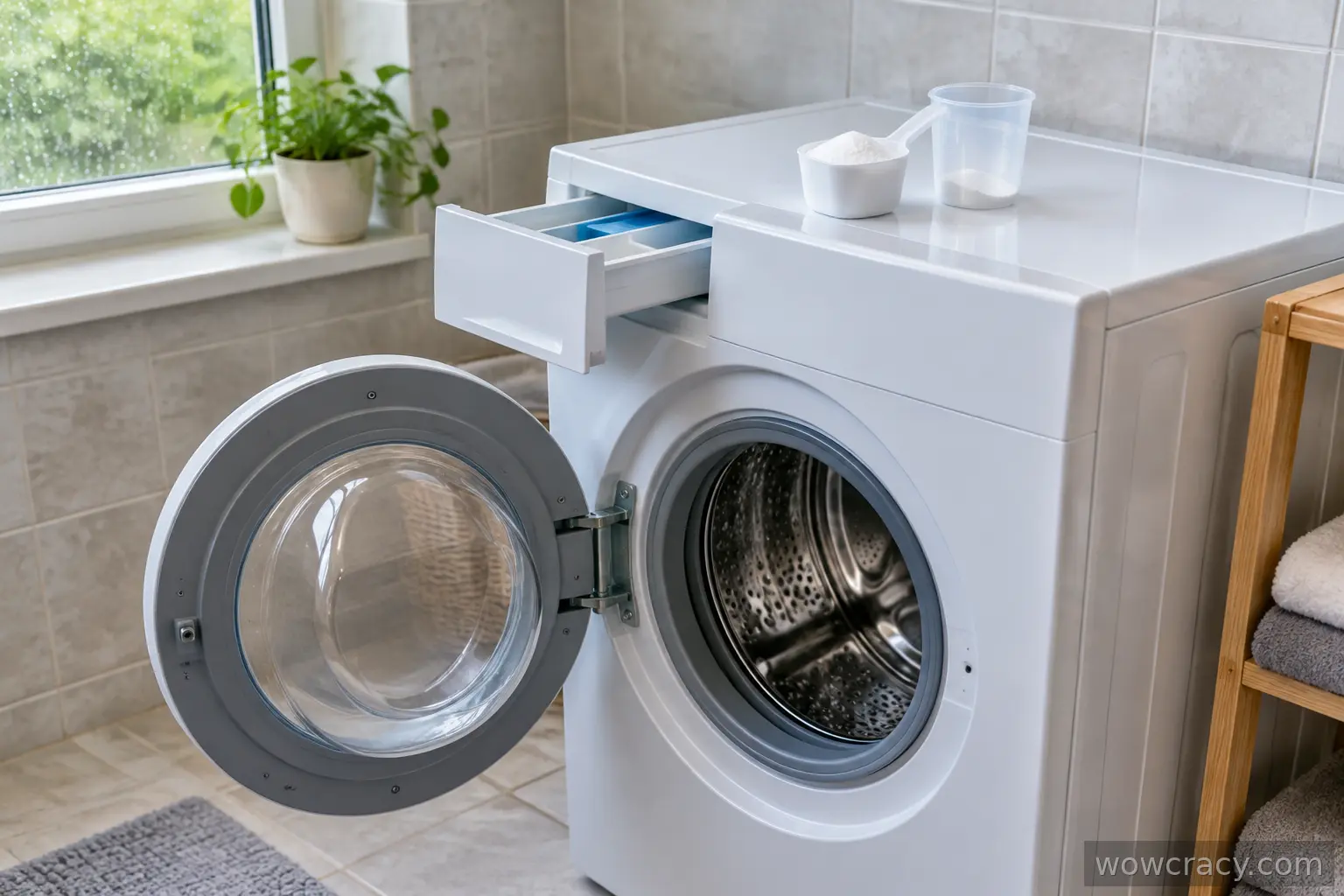
The second mistake is an excessive amount of powder or fabric softener. The residues aren’t rinsed out, settle in the hoses and feed bacteria. The dosage should be selected according to water hardness and the degree of soiling of the laundry, not “by eye”.
Another mistake is skipping maintenance after repeated low-temperature washes. Run the maintenance programme at the interval and temperature specified in the manual, with no laundry when directed.
A fourth mistake is closing both door and drawer immediately, trapping moisture. Let them dry as directed while keeping children and pets out of the machine.
A short algorithm of actions
- Stop use for burning, smoke or overheating; for musty odours, disconnect power before inspection.
- Remove and rinse the drawer, wipe the recess beneath it.
- Clean and dry the rubber seal, inspect the fold.
- Check the drum holes and rinse them if necessary.
- Clean an accessible filter only after cooling and draining as the manual directs.
- If the smell returns or there are signs of drainage problems — contact a technician.
After cleaning, leave the door and drawer ajar, periodically wash the seal and drawer, and don’t exceed the dosage of products. These simple habits eliminate most of the causes of an unpleasant smell from the washing machine and don’t require disassembling the appliance.
Frequently asked questions
Can vinegar be used to clean the machine?
Diluted vinegar is sometimes used to remove scale, but it requires care with rubber parts and plastic. It is safer to use products intended for washing machines and to follow the manufacturer’s instructions.
Why does the smell appear only during the spin?
If the odour occurs during draining, check the filter, hose and drain connection. Do not attribute a burning smell during spinning to stagnant water; stop using the machine and contact service.
Is one cleaning cycle enough?
If the source was in several places, one time may not be enough. Combine mechanical cleaning of the accessible units with a preventive wash cycle without laundry.
When is a technician needed rather than self-cleaning?
When the smell is accompanied by poor water drainage, a leak, damage to the seal, or when the accessible units are already clean but the smell doesn’t go away.