Pocket money can help a child practise choosing, spending and saving when adults discuss decisions with them. It is one teaching option, not a required payment for every family. This guide offers an agreement in which money for personal wants is separate from school grades.
- When a child is ready for their own money
- How to determine the amount and frequency
- Rules worth agreeing on in advance
- What it can be spent on
- Whether borrowing is allowed
- Whether grades have an influence
- Whether pocket money can be canceled as a punishment
- What to do if the money is spent immediately
- Which expenses remain the parents’ responsibility
- Typical parenting mistakes
- Frequently asked questions
- Can you give pocket money to a child who can’t count?
- Should you require a report on expenses?
- What to do if the child spends money on dangerous things?
- Can pocket money be replaced with gifts?
- A short algorithm for getting started
When a child is ready for their own money
There is no universal age: one six-year-old child already consciously chooses between two stickers, while another at ten has never held their own banknotes. Focus not on the number in the passport, but on everyday skills and understanding of boundaries. Readiness shows in small things: the child remembers that they promised to bring back change, understands that money in the wallet runs out, can wait until a birthday instead of demanding a toy immediately.
Signs that it’s time to try the first pocket money:
- the child can count a small amount or compare two options with support;
- they independently choose a product in a store and don’t get lost when they need to compare prices;
- they can explain why they need money, even if it’s another set of stickers;
- you can practise simple limits with adult support, even if disappointment is still difficult.
Begin with manageable choices supported by an adult rather than waiting for perfect arithmetic or self-control. Keep small coins away from a child who might swallow them. Payments alone do not teach budgeting: explain prices, remaining money and delaying a purchase.
How to determine the amount and frequency
Choose an amount based on family means and what it covers. A small sustainable agreement is better than a promise you cannot maintain. If there is no spare money, teach through shopping together, play money or planning spending already in the budget.
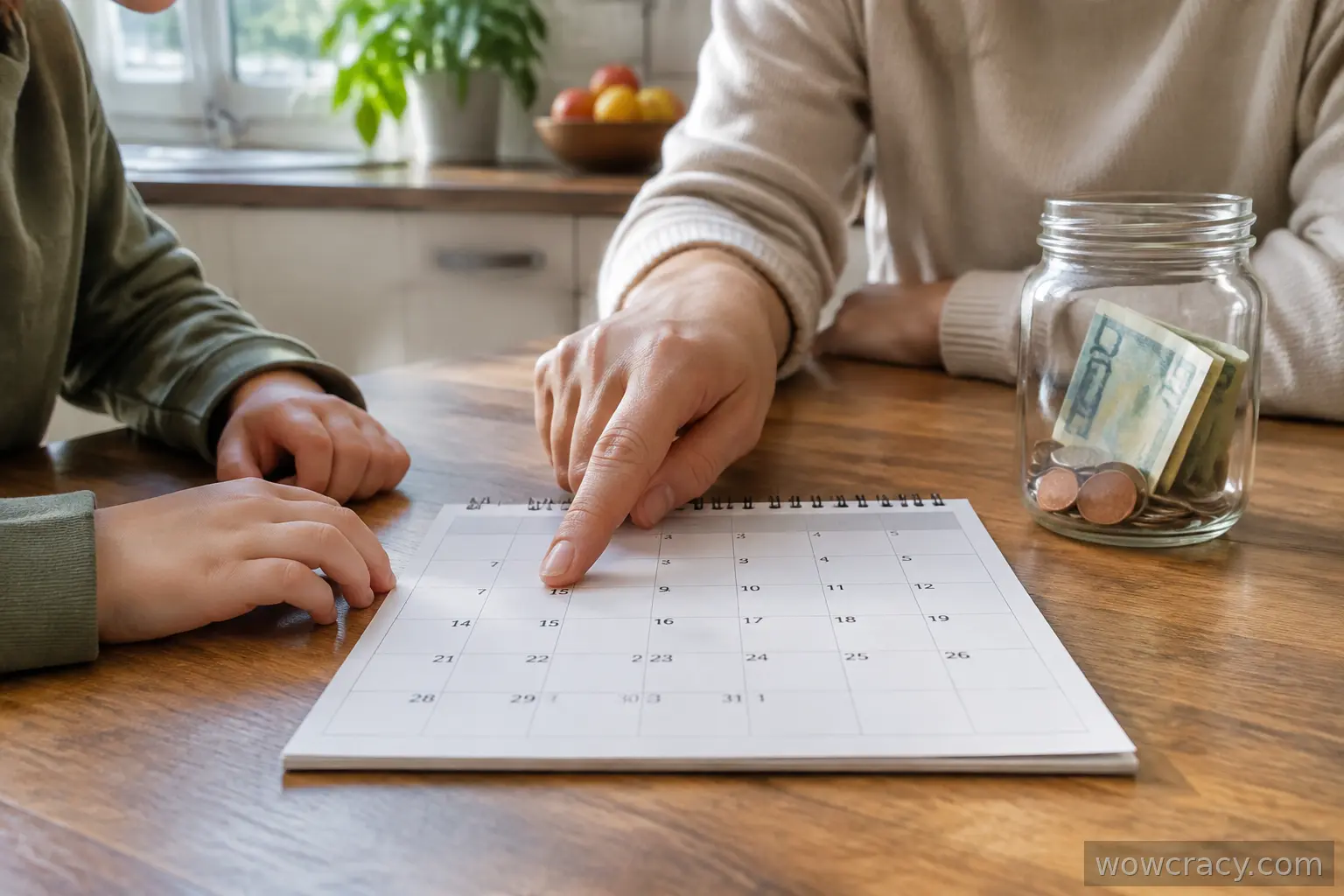
A shorter cycle can be easier initially, while a longer one offers budgeting practice. Age is a guide, not a rule. The table gives options to adapt to the child’s skills and family budget.
| Age | Frequency | What pocket money covers | What remains with parents |
|---|---|---|---|
| 6–8 years old | Once a week | Small toys, stickers, sweets by agreement | Clothing, food, school supplies, medicine, clubs |
| 9–12 years old | Once a week or every two weeks | Stationery for hobbies, small entertainment, gifts for friends | Main food, transport to school, mandatory excursions |
| 13–15 years old | Once a month | Part of entertainment, cosmetics, extra sweets, pocket expenses | Clothing, school, clubs, medicine, large purchases |
| 16–18 years old | Once a month | Personal entertainment, part of clothing of their choice, mobile communication (by agreement) | Housing, food, education, basic clothing, treatment |
This table is not a dogma but a starting point. The main rule: the amount should be enough for the child to be able to make a choice, and not so large that the need to think disappears. If the money is spent in one day, this is a signal to review the amount or frequency, not to punish.
Rules worth agreeing on in advance
Pocket money works better when there is a simple agreement rather than a series of punishments. Sit down with the child and talk through a few points. It’s not necessary to put them in writing, but it’s important that both sides understand them the same way.
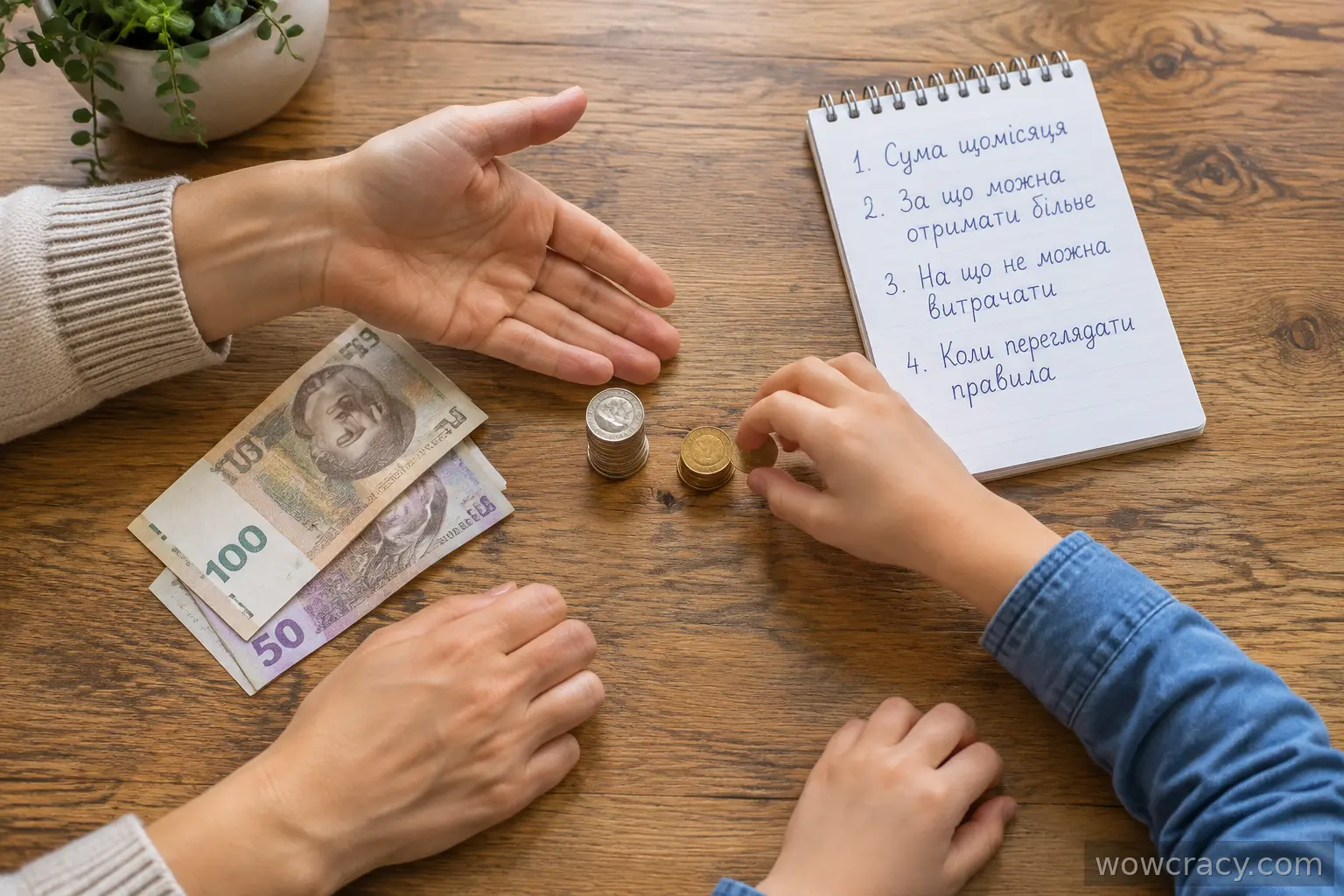
What it can be spent on
Allow the child to choose independently within safety limits: toys, books, sweets, stickers, small accessories. Prohibit only what is truly dangerous or contradicts family values (for example, dangerous pyrotechnic items, tobacco, alcohol). Don’t turn the list into an endless “allowed/not allowed” inventory — a few clear boundaries are enough.
Whether borrowing is allowed
Loans between parents and child are a slippery topic. If you lend, agree on repayment from future pocket money. But don’t make it a permanent practice: the child should learn to plan, not live in debt. It’s better if they decide to save up for a desired item themselves than take an advance every time.
Whether grades have an influence
In this approach, pocket money is separate from grades to keep budgeting practice predictable. Discuss learning difficulties and effort separately. A reward for a grade does not inevitably remove interest in learning; the agreement’s purpose and conditions matter.
Whether pocket money can be canceled as a punishment
For ordinary behaviour issues, avoid changing an existing pocket-money agreement retrospectively. Unsafe purchases can require an adult to restrict spending access and increase support. Safety and basic needs matter more than keeping the payment method unchanged.
What to do if the money is spent immediately
The first pocket money often disappears within an hour: the child buys sweets, a trinket, and then regrets it. This is a normal stage. Your task is not to save the situation with an extra banknote, but to help them see the consequences. Calmly ask: “Are you happy with the purchase? Do you think you would have wanted something else with this money?” Don’t preach and don’t reproach.
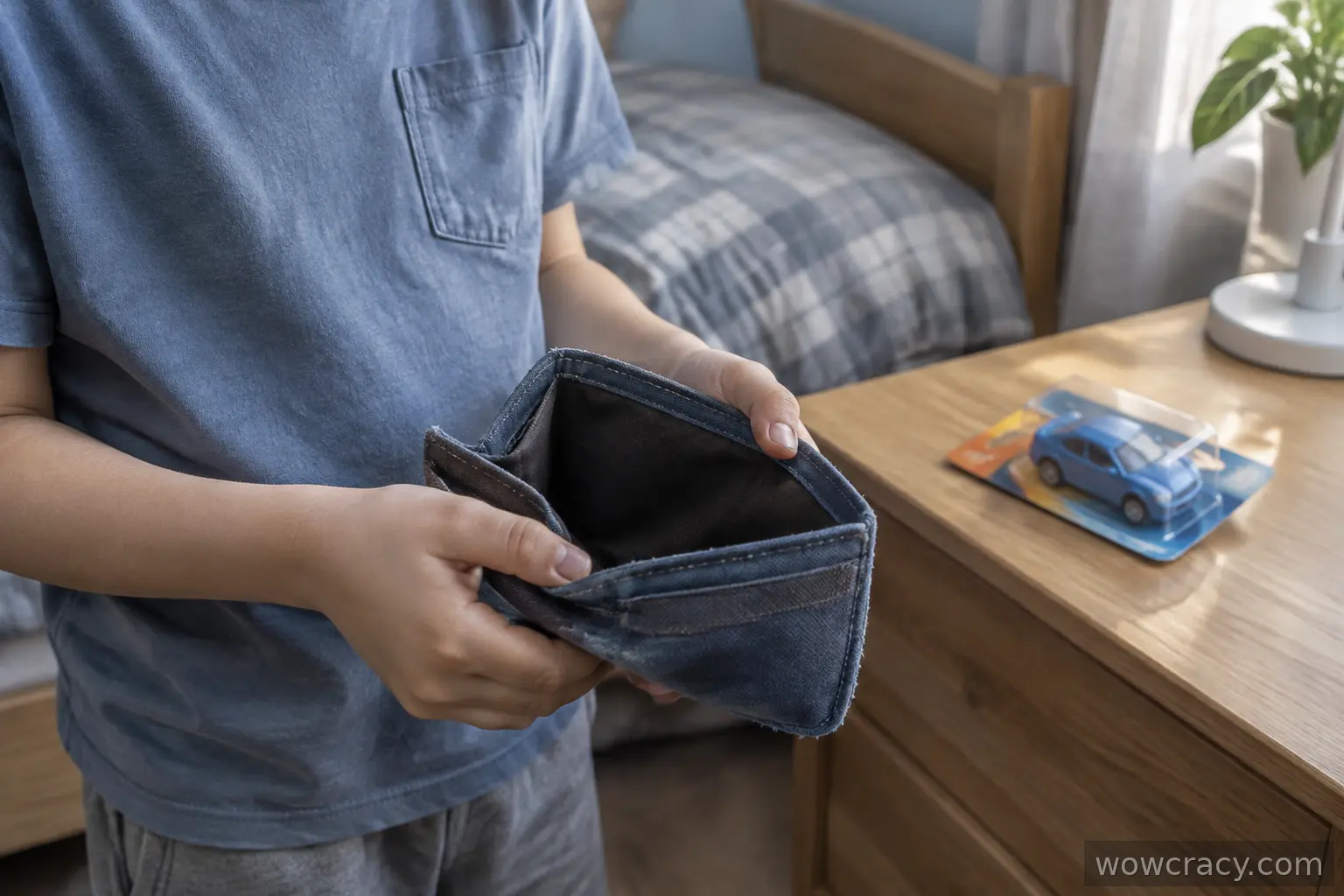
If the child constantly spends everything in one day, try this approach: split the amount into two parts — one can be spent immediately, the other after a few days. For younger schoolchildren, you can use transparent jars or envelopes labeled “save” and “spend.” For teenagers, a simple expense-tracking app or an ordinary notebook will work. The main thing is not to force but to offer a tool.
If the arrangement is not working, review amount, covered expenses and frequency together. Smaller, more frequent payments may help initially but do not by themselves teach longer-term budgeting. Explain changes in advance and gradually practise independence.
Which expenses remain the parents’ responsibility
Essential food, treatment, clothing and educational needs should not depend on whether a child saved money intended for wants. An older child may separately practise a lunch or transport budget with adult backup. Discuss clubs, gifts and extra activities separately in light of family means.
It’s important to state the boundary: “Pocket money is money for your personal wishes. Everything related to health, education, and basic needs is our joint decision and our responsibility.” Such clarity removes anxiety and prevents manipulation.
Typical parenting mistakes
Even with good intentions, it’s easy to spoil the learning effect. Here are a few mistakes worth avoiding.
- Mixing goals. If money is for budgeting practice, avoid changing it for every grade; discuss learning incentives separately.
- Inconsistency. If money is given chaotically, the child doesn’t learn to plan. Agree on a day and stick to it.
- Controlling every expense. Constant checks and prohibitions kill initiative. Allow mistakes within safety limits.
- Rescuing from consequences. If the child has spent everything, don’t compensate immediately. Let them feel the natural result.
- Comparing with others. “Well, Petryk has more” is not an argument. The amount should match your family’s means.
Avoid the other extreme as well: when pocket money becomes the only way to get parents’ attention. Money does not replace time together.
Frequently asked questions

Can you give pocket money to a child who can’t count?
Yes, with adult support and age-appropriate methods: compare two prices, count an amount together or play shops. Counting to 100 is not a fixed prerequisite.
Should you require a report on expenses?
Agree on age- and risk-appropriate oversight: help younger children count and discuss plans and outcomes with older ones. Avoid ridiculing purchases without giving up safety supervision. Adjust oversight and independence gradually by agreement.
What to do if the child spends money on dangerous things?
Stop the unsafe purchase and find out how access occurred. Temporarily change spending access or shop together, seeking help for the specific risk if needed. A card limit does not automatically block every unsafe item; availability and controls depend on the bank and age.
Can pocket money be replaced with gifts?
A money gift can also offer spending and saving practice if you discuss a plan. Regular pocket money makes repeated practice convenient, but is not the only method. Choose an arrangement your family can sustain.
A short algorithm for getting started
If you’ve decided to start, do it in stages. First, determine the amount and frequency that are comfortable for you. Then discuss the rules with the child: what it can be spent on, what remains with the parents, what to do if the money runs out. Agree on a payment day and stick to it. For the first few weeks, observe without criticism. If you see that the format isn’t working, change the amount or frequency, but don’t cancel pocket money as a punishment. Remember: the goal is not perfect saving but the gradual formation of financial habits that will be useful in adult life.